Integrative Veterinary Oncology: Holistic Dog Cancer Care
Jun 13, 2026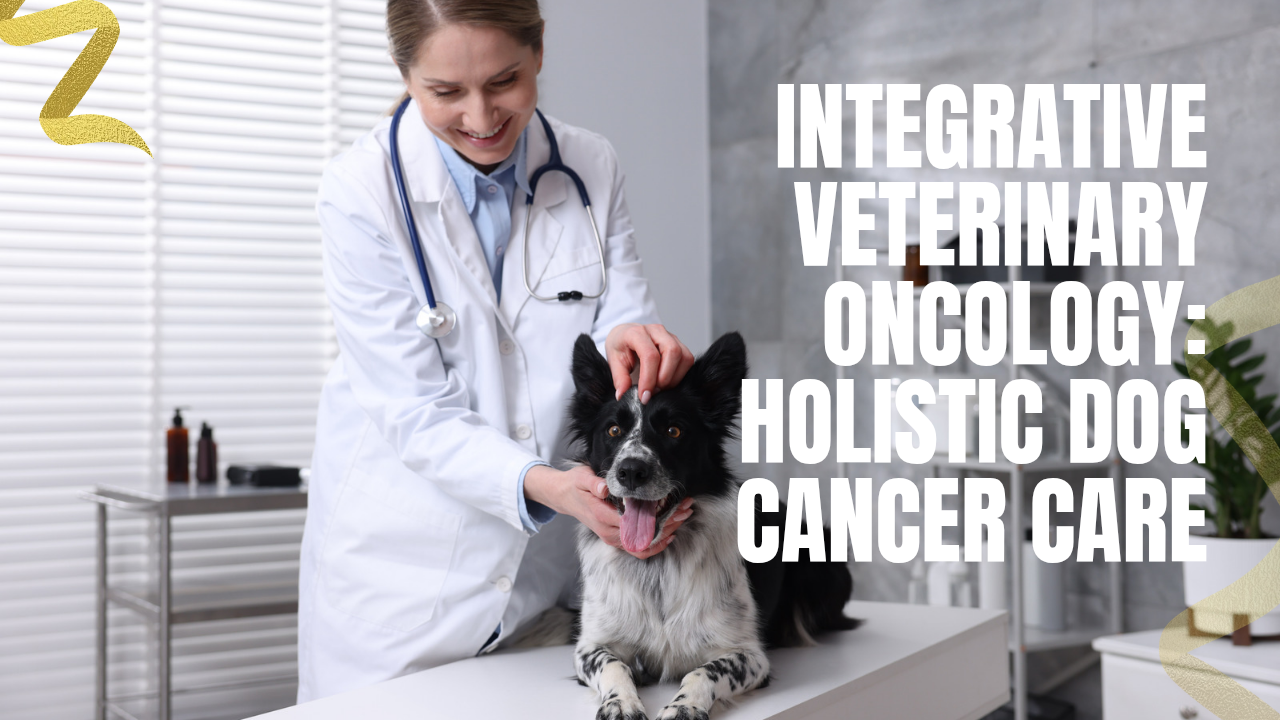
The moment you hear "your dog has cancer," the room tends to go blurry. Most people walk out of that appointment holding onto only a few words. Tumor. Biopsy. Treatment. Referral. Then, usually in the car or at two in the morning, the questions start. Should we do surgery? Is chemo worth it? Can food help? What about supplements, acupuncture, CBD? And underneath all of it, the real one: how do I keep my dog feeling like my dog for as long as I possibly can?
That last question is where an integrative approach earns its place. Not by replacing standard cancer care, but by rounding it out. One part of the plan goes after the cancer. The other part looks after the dog who has to live with it, and with the treatment.
For a lot of families, that reframing changes everything. The question stops being "which treatment do we pick?" and becomes "how do we build the safest, kindest, best-coordinated plan for this particular dog?"
Your Dog Has Cancer. Now What?
When I sit with worried families, I hear a version of the same sentence over and over. "I want to do everything, but I don't want to make my dog suffer." That instinct is loving and exactly right, and it is precisely the space integrative oncology is built for.
Take a dog named Molly. Her family came in after a biopsy confirmed cancer, already deep into reading about diet changes, medicinal mushrooms, acupuncture, and herbal formulas. They were terrified of missing something that could help and equally terrified of giving something that could hurt. What they needed was not more information. It was a plan and someone to hold the whole picture.
First, slow the panic
Three questions do most of the early work. What do we actually know? Ask for the cancer type, the location, the stage if it is known, and which tests are still pending. What needs help first? Pain, a fading appetite, nausea, labored breathing, bleeding, or trouble walking all jump to the front of the line. And who is running the plan? One veterinarian, usually your oncologist, should be the coordinator everyone else reports back to.
Here is the part worth holding onto emotionally as much as medically. Cancer in dogs is common. Roughly 1 in 4 dogs will develop it at some point, and the odds climb toward 1 in 2 for dogs over age 10 (American Animal Hospital Association, n.d.). You are not the first family to stand here, and you are not doing this alone. You also do not have to choose between fighting the cancer and protecting your dog's quality of life. A good plan does both at once.
What "doing everything" should really mean
Doing everything does not mean trying every remedy you stumble across online. It means using the right tools, in the right order, toward goals you have actually named.
For one dog, "everything" might be surgery plus rehab plus a feeding plan built around his appetite. For another, it might be palliative radiation, pain medication, acupuncture, and a home routine that guards his energy and his good days. The best plan is rarely the most crowded one. It is the most coordinated one.
And build a little support around yourself while you are at it. If you need other people's stories, better questions, or somewhere to feel less alone at 2 a.m., the Dog Cancer community can be a steadying place while you sort through options.
What Integrative Veterinary Oncology Actually Means
Integrative veterinary oncology combines standard medical treatment with carefully chosen supportive therapies. The operative word is integrative. These therapies are meant to work with your oncology care, not around it and not against it.
Picture a cancer-care toolkit. Surgery, chemotherapy, radiation, and diagnostics are the core tools for controlling the disease. Nutrition support, acupuncture, rehabilitation, selected supplements, and symptom management are the tools that help your dog stay stronger and more comfortable while that control happens.
A both/and approach
Families often assume they have to pick a side. Conventional or natural. Science or holistic support. That split is a false one, and it usually leads to worse decisions than the questions that replace it.
A healthy integrative plan asks better questions. What has the strongest evidence for controlling this particular cancer? What can ease pain, nausea, poor appetite, anxiety, or weakness? What is safe to combine? And what outcome are we actually trying to improve for this dog, right now?
What the team looks like
I usually describe the care team as a group with one head coach. Your oncologist typically fills that seat. Others join depending on what your dog needs.
| Team member | Main job |
|---|---|
| Veterinary oncologist | Diagnoses the cancer, sets the treatment backbone, monitors the response |
| Primary care veterinarian | Handles day-to-day follow-up and routine checks close to home |
| Integrative veterinarian | Helps choose supportive therapies such as acupuncture, herbs, or nutrition changes |
| Rehabilitation professional | Protects mobility, strength, and comfort |
| You | Track appetite, energy, sleep, stool, pain, and the small changes no one else can see |
This is all still medicine. It is just broader medicine, with more than one kind of expertise in the room.
The central promise
An integrative plan is trying to do two things at the same time: control the disease where that is possible, and support daily life at every stage.
That second half is where a lot of pet parents finally exhale. You do not have to wait for a crisis to start on comfort. You can support appetite before weight loss gets serious. You can loosen up stiffness before your dog stops rising easily. You can have nausea control in place before the first chemo appointment rather than after it. None of that is extra. It is simply good oncology.
The Foundation: Conventional Cancer Treatment
If integrative oncology is the whole house, conventional treatment is the foundation. It carries the most direct anti-cancer intent, and it often decides which supportive care makes sense in the first place.
The three treatments families hear about first
Surgery aims to remove visible disease. Sometimes that is a small skin mass taken out with a margin of healthy tissue. Sometimes it is a much larger operation on an organ, a limb, or a body cavity. When surgery is an option, timing and planning matter a great deal.
Chemotherapy uses drugs that target cancer cells, especially the fast-dividing ones. In dogs, the goal usually differs from human oncology, because we lean much harder toward preserving quality of life. Many dogs tolerate chemo far better than their owners expect, though side effects can still happen and should be planned for.
Radiation therapy uses focused energy to damage tumor cells. It can be aimed at controlling a local tumor, or used to reduce pain and discomfort when a cure is not realistic.
Why diagnostics matter so much
The right treatment depends on the right diagnosis. That sounds obvious, but it is exactly where plans succeed or fall apart. Imaging, biopsy, cytology, pathology review, and staging tell us what we are treating and how aggressive we need to be.
This part of veterinary medicine is expanding quickly. The U.S. veterinary oncology diagnostics market sat at just under USD 1 billion in 2024 and is projected to reach about USD 1.6 billion by 2030, with dogs making up the large majority of it (Grand View Research, 2025). That figure will not tell you what to do for your own dog. What it does tell you is that diagnostic tools are becoming more central to canine cancer care, and sharper diagnosis usually leads to better treatment decisions.
One practical rule follows from all this. Before you add supplements or make major diet changes, make sure the diagnosis and the treatment goals are clear. "Supportive care" means something very different for a dog aiming at remission than for a dog whose plan is comfort-focused from the start.
Where conventional care needs support
Even when standard treatment is clearly the right call, it can leave gaps. Appetite drops. Nausea shows up. Pain rises and falls. Mobility slips. Energy swings from one week to the next. That is where supportive therapies earn their keep, not by replacing the treatment backbone, but by helping your dog stay steadier as he moves through it.
The Supportive Therapies Families Ask About Most
This is the part almost everyone asks about first, and they want specifics. What can we add, and what does it actually help with? The honest answer depends on the dog, the cancer, and the treatment plan. Still, a handful of supportive therapies come up again and again, because they address the problems that come up again and again: pain, nausea, muscle loss, poor appetite, weakness, and stress.
Nutrition
Cancer patients need more than calories. They need food they can tolerate, food they will actually eat, and a plan that bends around their symptoms.
For one dog that means smaller, more frequent meals to keep nausea down. For another it means warming the food slightly to bring out the smell, or adding a simple topper the oncology team has approved. If your dog is eating but seems lukewarm about it, ask whether a bland, highly palatable topper could fit the plan, maybe a little gently cooked lean protein or another team-approved addition. The goal is not to invent a "cancer diet" from social media. It is to make eating easier and more consistent.
Acupuncture
Acupuncture is used mostly for pain control, nausea, and general comfort, and it can help with the arthritis, weakness, and tension that often get louder during cancer treatment.
Owners usually worry their dog will hate the needles. Most dogs do far better than expected. Sessions tend to be quiet and low-stress, and some dogs actually get drowsy partway through. If you want a plain-language look before deciding whether it fits your dog, this guide on acupuncture and acupressure for dogs is a good place to start.
Supplements and nutraceuticals
This is the category that causes the most confusion. "Supplement" can mean fish oil, mushroom products, probiotics, antioxidants, or any of a hundred commercial blends. Some are reasonable in the right patient. Some are unnecessary. And some can actively work against treatment.
A good home rule: never start a supplement just because it sounds anti-cancer. Start it only if your veterinary team can answer three things. What symptom or goal is it for? What are the known risks? And how will we know if it is working? Those three questions turn a vague hope into an actual medical decision.
Cannabis medicine
Some families ask about CBD or broader cannabis products for pain, anxiety, sleep, or appetite. This is an area where veterinary guidance really is essential. Product quality, dosing, and drug interactions all matter, and "natural" does not mean gentle or automatically safe.
If cannabis medicine is on the table, your oncologist should know before the first dose, not after. That goes double if your dog is already on several medications, has liver concerns, or is dealing with sedation or appetite changes.
Physical rehabilitation
Cancer can weaken a dog in indirect ways. Less movement leads to muscle loss. Pain reshapes posture. After surgery, dogs often compensate in ways that quietly strain other joints and muscles.
Rehab might mean guided exercises, massage, range-of-motion work, an assisted walking plan, or hydrotherapy when it is appropriate. The aim is not athletic performance. It is function. A dog who can get up more easily, walk out to the yard, and settle down comfortably often feels dramatically better, even when the cancer itself has not changed at all.
Weighing Evidence, Risks, and Rewards
Supportive care deserves the same clear thinking as any other medical decision. Some of these therapies are genuinely promising. Some are reasonable for symptom relief. Some are barely studied. And some carry real risk when mixed with cancer drugs.
The honest picture is that rigorous evidence for many of these modalities is thin. A veterinary review of integrative oncology describes the research base as limited and recommends treating unproven therapies as experimental, using them mainly for symptom control and quality of life, and putting safety first (Raditic & Bartges, 2014). A therapy can still be worth considering when the evidence is limited. The conversation just has to stay honest. "This may help his appetite and appears safe in his situation" is a very different sentence from "this treats cancer."
A simple evidence ladder
Not all evidence carries the same weight. Here is a practical way to sort it.
| Type of support | What it means for you |
|---|---|
| Clinical trial data | Most useful for judging real safety and likely benefit |
| Veterinary case experience | Can guide symptom care, but read with caution |
| Lab or cell-line findings | Interesting, not enough to prove benefit in your dog |
| Online testimonials | Emotionally powerful, medically weak |
Questions before you add anything
Bring these to your next appointment. What is the goal, exactly: pain relief, nausea control, appetite, anxiety, something else? What would make you stop it: sedation, diarrhea, poor lab values, a conflict with treatment? Does it interact with chemotherapy or any current prescriptions? Should it be paused before surgery or on treatment days? And who is watching for a response? If a practitioner cannot answer those clearly, that is your cue to slow down. When you want to review the research behind a claim, the scientific research resource page is a good reference.
The real risk isn't only "ineffective"
The deeper danger is not a useless supplement. It is a lack of coordination. Problems tend to start when one clinician does not know what another recommended, or when a family adds several new products at once and no one can tell which one moved the needle on appetite, stool, or liver values. Over-the-counter botanicals are poorly regulated and can contain active compounds that interfere with how the body processes chemotherapy and other drugs (Raditic & Bartges, 2014). That is exactly why the safest integrative plans are usually the simplest ones.
Building Your Dog's Integrated Care Plan
Most articles stop at "talk to your vet." That is not enough when your dog is on prescription drugs, moving through treatment appointments, and you are trying to layer in supportive care safely. A real plan needs names, timing, and rules.
One master list
Make a single document and bring it to every appointment. Put everything on it: the diagnosis details (cancer type, biopsy result, stage, key scan findings), every medication with its dose, schedule, and reason, every supplement and herb even if it seems trivial, the diet including toppers, treats, and appetite aids, and your daily observations on appetite, sleep, pain, energy, stool, vomiting, and mobility.
That one list closes a gap that trips up a lot of families, because clear public guidance on how to safely combine supplements, herbs, and diet changes with oncology drugs is genuinely scarce (Raditic & Bartges, 2014). Your written list is what lets one person catch a conflict before it becomes a problem.
Build the schedule around conflict points
Most coordination trouble shows up in a few predictable places.
| Treatment element | What to clarify with your team |
|---|---|
| Chemotherapy days | Which supplements, if any, should be paused |
| Surgery dates | Whether herbs or fish oil need to stop beforehand |
| Radiation course | How skin care, appetite support, and pain control will be adjusted |
| Acupuncture visits | Best timing relative to pain flares or nausea-prone days |
| Diet changes | How fast to transition, and what to do if stool changes |
A sample week for a dog with bone cancer might include a pain-control check on Monday, acupuncture on Tuesday, routine meds and short leash walks through the week, a nutrition tweak if appetite dips, and a recheck with the oncology team whenever comfort or function shifts. The exact schedule matters less than having one team confirm the pieces fit together. One sentence prevents a surprising number of mistakes: "Please look over everything my dog gets in a normal week, food extras and supplements included, and tell me what might conflict."
Keep quality of life measurable
"How's he doing?" is too vague to be useful. Pick categories and score them, daily or a few times a week: appetite, pain, mobility, sleep, interest in the family, and a simple tally of good days versus hard days. Patterns you can see on paper are far kinder to make decisions from than a single good hour or a single bad one.
If your team needs materials, the feeding guidance for dogs with cancer can help with meal-planning conversations, and the Drake Dog Cancer Foundation and Academy offers resources on quality of life, nutrition, and integrative care.
When team members disagree
It happens. When it does, steer everyone toward specifics rather than labels. Do not ask, "Do you believe in supplements?" Ask, "Is there a concern about bleeding risk, liver metabolism, sedation, appetite, or chemo timing with this specific product?" Concrete questions pull out useful answers.
Frequently Asked Questions
Is integrative care the same as alternative care? No, and the difference matters. Integrative care adds supportive therapies on top of conventional oncology. Alternative care usually means replacing standard treatment, which is a very different choice and can carry very different risks.
Can I do some of this at home? Yes, as long as home care sticks to safe basics. Keep meals consistent, track symptoms, give medications exactly as prescribed, use non-slip rugs, and protect rest. Do not add herbs, oils, or supplements on your own just because they are marketed for cancer.
What if my regular vet seems skeptical? Ask for the specifics behind the skepticism. Plenty of veterinarians worry about interactions, poor product quality, or inflated claims, and those are fair worries. Invite collaboration instead of a standoff: "I don't want to replace oncology care. I want help choosing supportive options that are safe."
How do I know whether something is helping? Pick one goal per intervention. Better appetite. Easier rising. Less nausea. More restful sleep. If you start several things at once, you will never know which one did what.
Does every dog need an integrative plan? Not a complicated one. Some dogs need only excellent pain control, thoughtful feeding support, and close monitoring. Integrative care is not about piling on therapies. It is about matching support to the dog in front of you.
If you want steady, evidence-aware guidance while you make these decisions, the Drake Dog Cancer Foundation and Academy offers education, practical care resources, and community for families navigating canine cancer.
This article is for educational purposes only and is not a substitute for professional veterinary advice, diagnosis, or treatment. Every dog and every cancer is different. Always work with your veterinarian or a board-certified veterinary oncologist before starting, stopping, or combining any treatment, supplement, or diet change, and seek prompt care for pain, bleeding, difficulty breathing, or a sudden decline.
References
American Animal Hospital Association. (n.d.). How common is cancer in dogs? Retrieved July 13, 2026, from https://www.aaha.org/resources/how-common-is-cancer-in-dogs/
Grand View Research. (2025). U.S. veterinary oncology diagnostics market size, share & trends analysis report by animal type, by test type, by cancer type, by end use, by country, and segment forecasts, 2025–2030. https://www.grandviewresearch.com/industry-analysis/us-veterinary-oncology-diagnostics-market-report
Lana, S. E., Kogan, L. R., Crump, K. A., Graham, J. T., & Robinson, N. G. (2006). The use of complementary and alternative therapies in dogs and cats with cancer. Journal of the American Animal Hospital Association, 42(5), 361–365. https://pubmed.ncbi.nlm.nih.gov/16960039/
Raditic, D. M., & Bartges, J. W. (2014). Evidence-based integrative medicine in clinical veterinary oncology. Veterinary Clinics of North America: Small Animal Practice, 44(5), 831–853. https://pubmed.ncbi.nlm.nih.gov/25174902/
Reviewed by: Amber L. Drake, PhD
Dr. Amber L. Drake is a board-certified holistic health practitioner, canine clinical herbalist, educator, and founder of the Drake Dog Cancer Foundation and Drake Dog Academy. She is dedicated to helping pet parents better understand canine cancer, treatment options, nutrition, quality of life, and supportive care through compassionate, evidence-informed education. Her work combines professional training, practical resources, and firsthand insight from supporting thousands of dog families through the challenges of a cancer diagnosis.
Stay connected with news and updates!
Join our mailing list to receive the latest news and updates from our team.
Don't worry, your information will not be shared.
We hate SPAM. We will never sell your information, for any reason.