





When you first hear the words "canine cancer," the world seems to tilt on its axis. We know that feeling: the sudden, sharp weight in your chest and the desperate urge to do everything in your power to protect your best friend. At the Drake Dog Cancer Foundation, we’ve walked this path alongside countless families, and we’re here to walk it with you, too.
In our search for "real help" beyond just the standard protocols, many of us have stumbled upon a concept that’s making waves in both human and veterinary longevity circles: intermittent fasting. It sounds a bit intense at first: after all, our dogs live for mealtime. But when we look at the emerging science, we see a powerful tool that might help tip the scales back in our favor.
Today, we’re diving deep into the science of autophagy, metabolic flexibility, and how a controlled feeding window might be a game-changer for dogs fighting cancer or those we’re trying to protect for the long haul.
The Science of "Cellular Housekeeping": Understanding Autophagy
The word "autophagy" literally translates to "self-eating." While that sounds a bit scary, it’s actually one of the most beautiful processes in the body. Think of it as a cellular recycling program. When a dog’s body is in a fasted state, it isn’t focused on digesting a heavy meal. Instead, it turns its attention inward to find damaged proteins, dysfunctional mitochondria, and: most importantly: potentially cancerous cells to break down and clear out.
For a dog facing a diagnosis like lymphoma, this "cleanup crew" is vital. Research suggests that by limiting the feeding window, we allow the body the time it needs to perform this deep cleaning.

Why Cancer Cells Hate Fasting
Cancer cells are notoriously picky eaters. Most of them are "sugar junkies" that rely heavily on glucose to fuel their rapid growth. This is why the debate on kibble vs. raw food is so important; high-carb kibbles can inadvertently feed the very thing we’re trying to starve.
When we implement intermittent fasting (often paired with a ketogenic approach), something fascinating happens known as Differential Stress Resistance.
- Healthy Cells Go Dormant: In a fasted state, healthy cells slow down their division and enter a protective "shield" mode. They become more resilient to toxins: including chemotherapy.
- Cancer Cells Panic: Cancer cells don’t have this "shield" mode. They keep trying to grow and divide at high speeds, but without a constant stream of glucose, they become stressed, fragile, and much more sensitive to treatment.
We’ve seen incredible case studies where this metabolic shift made a visible difference. One 6-year-old German Shepherd with lymphoma achieved remission for 27 months: far exceeding the typical timeline: by combining chemotherapy with a ketogenic diet and metabolic support.
Fasting and Chemotherapy: A Lifeline for Side Effects
One of the hardest parts of cancer treatment is watching our dogs lose their spark during chemotherapy. If you’ve asked yourself, "Why isn't my dog with cancer eating?", you know the heartbreak of seeing them nauseous or lethargic.
Research from UC Davis and Oregon State University has shown that short-term fasting before and after a chemo session can significantly reduce gastrointestinal side effects. By giving the digestive tract a break, we reduce the inflammation and cellular damage often caused by these powerful drugs. It’s a gentle, science-backed way to prioritize their quality of life during the toughest days.
Integrating Functional Wellness into the Fasting Window
Intermittent fasting isn’t just about when they eat; it’s about making every calorie count when they do eat. When we open that feeding window, we want to flood their system with functional wellness ingredients.
- Gut Health & Probiotics: Since a huge portion of the immune system lives in the gut, adding gut health probiotics for dogs during mealtime is essential. This ensures that when the body is in "repair mode," it has the right microbiome balance to support the transition.
- The Power of Pectin: For dogs who struggle with digestive upset during diet changes, apple pectin for dogs can be a wonderful, natural fiber source to firm up stools and soothe the gut lining.
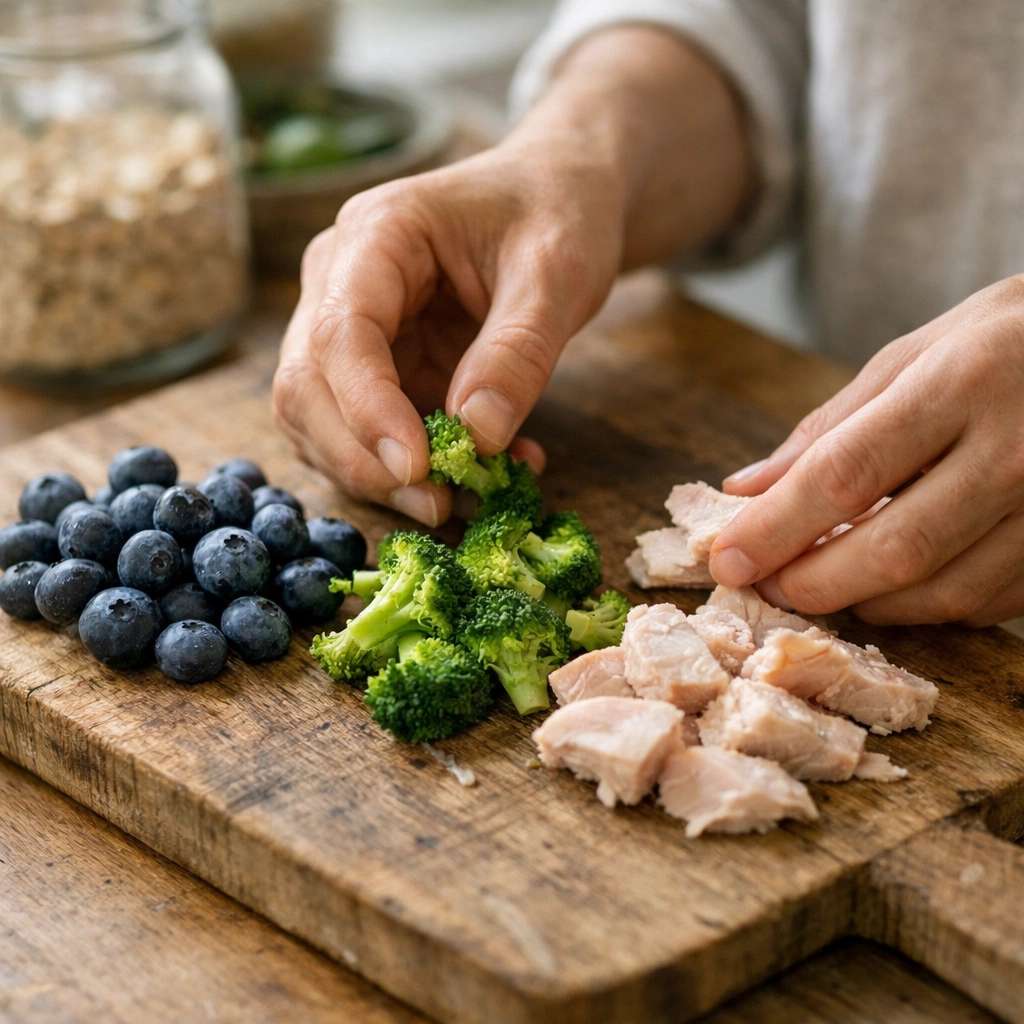
- Superfoods: We always look for beneficial foods for dogs with cancer prevention: think dark berries, cruciferous vegetables (lightly steamed), and healthy fats like Omega-3s. If you’re wondering how these help, check out our guide on how Omega-3s help dogs with cancer.
Is Intermittent Fasting Right for Every Dog?
We want to be very clear: Always consult your vet or a veterinary oncologist before changing your dog’s feeding schedule, especially if they are currently on medication or have underlying issues like diabetes.
While a functional diet for senior dogs often includes restricted feeding windows to help with inflammation and cognitive health, every dog is an individual. What works for a vibrant Labrador might be too taxing for a tiny Chihuahua or a dog with adrenal issues.
If you’re feeling overwhelmed by the options, we have resources to help you find clarity. A great first step is filling out our Intake Form. It helps us understand your dog’s specific journey so we can point you toward the right tools.
Practical Steps: How to Start (The Drake Dog Way)
If your vet gives the green light, here is a gentle way to introduce functional feeding:
- The 16:8 Method: This is a popular starting point. Your dog eats all their food within an 8-hour window (say, 10 AM to 6 PM) and fasts for the remaining 16 hours.
- Nutrient Density: Because they are eating fewer meals, the quality of the food is paramount. Many parents find that a best multivitamin for homemade dog food is necessary to ensure no gaps are left in their nutrition. You can find vetted options in our shop.
- Hydration is Key: During the fasting hours, your dog should always have access to fresh, filtered water.
- Track Everything: We can’t emphasize this enough. Use a journal to note their energy levels, coat quality, and mood. This is what veterinary teams wish every dog cancer caregiver was tracking, as it helps your medical team make better decisions.

Driven by Hope, Guided by Science
We know that a cancer diagnosis feels like a race against time. But by shifting our focus to functional nutrition and metabolic health, we aren't just "waiting for the next scan": we are actively participating in our dog's healing process. Whether you are celebrating clean margins or navigating a terminal diagnosis, your goal is the same as ours: more good days, more wagging tails, and more love.
If you’re ready to dive deeper into the specifics of what to put in that bowl, we invite you to join our FREE course: Feeding a Dog with Cancer. It’s a heartfelt, structured guide designed to take the guesswork out of the kitchen so you can focus on what matters most: the bond you share.
We’re here for you. Every step of the way.
Because they’re family.
References
Bose S, Zhang C, Le A. Glucose Metabolism in Cancer: The Warburg Effect and Beyond. 2021 May 21. In: Le A, editor. The Heterogeneity of Cancer Metabolism [Internet]. 2nd edition. Cham (CH): Springer; 2021. Available from: https://www.ncbi.nlm.nih.gov/books/NBK573693/ doi: 10.1007/978-3-030-65768-0_1
Epner M, Yang P, Wagner RW, Cohen L. Understanding the Link between Sugar and Cancer: An Examination of the Preclinical and Clinical Evidence. Cancers (Basel). 2022 Dec 8;14(24):6042. doi: 10.3390/cancers14246042. PMID: 36551528; PMCID: PMC9775518.
Hay N. Reprogramming glucose metabolism in cancer: can it be exploited for cancer therapy? Nat Rev Cancer. 2016 Oct;16(10):635-49. doi: 10.1038/nrc.2016.77. Epub 2016 Sep 16. PMID: 27634447; PMCID: PMC5516800.
Kim B, Youn B. Starving tumor, feeding metastasis: a warning about low-carbohydrate diets in cancer therapy. Signal Transduct Target Ther. 2025 Nov 21;10(1):379. doi: 10.1038/s41392-025-02469-4. PMID: 41266319; PMCID: PMC12635311.
Mu X, Liu A, Shi R, Xu L, Huang Z, Zhang Y, Xu Y. On why cancer cells require a great amount of glucose. Quant Biol. 2025 Dec 5;14(2):e70025. doi: 10.1002/qub2.70025. PMID: 41675593; PMCID: PMC12806031.
Nam M, Xia W, Mir AH, Jerrett A, Spinelli JB, Huang TT, Possemato R. Glucose limitation protects cancer cells from apoptosis induced by pyrimidine restriction and replication inhibition. Nat Metab. 2024 Dec;6(12):2338-2353. doi: 10.1038/s42255-024-01166-w. Epub 2024 Nov 26. PMID: 39592843; PMCID: PMC12019718.
Pan BS, Hsu CC, Wu HE, Chen YR, Zhou X, Wang SC, Li CY, Lin HK. Glucose metabolism and its direct action in cancer and immune regulation: opportunities and challenges for metabolic targeting. J Biomed Sci. 2025 Jul 29;32(1):71. doi: 10.1186/s12929-025-01167-1. PMID: 40734168; PMCID: PMC12306072.