





The house feels wrong in the first few days.
You still glance toward the water bowl. You pause before opening the door because no one is there to greet you. If your dog had cancer, the silence can feel even sharper because your life may have revolved around medications, appointments, appetite checks, and those quiet little quality-of-life calculations that only you understood.
I want to say this clearly as both a grief educator and a pet owner. What you're feeling is grief. Not “just sadness.” Not “being too attached.” Grief.
Many people looking for grief support for pet loss are trying to answer painful questions all at once. Why does this hurt so much? Why am I exhausted? Why do I keep replaying the last day? And if cancer was involved, why can't I stop second-guessing every choice?
Those reactions make sense. They have names. They have patterns. And they can be met with care.
Why Your Grief Is Real and Valid
The first morning after a pet dies often brings a strange mix of numbness and instinct. You may wake up expecting to hear paws on the floor. You may reach for the leash, medicine chart, or favorite blanket before your mind catches up. Then the absence lands again.

For many people, the hardest part isn't only the loss itself. It's the reaction around them. A coworker says, “Are you getting another dog?” A relative means well but says, “At least it wasn't a person.” Someone expects you to be back to normal by the weekend.
That kind of response can make grief feel lonely and hidden. Mental health professionals often call this disenfranchised grief. It means the loss is real, but the world around you doesn't fully recognize it.
A UK survey found that 7.5% of owners who lost a pet met criteria for prolonged grief disorder, with pet loss associated with a 27% higher relative risk. The same discussion highlights how social pressure to “get over it” can deepen isolation. You can read that summary in this report on pet-loss prolonged grief disorder.
What disenfranchised grief sounds like
You might hear it in comments like these:
- Minimizing language like “it was only a dog.”
- Rushing language like “you should move on.”
- Replacement language like “just get a puppy.”
- Silencing language like “don't dwell on it.”
None of those statements measure the bond you had.
Your grief reflects attachment, routine, responsibility, and love. It doesn't need anyone else's permission to be real.
If you're wondering whether your reaction is “too much,” try this simple test. Ask yourself what your pet meant in the structure of your day. Companion. Witness. Walking partner. Source of touch. Comfort during panic. Motivation to get up. Family member. For many people, the answer is all of the above.
A grounding step for today
Do one small validating act before the day ends:
- Say your pet's name out loud.
- Tell one safe person what happened.
- Use honest language like “I'm grieving my dog” instead of shrinking it down.
- Read something that validates pet loss, such as this piece on coping with the loss of a dog.
That last step matters more than it seems. When your environment doesn't mirror the depth of your loss, borrowed language can help you hold onto your own truth until your footing returns.
Understanding the Emotional Journey of Pet Loss
Grief rarely moves in a neat line. It behaves more like waves.
Some moments feel manageable. Then you see a tuft of fur under the couch, or you walk past the oncology clinic, or your phone suggests an old photo, and the wave hits again. People often mistake this for “going backward.” It isn't. It's how grief tends to work.
Grief waves are normal
A wave can be emotional, physical, or mental.
You may cry in the grocery store because you passed the treat aisle. You may feel relief one afternoon and guilt the next. You may laugh at a happy memory, then feel bad for laughing.
Common grief reactions include:
- Emotional shifts such as sadness, anger, guilt, relief, anxiety, or numbness
- Body responses like fatigue, restlessness, tightness in the chest, poor appetite, or disrupted sleep
- Thinking changes such as forgetfulness, brain fog, replaying final moments, and difficulty making decisions
None of these reactions automatically mean something is wrong with you. Grief affects the whole person.
Why guilt can get so loud
Pet loss often includes responsibility in a way many other losses don't. You scheduled the appointments. You approved tests. You watched symptoms. If euthanasia was involved, you may also have chosen the timing.
That responsibility can turn love into self-interrogation.
You might think:
- Did I wait too long?
- Did I act too soon?
- Did I miss a sign?
- Should I have tried one more treatment?
- Did my dog know I was trying?
Those thoughts are common, especially after a medically complex loss. They feel convincing because grief wants certainty, and medicine often leaves some uncertainty behind.
Continuing bonds can help
Research across 78 studies found that continuing bonds, the ongoing emotional connection people keep with a pet after death, can either intensify grief or support healing. With support, positive remembrance can reduce distress. Without support, a person can get stuck in guilt-focused rumination. That review also noted that 20% of owners still reported symptoms a year later in some contexts. The findings are summarized in this scoping review of pet loss grief and continuing bonds.
A continuing bond doesn't mean refusing reality. It means carrying the relationship in a healthy way.
Healthy examples might include:
- keeping a collar in a memory box
- talking to your pet during a walk
- making a photo book
- cooking on the anniversary of an adoption day because your dog loved being in the kitchen
- writing down what your pet taught you
A real-life example of a healthier bond
A client once told me she couldn't stop replaying the euthanasia appointment. Every memory of her dog ended at the clinic door. She felt trapped there.
We didn't try to force the memory away. Instead, she started a short ritual every Sunday. She wrote one story about her dog's life that had nothing to do with illness. The day he stole a sandwich. The lake trip where he barked at ducks. The ridiculous dance he did before dinner.
Over time, the last chapter stopped being the only chapter.
Practical rule: If your memories keep collapsing into guilt, widen the frame. Ask, “What was true about our life together besides the ending?”
That question often softens the nervous system. It reminds the brain that love wasn't limited to the final decision.
Practical Strategies for Coping and Healing
When grief is raw, broad advice doesn't help much. You need things you can do on a hard Tuesday afternoon when the house is quiet and your body feels heavy.
Start small. Repetition matters more than intensity.

Create one ritual that fits your relationship
Ritual helps grief move. It gives love somewhere to go.
Try one of these:
- A memory jar. Keep slips of paper and write one memory each time a new one comes up.
- A walking ritual. If you used to walk your dog at sunset, continue once or twice a week and dedicate the walk to them.
- A visible remembrance space. Place a photo, collar, tag, or favorite toy in one spot instead of scattering items around the house.
- A planting ritual. Plant something living if tending to it feels comforting, not burdensome.
One family I worked with placed a glass jar on the kitchen counter after their dog died. Each person wrote down favorite moments for several weeks. On the anniversary of his passing, they read the memories aloud. The jar became less about pain and more about shared witness.
If memorial ideas feel overwhelming, these meaningful ways to celebrate the remembrance of a loved one can help spark something personal and gentle.
Use writing to organize the chaos
Journaling isn't about writing beautifully. It's about giving shape to what keeps circling in your mind.
Useful prompts include:
- What I miss most today is...
- What I want to remember forever is...
- What I'm blaming myself for is...
- What I know my pet would have felt from me is...
- One kind thing I can do for myself tonight is...
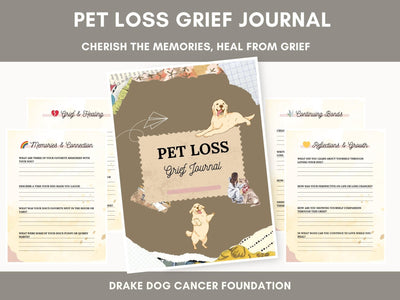
If blank pages feel intimidating, a structured tool can help. One option is this free grief journal for losing a dog, which gives prompts instead of asking you to start from scratch.
Protect the basics
Grief can make ordinary care feel unnecessary. It isn't.
Focus on the smallest sustainable version of self-care:
- Food. Eat something with protein or warmth, even if it's simple.
- Sleep. Lower stimulation before bed. A shower, dim lights, and no doom-scrolling is enough.
- Movement. Walk to the mailbox, stretch on the floor, or sit outside for ten minutes.
- Hydration. Keep one bottle or glass in the place where you usually cry or scroll.
- Companionship. Text one person who won't minimize your loss.
On bad days, lower the bar without abandoning yourself.
Plan for grief triggers
Triggers aren't setbacks. They're reminders.
Common triggers include the first weekend without your pet, the sound of tags from another dog, vet parking lots, old medication reminders, birthdays, adoption anniversaries, and the season when your dog got sick.
A practical coping plan looks like this:
| Trigger | What you can do |
|---|---|
| Feeding time | Replace it with tea, journaling, or a short walk |
| Vet reminder on phone | Rename it to “pause and breathe” before deleting |
| Empty bed or crate | Decide whether to keep, move, donate, or cover it for now |
| Anniversary dates | Plan support in advance, not on the day itself |
You don't have to “be strong” by pretending these moments don't matter. Strength often looks more like preparing for them kindly.
Finding Your Support System
Private grief can become heavy grief. At some point, many individuals need another nervous system in the room, whether that's a friend, a group, or a counselor.
The challenge is that not all support feels the same. Some people need immediate listening. Others need skillful guidance. Some need both.
Comparing Pet Loss Support Options
| Support Type | Best For | What to Expect |
|---|---|---|
| Hotline or helpline | Immediate support, strong feelings, needing someone now | Brief, compassionate conversation and emotional grounding |
| Peer support group | Feeling less alone, hearing similar stories | Shared experiences, mutual validation, less individualized guidance |
| Individual grief counseling | Guilt, trauma, decision regret, complex grief, private processing | One-to-one support, pacing adjusted to your needs, deeper emotional work |
| Moderated online community | Ongoing connection between appointments or group meetings | Flexible access, shared language, varied quality depending on moderation |
| Support from friends or family | Day-to-day care and practical help | Meals, check-ins, companionship, but often limited grief literacy |
Why group leadership matters
Support groups can be powerful, especially when people feel isolated by pet loss stigma. But the structure matters.
The American Veterinary Medical Association advises that pet loss support groups should be facilitated by a licensed, clinically trained mental health professional, because people in different stages of grief can unintentionally trigger each other, and poor facilitation can increase distress. The guidance appears in this AVMA document on companion animal loss support services.
That doesn't mean peer support is bad. It means you should know what you're entering.
A well-run group often includes:
- Clear boundaries around confidentiality and respectful sharing
- A trained facilitator who can manage intense emotions
- Room for different grief styles without ranking anyone's pain
- Practical guidance instead of endless comparison stories
An unmoderated forum can still help, but it may also flood you with graphic stories, arguments about treatment choices, or pressure about “what you should have done.”
How to choose the right kind of help
Ask yourself these questions:
- Do I need someone today, or can I wait for an appointment?
- Do I want advice, listening, or both?
- Am I comfortable sharing in a group?
- Do I need support specifically for euthanasia guilt or cancer loss?
- Do I feel emotionally safe after using this resource, or more activated?
If support leaves you feeling shamed, overwhelmed, or more confused every time, it's not the right fit for this season.
A simple decision guide
Choose a helpline if you're flooded and need a human voice quickly.
Choose a group if isolation is the sharpest pain and hearing “me too” would help.
Choose individual counseling if your thoughts keep circling around regret, trauma, anger, or if daily functioning feels hard to regain.
You can also layer support. Many people do best with one steady professional relationship and one informal community space.
The Unique Grief of Losing a Dog to Cancer
Cancer grief often begins before death.
It starts at diagnosis, changes with each scan or symptom, and deepens with every treatment decision. By the time a dog dies, many families are not only mourning the death itself. They're also carrying months of fear, hope, vigilance, and exhaustion.

Anticipatory grief changes the whole experience
When a dog has cancer, you may start grieving while your dog is still alive. That's called anticipatory grief.
You might feel guilty for crying “too soon.” You might swing between fierce hope and quiet dread in the same hour. You may stop fully resting because you're always monitoring eating, breathing, pain, mobility, or comfort.
That kind of vigilance has a cost. It drains the body and narrows the mind. Many people describe the period before loss as living in permanent emotional brace position.
Decision fatigue and regret can become tangled
Cancer care often requires repeated choices. Test or don't test. Another round of treatment or comfort-focused care. One more night or not. Home euthanasia or clinic. Family present or one person only.
A 2023 survey from the American Animal Hospital Association found that 68% of owners who lost dogs to cancer reported prolonged complicated grief, compared with 42% for sudden deaths, and the difference was linked to decision fatigue and guilt around treatment and euthanasia choices, as summarized on this pet loss coping resource that cites the AAHA survey.
Those numbers matter because they give context to something many grieving owners feel ashamed of. If your dog had cancer and you're replaying every choice, you're not failing at grief. You're responding to a medically and emotionally demanding kind of loss.
What many people need to hear
If you authorized treatment, that was love.
If you stopped treatment, that may also have been love.
If you chose euthanasia because suffering was growing, that was not betrayal. It was responsibility under heartbreaking conditions.
This is often the core wound in cancer-related pet grief. Love and decision-making got fused together. So when you question the decision, it can feel like you're questioning your love.
A more accurate question is this: What information, capacity, and compassion did I have at the time?
That question is kinder, and usually more truthful.
Use concrete tools to revisit the story
Many families find relief in going back through the final chapter with structure instead of panic. Quality-of-life tools can help because they move the mind from vague self-blame toward observed reality.
Useful questions include:
- Was my dog still able to experience comfort or joy?
- Was pain or distress becoming harder to control?
- Were good moments still accessible?
- Was I making decisions based on love and available information?
Later in the grieving process, some people benefit from reflecting with supportive communities focused on canine cancer. If you want connection with others who understand this particular path, this dog cancer community is one place to look.
A brief conversation on this topic can also be helpful if you're carrying cancer-specific guilt or second-guessing the timing of goodbye:
A self-forgiveness exercise
Try writing two short letters.
In the first, let guilt speak without censoring it. Write every accusation.
In the second, answer as the version of you who sat in the exam room, loved your dog, and had to choose under stress. Include facts. Include tenderness. Include the limits of medicine. Include your dog's personality and needs.
Many people are surprised by what happens next. The harsh voice gets smaller when it is met by a fuller story.
Helping Children and Other Pets Grieve
Loss doesn't stay inside one person. It changes the whole household.
That matters for children, and it matters for the animals still living in the home. Pets often help organize a family's routines, moods, and sense of connection. One study of grieving seniors found that 74.5% lived alone, and after a pet's death 47% reported an emotional health decline while 38.1% reported reduced physical activity, underscoring how central a pet can be in everyday life. Those findings are summarized in this review of pet bereavement research.
Helping children with honest language
Children need clarity more than euphemisms.
Avoid phrases like “went to sleep,” “passed away” without explanation, or “ran away.” Those can create confusion, fear, or false hope.
Try language like this instead:
- For young children: “Buddy's body was very sick, and it stopped working. He died. That means he can't eat, play, or come back.”
- For school-age children: “The cancer made Bella's body stop working, and the doctor couldn't fix it. We helped her die peacefully so she wouldn't hurt anymore.”
- For teens: “There wasn't a perfect choice, but we made a loving decision based on her comfort.”
Useful do's and don'ts:
- Do answer repeat questions. Repetition helps children process.
- Do welcome feelings. Sad, angry, numb, confused, even relieved can all show up.
- Don't force a ceremony if a child doesn't want one.
- Don't hide your grief completely. Calm tears teach that love and sadness can coexist.
If your child needs help putting feelings into words, a gentle resource like That's Grief Book To Help Children Tackle Difficult Emotions can support the conversation.
Helping other pets after a loss
Animals can react to change in routine, scent, and household mood. A surviving dog or cat may search, sleep more, vocalize, eat less, or seem clingier than usual.
What helps most is steady structure.
- Keep routines familiar with meals, walks, and rest times.
- Offer extra contact if your pet seeks closeness, but don't force interaction.
- Watch appetite and energy. If changes persist or worry you, call your veterinarian.
- Add comfort cues such as favorite blankets, calm music, or sniff walks.
A common mistake is assuming another pet should “replace” the one who died emotionally for the family. That pressure isn't fair to anyone. The surviving pet is adjusting too.
One family script that works
If your child asks, “Why did we have to say goodbye?” you might say:
“Because we loved him, we paid attention to his suffering. Love sometimes means trying to cure, and sometimes it means protecting from more pain.”
That sentence is simple enough for a child, but honest enough for an adult heart too.
If you're preparing for the goodbye itself and want language for the final days, this guide on how to say goodbye to your dog can help you think through those conversations.
Building Resilience with Drake's Community and Training
Grief changes shape over time. It doesn't disappear on command, but it can become more livable, more integrated, and less frightening.
Resilience after pet loss doesn't mean loving less. It means learning how to carry love without being crushed by every reminder. For some people, that looks like finding a community that understands canine cancer. For others, it means turning lived experience into support for someone else.

What resilience can look like in real life
It can look like keeping your dog's name in conversation instead of avoiding it.
It can look like using a journal when anniversary dates approach.
It can look like joining one safe community instead of reading every painful story online.
And sometimes it looks like purpose. A person who has walked through canine cancer, anticipatory grief, treatment decisions, and loss often develops deep practical empathy. That experience doesn't qualify someone to counsel others on its own, but it can become meaningful when combined with training and ethical guidance.
One path for support and learning
In the tools-and-resources category, Drake Dog Cancer Foundation & Academy offers a free community for families dealing with canine cancer, along with educational resources such as a Quality of Life Guide, Joys of Life Scale, Dog Cancer Journal, blog content, and professional certificates including Pet Grief Counselor and Dog Cancer Coach. For some readers, that combination of peer connection and structured learning may be useful when grief and medical decision-making overlap.
Keep your next step very small
You do not need a five-month healing plan today.
Pick one next step:
- Save one photo that captures your pet's personality.
- Book one counseling consultation if guilt keeps looping.
- Join one moderated group instead of searching endlessly.
- Write one page about what your dog received from your love.
- Study one topic if helping others feels like part of your healing.
Healing usually begins with one humane decision, then another.
If you remember nothing else, remember this. Love for an animal is not lesser love. The grief that follows is not lesser grief. And if your dog died from cancer, the complexity of that loss deserves support that understands both the medical journey and the bond at the center of it.
If you're looking for practical help, compassionate education, or a place to connect with people who understand canine cancer and pet loss, explore Drake Dog Cancer Foundation & Academy. You'll find resources for grieving families, tools for quality-of-life decisions, and training pathways for people who want to support others with skill and care.

