





The world has suddenly gone quiet. You’re sitting on the floor, your hand resting on the soft, feathered fur of your Golden Retriever’s neck, and you feel it. A small, firm bump where there shouldn't be one. In that moment, a piece of paper that weighs a thousand pounds seems to drop into your lap, the heavy weight of "what if."
We know that feeling. We have sat on that same floor. At the Drake Dog Cancer Foundation, we are not just researchers or educators; we are fellow travelers on this path. If you are here because you’ve noticed something different about your Golden, please take a deep breath. You are in the right place, and you are not alone.
Golden Retrievers are often called the "heart of the home." Their goofy smiles and unwavering loyalty make them members of the family in the truest sense. But as many of us in the Golden community know, this breed carries a heavy burden: a significantly higher risk of developing lymphoma than almost any other breed.
Understanding the early warning signs isn’t about living in fear; it’s about empowered observation. It’s about catching the "silent" whispers of the body before they become a roar.
The "Body Map": Checking the Lymph Nodes
The most common early sign of multicentric lymphoma, the most frequent form of the disease, is the enlargement of the lymph nodes. In the early stages, these swellings are usually painless.
Your dog might still be wagging their tail, eating their dinner, and chasing tennis balls, unaware that anything is wrong.
As a "gentle guide" through this process, we recommend doing a weekly "connection massage." This is a time for you to bond with your dog while systematically checking the areas where lymph nodes are most accessible.
What you are looking for:
- The Submandibular Nodes: Located under the jaw, where the jaw meets the neck.
- The Prescapular Nodes: Located just in front of the shoulder blades.
- The Popliteal Nodes: Located behind the knees on the back legs.
- The Axillary and Inguinal Nodes: Located in the "armpits" and the groin area.
When you feel these areas, a healthy lymph node is usually small and difficult to find. A node affected by lymphoma will feel like a firm, rubbery grape or a golf ball. It should move freely under the skin.
If you find a lump that feels "tethered" or hard as a rock, it’s time for a professional checkup.

The Subtle Energy Shift
Golden Retrievers are known for their "forever puppy" energy. Because of this, it is very easy to dismiss a slight decrease in activity as "just getting older" or "having an off day."
Is he sleeping a little longer after our morning walk? Is she less interested in her favorite squeaky toy?
In the context of lymphoma, lethargy is a subtle but frequent early indicator. It’s not always a collapse; often, it’s a quiet withdrawing. If your Golden seems to have lost their "sparkle" for more than a few days, listen to that intuition. You know your dog better than anyone else.
While you monitor these changes, it’s also important to think about internal support. Many pet parents find that nutritional adjustments can help maintain energy levels during the diagnostic phase. You can explore our guide on feeding a dog with cancer to learn how to support their body from the inside out.
Changes in Appetite and Weight
Goldens are notoriously food-motivated. If your "land shark" suddenly hesitates at the food bowl or leaves kibble behind, pay close attention. Lymphoma can cause a systemic inflammatory response that sours the appetite.
Weight loss can also occur even if the dog is still eating. This is because cancer cells are "metabolic thieves."
They highjack the body’s energy, burning through calories to fuel their own rapid growth. If you can feel your dog’s ribs more easily than you could a month ago, but their belly looks slightly tucked or bloated, this is a clinical sign that needs investigation.
Increased Thirst and Urination (PU/PD)
Sometimes, lymphoma can lead to elevated calcium levels in the blood (hypercalcemia). This is most common with T-cell lymphoma, which we often describe as the "soldiers" of the immune system gone rogue. You can read more about the difference between B-cell and T-cell lymphoma here.
High calcium levels act like a diuretic, making your dog incredibly thirsty. You might notice:
- Filling the water bowl more frequently.
- Your dog asking to go out in the middle of the night.
- "Accidents" in the house from a previously house-trained dog.
This is the body’s way of trying to flush out the excess calcium. It’s a quiet sign, but a significant one.

The Importance of Proactive Screening
Because Goldens are so stoic, they often don't show us they are sick until the disease has progressed. This is why we are such strong advocates for at-home cancer testing. These kits can sometimes pick up markers or provide a baseline that helps you and your vet make decisions faster.
Early detection is the bridge between a crisis and a plan. When we catch lymphoma in Stage 1 or 2, the options for maintaining a high quality of life are significantly broader.
What To Do If You Suspect Lymphoma
If you’ve found a lump or noticed these shifts, the first step is a veterinary visit for a Fine Needle Aspirate (FNA). This is a simple, usually painless procedure where a small needle collects cells from the lump to be looked at under a microscope.
While you wait for results, the "Golden Rule" of pet parenting applies: Focus on the dog, not the diagnosis. Your dog doesn't know they might have a scary word attached to their medical chart. They only know that you are here, that the sun is shining, and that they are loved.
If you do receive a diagnosis, remember that "Stage 5" is not a death sentence for your bond. We have resources specifically designed to help you navigate supporting a dog through stage 5 lymphoma with dignity and love.
A Path Forward with Love
We know the weight of this information can feel like a shadow. But knowledge is light. By knowing what to look for, you are providing your Golden Retriever with the greatest gift a pet parent can give: advocacy.
You are your dog’s voice. You are their protector. And while the path ahead may feel uncertain, you don't have to walk it in the dark. Whether you are looking for medical information, nutritional guidance, or emotional support, our community is here to hold space for you.
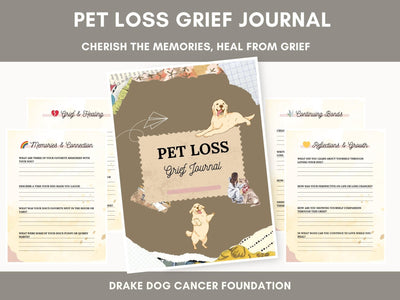
If you find yourself overwhelmed by the emotional toll of a potential diagnosis, please reach out for our free grief journal for dogs. It is designed to help you process the complex "anticipatory grief" that comes with canine cancer, allowing you to stay present in the moments that matter most.
You’ve got this. And we’ve got you.
Keep checking those lymph nodes. Keep watching those energy levels. And above all, keep cherishing the wag. The bond you share with your Golden is unbreakable, no matter what the future holds.
Want to stay informed on the latest in canine wellness and cancer prevention? Sign up for our newsletter and join a community dedicated to more good days.


