





It usually happens at 2:00 AM. You’re sitting on the floor, your hand resting on your dog’s flank, and you’re staring at a glowing phone screen. You’ve just typed it into the search bar: lymphoma in dogs survival rate.
We know that feeling. That cold, sinking sensation in the pit of your stomach. We’ve been there, too. When the vet says "lymphoma," the world seems to stop spinning, and suddenly, your life becomes a series of numbers, percentages, and clinical stages. You start calculating months, then weeks, then days.
But here is the truth we want you to hold onto today: Your dog is not a statistic. They don't know what a "median survival time" is. They don't know about B-cell or T-cell variations. They only know how they feel right now, in this moment, with you.
At the Drake Dog Cancer Foundation, we believe in a different way of looking at this diagnosis. We believe in shifting the focus from "how long" to "how well." Because while the clinical data is important for making decisions, it’s the quality of the life lived that truly matters.
The Reality of the Numbers (The Academic Side)
Before we talk about joy, let’s look at the facts. It’s okay to want to know the "average" lymphoma in dogs survival rate. It helps us prepare. It helps us plan.
Research shows us a few key things:
- Without treatment: Sadly, if left untreated, the average survival time is often quite short, typically between 4 to 6 weeks.
- With standard chemotherapy (CHOP): This is the gold standard of care. About 80-90% of dogs achieve complete remission. On average, these dogs live 10 to 14 months, with about 25% of them living two years or longer.
- B-Cell vs. T-Cell: These are the two main types. B-cell lymphoma generally responds better to treatment, with survival rates often reaching the 12-24 month mark. T-cell lymphoma can be more aggressive, with averages closer to 6-8 months.
- Substage A vs. Substage B: Dogs who feel "fine" at the time of diagnosis (Substage A) generally have a better prognosis than those who are already showing signs of illness like vomiting or lethargy (Substage B).
These numbers are evidence-based and research-driven. They give us a framework. But they are not a final sentence. They are averages, and averages are made of outliers, dogs who beat the odds and live far beyond the "standard" window.

Why We Prioritize Joy Over Statistics
When we fixate solely on the lymphoma in dogs survival rate, we run the risk of missing the very thing we are trying to save: the life itself.
A dog doesn’t care if they have 300 days or 3,000 days left. They care about the sunbeam on the carpet. They care about the smell of the grass. They care about the way you say "Good boy" or "Good girl."
If we spend every day in a state of clinical mourning, we lose the time we have left. We’re here to help you move from a state of fear into a state of empowered partnership. We want to help you create a life that is full, even if it is shorter than we’d like.
Introducing the "Joys of Life" Scale
How do you know if you're doing the right thing? This is the question that haunts every pet parent. To help you answer it, we use something called the Joys of Life Scale.
Instead of just looking at "survival," we look at "thriving." We encourage you to track five specific areas of your dog's daily life:
- Appetite: Are they excited about dinner? Are they enjoying their treats?
- Engagement: Do they lift their head when you walk into the room? Do they still want to be near the family?
- Comfort: Is their pain managed? Are they breathing easily?
- Mobility: Can they get up and move around to their favorite spots?
- The "Tail Wag" Factor: Are there still moments of pure, unadulterated canine happiness?
If the "joy" side of the scale is tipping higher than the "illness" side, you are winning. Regardless of what the calendar says, you are providing a beautiful life.
Tracking the Journey: Tools for Your Peace of Mind
One of the hardest parts of a lymphoma diagnosis is the "mental load." Keeping track of appointments, medications, side effects, and "good days" is exhausting.
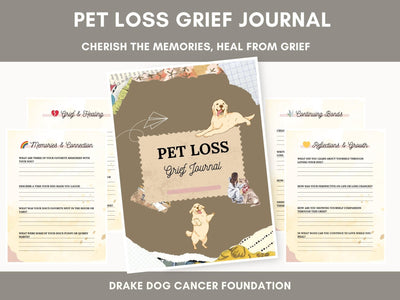
We’ve found that when parents have a structured way to record these things, their anxiety levels drop. You don't have to keep it all in your head. Our dog cancer journals are designed to be a lifeline during this time.
By using a physical or digital tracker, you can look back and see patterns. Sometimes, we feel like a dog is having a "bad week," but when we look at our tracker, we realize it was just one bad afternoon followed by four great ones. Data can actually be a source of comfort when it’s used to track happiness rather than just decline.

Balancing Conventional and Holistic Care
We believe in an "all-hands-on-deck" approach. While chemotherapy is the most effective way to drive lymphoma into remission, we also look at how dog health and wellness can support the body during that process.
- Evidence-Based Nutrition: What you put in the bowl matters. A diet low in simple sugars and high in high-quality proteins can help support a body fighting cancer. You can explore some of our curated dog food options that focus on clean, nutrient-dense ingredients.
- Herbal Support: Many of our families find that herbal products can help manage the side effects of conventional treatment, such as nausea or inflammation, keeping that "Joys of Life" score high.
- Comfort First: Whether it’s specialized supplements or simple lifestyle changes, our goal is to keep them feeling like themselves for as long as possible.
We Are Here For You
If you are reading this today and your heart is heavy, please know that you aren't walking this path alone. The Drake Dog Cancer Foundation was built on the belief that every dog deserves a champion, and every pet parent deserves a guide.
We don't offer false hope, but we do offer real help. We offer tools to manage the day-to-day, resources to understand the science, and a community that understands the depth of the bond you share with your dog.
Instead of focusing on the lymphoma in dogs survival rate as a countdown, try to see it as a reminder to make today count. Take the extra walk. Buy the "illegal" cheeseburger. Take the photos.

A Shared Journey
You are doing a great job. The fact that you are searching, learning, and trying to find the best path for your dog is proof of your love.
Whether you need common ailments guidance or just a place to find memories and keepsakes for the future, we have built this foundation to be your home base.
Focus on the wag. Focus on the breath. Focus on the love.
We’re here for you, every step of the way.
For more resources, guidance, and support tools, please visit our full collection of resources designed specifically for families navigating a canine cancer diagnosis.


