





You may be reading this with your dog asleep beside you, a bandage still on a shaved leg from recent tests, or with your phone full of notes you barely remember taking. You heard a word you may never have heard before, or hoped you'd never hear at all: osteosarcoma.
If that's where you are, take one breath and start here. What is osteosarcoma in dogs? It’s a cancer that starts in bone. It’s serious, it’s painful, and it moves fast. But there is still a path forward. Families make thoughtful, loving decisions about this diagnosis every day, and your next steps can be clear even if your emotions aren't.
Receiving the Osteosarcoma Diagnosis
One family is staring at an X-ray on a screen. Another is standing in a parking lot after the appointment, trying to remember what the veterinarian just said. Many people hear the same thing first: the limp was not a simple strain, and the bone looks suspicious for osteosarcoma.
That moment can make the next hour feel blurry.
Osteosarcoma is a primary bone cancer in dogs. It is the diagnosis your veterinary team worries about when a painful bone lesion appears aggressive on imaging, especially in a large-breed dog. Doctors often move quickly because this disease can cause significant pain early, and delays can make an already hard situation feel harder.
The first thing to know is practical. A diagnosis like this starts a decision process. It does not require you to solve every part of it today.
I tell families to treat the first 48 hours like building a roadmap after a storm. You do not need to drive the whole route at once. You need the next few turns, clear records, good pain control, and one calm conversation at a time.
What this diagnosis means today
Your choices usually fall into a few broad paths. Some families consider surgery and follow-up treatment. Some focus on pain relief and time at home. Some need a short pause to meet with a veterinary oncologist, talk as a family, and understand what each option would mean for their dog's comfort and daily life.
That pause is reasonable.
A strong first-day plan looks like this:
- Ask for copies of everything: X-rays, radiology notes, bloodwork, cytology or biopsy reports, and the visit summary.
- Clarify the immediate pain plan: Ask what medication starts today, what side effects to watch for, and what would count as an urgent change.
- Write down your dog's baseline: Appetite, sleep, willingness to walk, ability to rise, bathroom habits, and where touch seems painful.
- Book the next decision-making appointment: A consult with a veterinary oncologist or surgeon can turn a frightening word into specific options.
- Choose one family point person: One notebook, one shared document, or one text thread prevents missed details.
- Use support early: Drake Dog Cancer Foundation can help families organize questions, understand common next steps, and find emotional support while decisions are still fresh.
One more point often helps. Suspicion on X-ray and a confirmed diagnosis are related, but they are not always the same thing. Your veterinarian may discuss aspirates, biopsy, chest imaging, or other staging tests before recommending a full treatment plan. That can feel like a lot of steps after an already upsetting visit, but each step answers a different question.
Families also worry about guilt. Did I wait too long? Did I miss signs? In most cases, no. Osteosarcoma often first looks like something ordinary, such as a mild injury or arthritis flare. Concern usually rises only after the limp persists, the pain increases, or imaging shows changes in the bone.
Practical rule: Your first job is to define the problem in front of you. Your second job is to choose the next kind step for your dog.
If you feel too overwhelmed to know what to ask, start small. Ask, "What do we know for sure today?" Then ask, "What do we need to know before making the next decision?" That sequence gives worried families something solid to hold onto, and it helps turn panic into a plan.
What Happens Inside Your Dog's Bones
A healthy bone is busy all the time. Old bone is removed, new bone is laid down, and the whole structure stays strong because those jobs stay balanced. I often explain it like a construction site. There is a crew taking out worn material and a crew putting solid support back in its place.
In osteosarcoma, some of the bone-forming cells stop following the normal plan. They produce disorganized, poor-quality bone and cancer tissue instead of the strong framework your dog needs. From the outside, a limb may look only slightly swollen at first. Inside, the bone can already be weaker, more inflamed, and much more painful than it appears.

That loss of strength helps explain a pattern many families find confusing. A dog may seem to have a minor strain, then worsen over days or weeks without any clear new injury. The reason is that the problem is not only pain around the bone. The bone itself is changing.
This cancer also tends to grow in parts of the skeleton that carry a lot of force, especially the long bones of the legs. Large and giant breed dogs are affected more often than small dogs, and many cases are diagnosed in adulthood, though younger dogs can develop it too. Certain breeds appear more often in osteosarcoma case groups, which suggests that inherited risk plays some role.
That point matters emotionally as much as medically. If your dog has just been diagnosed, breed risk or body size may help explain why this happened. It does not mean you caused it, missed a prevention step, or made the wrong everyday choices.
Owners often ask whether fast growth, diet, prior injuries, yard chemicals, water, or supplements played a part. Those are reasonable questions. For many of them, veterinary medicine does not have firm answers yet. Osteosarcoma is a disease with real patterns, but not a single clear cause in most dogs.
For a newly diagnosed family, the most useful next step is to sort questions into two groups. One group affects your dog today, such as pain, fracture risk, and what testing is still needed. The other group is worth writing down for a later conversation, such as possible environmental or genetic influences. Keeping those separate can lower panic and help you focus on decisions that change your dog's comfort right now.
A simple roadmap helps:
- Ask your veterinary team whether the bone appears at risk for fracture.
- Ask what kind of pain control should start now, if it has not already.
- Write down any history you want to discuss later, including growth rate, previous orthopedic issues, supplements, or household exposures.
- Save those background questions in one place so they do not get lost during the first wave of appointments.
- If you need help organizing those questions, Drake Dog Cancer Foundation can help families prepare for oncology visits and sort urgent decisions from later concerns.
The main idea to hold onto is this. Osteosarcoma is not just a "spot on an X-ray." It is a cancer that changes the bone's structure from the inside, which is why early pain support and a clear plan matter so much.
Recognizing the Symptoms of Osteosarcoma
Bella, a 7-year-old Golden Retriever, started with a slight limp after her morning run. Her owner thought it was a strain, so she rested Bella for a few days and cut back on fetch. But the limp didn’t fade. Bella became slower getting up, less eager to turn sharply, and more protective when her front leg was touched.
That’s a common pattern. Osteosarcoma often starts in a way that looks ordinary.

What owners usually notice first
The first clues are often subtle changes in movement or mood rather than something dramatic. Your dog may still wag, still eat, and still want to be near you. But something is off.
Common signs include:
- A limp that doesn't resolve: especially if rest doesn't bring clear improvement.
- Swelling over a limb or near a joint: sometimes firm, sometimes more obvious over time.
- Pain when the area is touched: your dog may pull away, tense up, or look back at you.
- Reluctance to play or exercise: a dog who usually races to the door may hesitate.
- General slowing down: more sleeping, less enthusiasm, less willingness to jump into the car.
These signs can overlap with arthritis, a soft tissue injury, or a simple strain. That's exactly why osteosarcoma can be missed early.
When a limp needs more than rest
A short-lived limp after hard exercise isn't unusual. A persistent limp is different. If a larger dog keeps limping, especially with swelling or increasing pain, that deserves imaging sooner rather than later.
If your dog has a limp that keeps returning, worsens, or doesn't improve with rest, ask for an exam and imaging instead of repeating the same home care plan.
This video may help you recognize how bone cancer symptoms can show up in daily life and why early evaluation matters.
A practical home example helps here. If your dog used to bound up three porch steps and now pauses, shifts weight, or asks for help, don't assume it's “just aging.” Write it down. That note is useful to your veterinarian.
Your Dog's Path to Diagnosis and Staging
You bring your dog in for a limp. By the end of the visit, you may be hearing words like lesion, biopsy, staging, and chest films. That shift is jarring. It helps to know that diagnosis usually follows a clear sequence, and each step answers a different question.

The usual sequence
Veterinarians are usually trying to answer three things. Does this bone look like osteosarcoma. Do we need a sample to confirm it. Has the cancer spread in ways we can see right now.
Most dogs move through a path like this:
-
Physical exam
Your veterinarian checks gait, swelling, pain, and how stable the limb feels. One immediate concern is fracture risk, because a bone weakened by cancer can break with normal activity. -
X-rays of the affected bone
Osteosarcoma often creates a recognizable pattern. Parts of the bone are being destroyed while the body also lays down disorganized new bone. On an X-ray, that can look irregular and aggressive rather than smooth and worn, which helps distinguish it from ordinary arthritis. -
Sampling the lesion
A needle sample or biopsy may be recommended if the imaging is not definitive, if the location is unusual, or if the result would change treatment choices. In some cases, the X-ray pattern is so characteristic that your team may discuss proceeding without a biopsy. -
Staging tests
These often include chest imaging and baseline bloodwork. The goal is twofold: check for visible spread and make sure your dog is healthy enough for anesthesia, surgery, chemotherapy, or radiation if those are being considered. -
Treatment planning conversation
This is the point where the diagnosis becomes a roadmap. Ask for the plan in order: what needs to happen today, what can wait a few days, and what decision depends on which test result.
If the terms stage, metastasis, and prognosis start to blur together, this guide on understanding the stages of osteosarcoma in dogs can make the wording easier to follow.
Why chest X-rays matter even when they look normal
This part causes a lot of confusion. A family hears that the lungs look clear, then hears the oncologist talk about possible spread and recommend treatment aimed at disease beyond the leg. Both statements can be true.
Micrometastasis means tiny groups of cancer cells have likely traveled elsewhere but are still too small to show up on imaging. Chest X-rays are like looking at a map from high altitude. They can show larger, visible spots, but they cannot rule out every microscopic cell. So normal chest films are good news, but they do not prove the cancer is limited to one bone.
That distinction matters because it shapes the treatment discussion from the start.
Practical steps for the first week after diagnosis
This is often the point where families feel emotionally flooded. A short checklist helps.
- Ask what should happen first. Is the priority pain control, preventing a fracture, meeting with oncology, or scheduling more imaging?
- Clarify activity limits. Many dogs need leash walks only and no running, stairs, jumping, or rough play until the bone has been fully assessed.
- Request copies of records and images. Having X-rays, lab work, and notes in one folder can save time if you seek a second opinion or referral.
- Bring one support person if possible. One person can listen while the other asks questions.
- Use trusted support early. Drake Dog Cancer Foundation resources can help you organize questions, understand common terms, and prepare for specialist visits without having to sort through conflicting advice online.
Questions to bring to the appointment
Specific questions make hard conversations more manageable:
- What findings make you suspect osteosarcoma rather than another bone problem?
- Do you recommend biopsy before treatment, or is the imaging pattern strong enough to proceed?
- What staging tests do you want before we decide on surgery or other care?
- If the chest X-rays are clear, how does that change treatment planning, if at all?
- How fragile is this bone right now? Should activity be restricted immediately?
- What do we need to decide today, and what can we think about for a day or two?
Clear imaging means no visible spread was found on that test. It does not rule out microscopic disease.
Bring a notebook, or use your phone to record the plan with permission. Families often miss details because the emotional load is high. A written plan, a copy of the images, and a short list of next steps can turn a frightening day into something more manageable.
Navigating Your Dog's Treatment Options
You may be sitting in the exam room hearing several plans at once. Surgery. Chemotherapy. Radiation. Pain control. It can feel like someone handed you a road map with half the street names missing.
A clearer way to approach this is to sort each option by its job. One treatment may remove the main source of pain in the bone. Another may try to slow cancer cells that are too small to see on scans. Another may focus on comfort, mobility, and good days at home. Your dog’s plan depends on the tumor’s location, your dog’s strength in the other limbs, other health problems, and what your family can realistically manage week to week.
Comparing the main treatment paths
| Treatment Path | Primary Goal | What Families Should Know |
|---|---|---|
| Amputation | Remove the diseased, painful limb | Often gives the fastest and biggest relief from pain caused by the bone tumor itself. Best for dogs who can bear weight well on the other three limbs. |
| Amputation plus chemotherapy | Remove the painful tumor and address cancer cells elsewhere in the body | Commonly recommended for families choosing the most aggressive treatment path. Usually means repeat visits, bloodwork, and monitoring for side effects. |
| Limb-sparing surgery | Remove the tumor while keeping the leg, in carefully selected cases | Only appropriate for some dogs, based on tumor location and surgical anatomy. Recovery can be more demanding, and complications need honest discussion up front. |
| Palliative radiation and medical management | Reduce pain and improve day-to-day comfort without removing the limb | Often helpful when surgery is not a good fit or a family wants a less invasive plan. Usually combined with pain medications and home support. |
| Comfort-focused care at home | Keep pain controlled and protect quality of life | A reasonable choice for some families. This path still needs structure, close communication with your veterinary team, and a plan for changes in mobility or pain. |
One practical question helps narrow the list: what problem are we trying to solve first?
If your dog is painful because the tumor has turned the bone into something brittle and unstable, amputation can work like removing a cracked, weight-bearing beam from a house before it fails. For many dogs, that changes comfort quickly because the source of the bone pain is gone. Families often fear this option more than dogs do. Dogs care much more about whether they hurt and whether they can still eat, rest, go outside, and be with you.
Amputation is not the right choice for every dog. A dog with severe arthritis in the remaining limbs, advanced neurologic disease, or major weakness may struggle more on three legs. Ask your veterinarian and, if available, the surgeon to evaluate the whole dog, not only the cancer site. Video of your dog walking at home can help because stress and slippery clinic floors can hide or exaggerate mobility problems.
Chemotherapy is a separate question from surgery. Surgery addresses the visible bone tumor. Chemotherapy is usually discussed because osteosarcoma often behaves as a body-wide disease, even when scans show only one obvious spot. That can be confusing, so here is the plain version: the X-ray shows the fire you can see, while chemotherapy is meant to address sparks that may already have traveled elsewhere.
Limb-sparing surgery can sound more appealing at first because the leg stays in place. The harder truth is that keeping the limb does not always mean an easier recovery or a better fit. It usually requires very careful case selection, close follow-up, and a family prepared for bandage care, rechecks, and possible complications. In the right patient, it can be a thoughtful option. In the wrong patient, it can add stress without giving the comfort a family hoped for.
Palliative care deserves the same seriousness as surgery because it is still active treatment. It may include pain medicine, palliative radiation, activity changes, and home adjustments to make standing, walking, and resting easier. Families sometimes worry that choosing palliative care means they are doing less for their dog. In many cases, they are doing exactly what their dog needs most.
A useful next step is to ask your veterinary team to outline the top two reasonable plans for your dog, not every possible plan in theory. Then compare them side by side: expected benefit, likely burden, cost, number of visits, recovery needs, and what warning signs would mean the plan is no longer helping. Drake Dog Cancer Foundation resources can help you organize those questions, track what each clinician recommends, and prepare for the practical parts of treatment such as transportation, home setup, and caregiving help.
For a plain-language overview of surgery, chemotherapy, radiation, and comfort care, this guide on breaking down dog cancer treatments can help you prepare for your oncology conversation.
Two families can choose different paths and both make good decisions. A strong middle-aged dog with healthy joints in the other limbs may do well with amputation and additional therapy. An older dog who already struggles to rise, slips on the floor, and becomes anxious with frequent visits may be better served by palliative treatment focused on comfort. The best plan is the one that gives your dog the most comfort and function with a level of treatment your family can carry through consistently.
Managing Pain and Maximizing Quality of Life
Pain control isn't a side issue in osteosarcoma care. It sits at the center of every plan. Bone cancer hurts because the tumor disrupts normal bone structure and can make even ordinary movement painful.
Some dogs need a combination of medications rather than one drug alone. Your veterinarian may use anti-inflammatory medicine, nerve pain medication, and other supportive tools together. If your dog seems sedated, restless, unwilling to eat, or still painful, report that quickly. Pain plans often need adjustment.
What helps at home right away
Small changes in the house can reduce strain and make your dog feel safer:
- Create traction: put non-slip rugs on tile or wood floors where your dog turns, rises, or eats.
- Lower the effort of daily life: use ramps when possible and block access to stairs if they cause slipping.
- Choose supportive bedding: an orthopedic bed in a quiet spot helps dogs rest more soundly.
- Use a mobility harness: many dogs move more confidently when you support the chest or rear during transitions.
A simple example: if your dog struggles to get up after resting, place the bed where there’s grip underfoot and enough room to rise without twisting. That one change can reduce pain spikes several times a day.
Tracking good days honestly
Families often make better decisions when they stop relying on memory alone. Keep a short daily log with a few practical markers:
- Morning movement: easy, stiff, or difficult
- Appetite: normal, reduced, refused
- Enjoyment: sought affection, wanted a short walk, played, or seemed withdrawn
- Pain signals: panting at rest, guarding a limb, trouble settling
- Sleep quality: restful or interrupted
One option some families use is the Joys of Life Scale and a Quality of Life Guide to separate fear from observation. A parent might notice, for example, that their dog still lights up for a stroller walk, a favorite snack, and lying in the sun. That can support a special outing on a good day. If those joys disappear and pain keeps rising, the same notes can guide a harder conversation with clarity.
Palliative care can still be active care
Palliative care may include medication changes, rechecks, home mobility tools, and discussions about treatments aimed at comfort rather than tumor removal. It often works best when families decide in advance what matters most to their dog.
A good day doesn't need to look dramatic. Eating well, resting comfortably, greeting you at the door, and enjoying one favorite activity can be meaningful markers.
If you're exploring a comfort-focused path, this overview of palliative care for dogs with cancer can help you frame the right questions for your veterinary team.
Making Empowered Decisions for Your Family
The hardest part of osteosarcoma isn't only medical. It's personal. You may be weighing cost, time off work, transportation, lifting a large dog safely, recovery care at home, and the emotional reality of anticipatory grief all at once.
People sometimes think a loving decision should feel obvious. It often doesn't. A loving decision may still feel painful, uncertain, and imperfect.
Build a decision framework you can live with
Instead of asking, “What would the ideal owner do?” ask better questions:
- What does my dog need medically right now?
- What level of aftercare can I realistically provide every day?
- How does my dog handle clinics, confinement, medication, and change?
- Will this plan relieve suffering, or mainly prolong a hard period?
- If treatment complications happen, what are we willing to do next?
These questions move you from panic into decision-making.
Separate guilt from responsibility
Guilt sounds like this: “If I loved my dog enough, I'd do everything.” Responsibility sounds like this: “I will choose the plan that fits my dog and my household realistically.”
Those are not the same. Some families can manage surgery, transport, follow-up visits, and rehabilitation. Others can't, especially with a very large dog or other caregiving demands at home. That doesn't make the second family less devoted.
A practical tool here is a written journal. Keep one place for medication times, symptoms, appetite, mobility notes, questions for the oncologist, and your own emotional reactions. When people try to hold all of that in their heads, every day feels more chaotic than it is.
Use support instead of isolating
You don't have to process this alone. Support can come from your veterinary team, trusted friends, a grief counselor, or a community of owners who understand the rhythm of scans, medication alarms, and hard choices.
If you want a structured place to think through tradeoffs, this article on making decisions when your dog has osteosarcoma offers prompts you can use before your next appointment.
A real-world example: one couple kept arguing because one person focused on “more time” and the other focused on “less suffering.” Once they wrote down their dog's daily joys, mobility limits, and what post-op care would require, they realized they were both trying to protect the same dog in different ways. The conversation changed.
Your Questions Answered and Where to Find Support
The first days after an osteosarcoma diagnosis often feel like carrying a stack of papers in the wind. You are trying to hold onto medical facts, costs, schedules, and your own emotions at the same time. A short set of practical answers can make that load feel more manageable.
How much does osteosarcoma treatment cost
There is no single price because each dog's plan is built in stages. Costs can change based on imaging, biopsy needs, surgery, chemotherapy, pain medications, hospital type, and follow-up visits.
Ask your veterinary team for a written estimate broken into phases. One useful way to frame it is: what do we need to do now, what can wait, and what costs might come later if the cancer progresses or recovery is harder than expected. That turns a frightening total into a roadmap.
Can a special diet or supplements help
Food matters because dogs with cancer often eat less well when they are painful, stressed, or recovering from treatment. Good nutrition supports strength and day-to-day comfort, but it does not replace pain control or treatment directed at the tumor.
Supplements deserve the same careful review as prescription drugs. Bring each product, or a photo of the label, to your veterinarian and ask two simple questions: is it safe with my dog's current medications, and what result are we realistically hoping for? A short list is usually easier to track and safer than trying many things at once.
What about cannabis or CBD oil
This question comes up often. Some families are hoping for better comfort, appetite, or calmer nights.
CBD or other cannabis-based products may not be harmless just because they are sold as natural products. Strength and purity vary, and some can interact with other medications. Your veterinarian can help you weigh possible benefits against risks for your dog's specific situation.
Is there one place to organize this whole experience
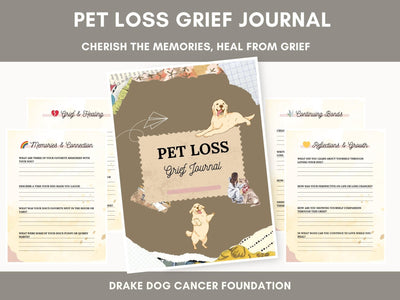
Yes. Many families feel steadier when they have one home base for questions, records, daily notes, and quality-of-life check-ins. The Drake Dog Cancer Foundation & Academy offers educational articles, a dog cancer journal, quality-of-life tools, a parent community, and guidance on topics such as grief support, nutrition, and complementary care.
That kind of support helps with more than information. It gives structure to days that can otherwise feel scattered.
What support matters most right now
Start with the supports that reduce confusion at home:
- One clear veterinary contact: know who to call if pain increases, your dog stops eating, or mobility suddenly worsens.
- One written home plan: keep medication times, feeding notes, activity guidance, and red-flag symptoms in one place.
- One record folder: save imaging reports, lab work, invoices, and appointment notes together.
- One emotional outlet: a trusted friend, counselor, journal, or support group can help you process decisions without carrying them alone.
You do not need to master every part of osteosarcoma this week. You need enough clarity to make the next decision with care.
If you're facing osteosarcoma with your dog right now, the next step can be simple and specific. The Drake Dog Cancer Foundation & Academy provides practical education, quality-of-life tools, journaling support, and a community for families trying to make informed, loving decisions one day at a time.


