My Dog With Cancer Has Pale Gums
Jan 31, 2026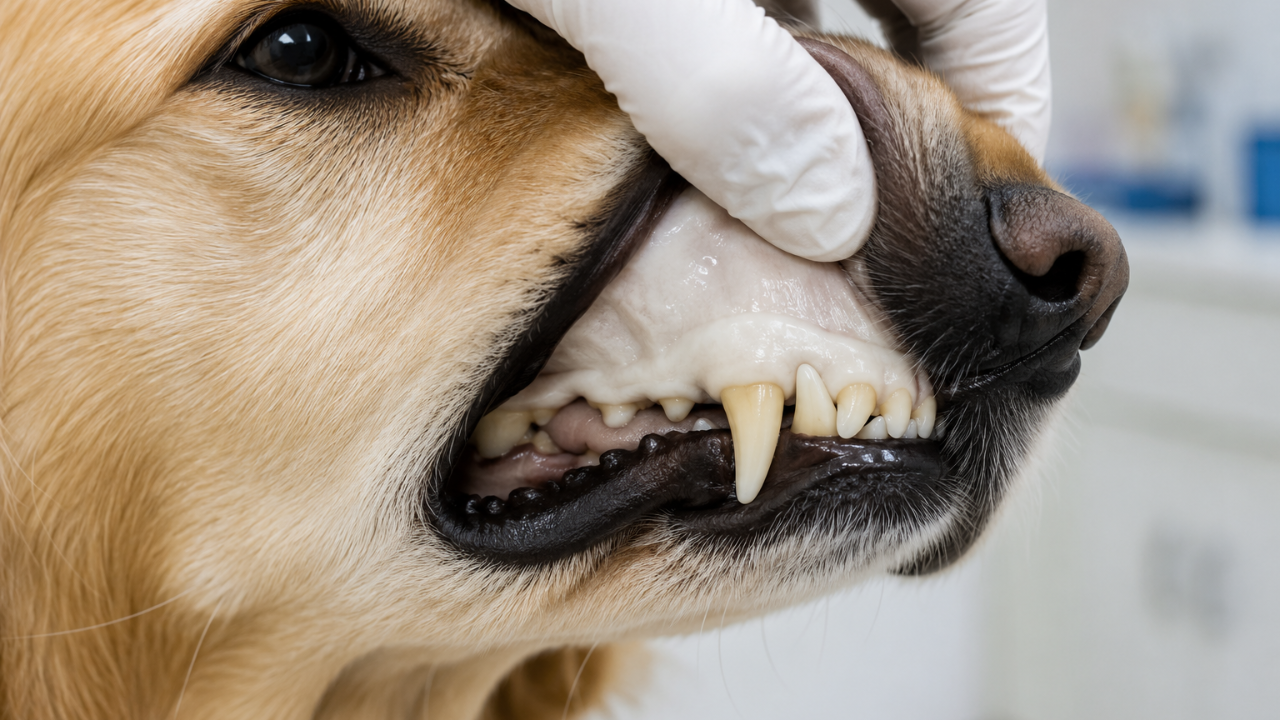
If your dog's gums are pale, white, or grey right now, treat this as an emergency and contact a veterinarian immediately. Do not wait until morning. Do not wait to see whether things improve.
Pale gums mean one of two things: your dog does not have enough red blood cells, or blood is not reaching the tissues properly. In a dog with cancer, the most common serious cause is bleeding inside the body, usually from a tumor of the spleen or liver that has ruptured. Hemangiosarcoma is the classic example, and acute collapse from internal bleeding is often the first sign that anything was wrong at all (Griffin et al., 2021).
There is one pattern that deserves naming immediately, because it costs dogs their lives. Some dogs collapse, then appear to recover within minutes, and seem almost normal again. That is not recovery. It happens when bleeding pauses temporarily, and it is characteristic of a slowly bleeding splenic tumor that will bleed again. A dog who has collapsed and then got up still needs to be seen today.
Call now. Read the rest afterwards.
Key points
- Pale gums in a dog with cancer are an emergency until proven otherwise.
- The most common serious cause is internal bleeding, usually from a ruptured splenic or hepatic mass.
- A dog who collapses and then seems to recover has not recovered. Go anyway.
- Fluid building up around the heart is another cause, and it produces pale gums, weakness, and collapse without any visible blood loss (Merck Veterinary Manual, 2024).
- Anemia can also build slowly, from chemotherapy suppressing the bone marrow, from cancer in the marrow itself, or from ongoing bleeding into the gut.
- Normal gums are pink and moist, and color should return within about two seconds after you press and release (Englar, 2019).
- Some dogs have naturally pigmented gums. Learn where your dog's usable pink tissue is before you need it, and use the inner eyelid if the gums are entirely black.
- If your dog is in hospice care and you have decided against further intervention, this is still a call, not a wait.
Detailed explanation
Why gum color tells you something
The gums are thin, well supplied with small blood vessels, and easy to see. Their color is a rough proxy for whether there are enough red blood cells circulating and whether blood is reaching the periphery at all.
When either fails, the gums lose color. Pale pink becomes very pale, then white or grey. This is why emergency clinicians look at gums within seconds of a dog arriving, and why it is one of the few genuinely useful things an owner can assess at home.
Internal bleeding, the cause that matters most
Hemangiosarcoma is a cancer of the cells lining blood vessels, and it forms blood-filled tumors that are prone to rupture. The spleen is the most common site, followed by the right side of the heart (Griffin et al., 2021). These tumors frequently cause no symptoms at all until the moment they bleed.
When a splenic tumor ruptures, blood pours into the abdomen. The dog becomes suddenly weak or collapses, the gums go pale or white, the heart races to compensate, and the abdomen may swell as it fills. Some dogs pant, some are cold to the touch at the extremities, and some seem confused.
Not every splenic mass is hemangiosarcoma, and not every dog bleeding into the abdomen has cancer. But a dog with a known cancer diagnosis who presents this way needs immediate assessment regardless of the eventual answer.
The collapse-and-recover trap
This deserves its own heading because it is the single most dangerous misunderstanding in this article.
Bleeding from a splenic tumor is often intermittent. The tumor bleeds, blood loss causes weakness and collapse, the body clamps down and the bleeding slows, and the dog gets up. Twenty minutes later they may be walking around, taking a treat, seeming tired but essentially themselves.
Owners very reasonably conclude that whatever happened has passed. It has not. The tumor that bled will bleed again, usually within hours to days, and the next bleed may be the one the dog does not survive. Episodic weakness and collapse that comes and goes is a recognized presentation of visceral hemangiosarcoma, reflecting repeated small bleeds rather than a resolved problem (Griffin et al., 2021).
If your dog collapsed and then got up, go. Take them today. The fact that they seem better is not evidence that they are.
Fluid around the heart
Some tumors grow on or near the heart, and the most common cause of pericardial effusion in dogs is hemangiosarcoma of the right atrium, followed by heart base tumors.
Blood or fluid collects in the sac around the heart. As pressure builds, the heart cannot fill properly, which is called cardiac tamponade. The result is poor circulation despite no visible blood loss: pale or muddy gums, delayed capillary refill, a racing heart, weak pulses, weakness, and collapse (Merck Veterinary Manual, 2024).
This one is worth knowing about because there is nothing to see. No swollen abdomen, no blood, nothing external. A dog can look simply weak and off-color while a genuinely treatable emergency is developing, and draining the fluid can produce dramatic improvement.
Signs that point this way include labored or rapid breathing, a swollen abdomen developing over days rather than minutes, exercise intolerance, and collapse associated with activity.
Anemia that builds slowly
Not all pale gums arrive suddenly. Some develop over weeks, and these dogs are often described by their owners as gradually slowing down.
Bone marrow suppression from chemotherapy. Conventional chemotherapy affects rapidly dividing cells, including those in the bone marrow (Christensen et al., 2026). Low white cells get most of the clinical attention, but red cells can drop too, particularly with repeated cycles.
Cancer in the bone marrow. Leukemia, advanced lymphoma, and multiple myeloma can crowd out normal blood cell production.
Anemia of chronic disease. Cancer itself interferes with red blood cell production and iron handling. This tends to be mild to moderate and slowly progressive.
Immune-mediated destruction. Occasionally the immune system begins destroying red blood cells, sometimes triggered by an underlying cancer. These dogs may also have yellow-tinged gums or eyes.
Slowly developing anemia is less dramatic but still needs assessment, because the dog has usually been compensating quietly for some time by the point it becomes visible.
Bleeding into the gut
Blood lost into the gastrointestinal tract does not appear as bleeding. It appears as black, tarry, foul-smelling stool, and as pale gums once enough has been lost.
Mast cell tumors are the most common cause of paraneoplastic gastrointestinal ulceration in dogs, driven by histamine released from tumor granules stimulating gastric acid production (Merck Veterinary Manual, 2025). Non-steroidal anti-inflammatory drugs and steroids can also contribute, and gastrointestinal tumors can bleed directly.
If your dog has pale gums and you have seen black stool, mention both together when you call. That combination narrows things considerably.
Other causes of poor circulation
Severe infection can cause circulatory collapse. In a dog receiving chemotherapy, fever combined with low white cell counts is an oncologic emergency (Christensen et al., 2026), and a dog in septic shock may have pale or muddy gums.
Severe pain and shock from any cause reduce peripheral circulation. So can dehydration from prolonged vomiting or diarrhea.
How to check gums properly
Lift your dog's upper lip gently, near the canine tooth. Look at the gum above the teeth in reasonable light. Natural daylight or a phone torch both work, but not a colored light.
You are assessing two things. Color should be pink and moist. Think of a healthy pink rather than white, grey, blue, or yellow. Capillary refill time is checked by pressing a fingertip firmly on the gum for a second so the spot blanches white, then releasing and counting how long the pink takes to return. Under about two seconds is normal (Englar, 2019). Longer than that suggests circulation is compromised.
If your dog's gums are pigmented. Many dogs have black or spotted gums, and some breeds have them almost entirely. Pigmented mucosa is a normal variation reflecting higher melanin concentration rather than a problem (Englar, 2019).
Most pigmented dogs still have some pink tissue somewhere. Look at the inner surface of the lip, under the tongue, or the gum above a different tooth. If there is genuinely none, use the conjunctiva instead: gently pull the lower eyelid down and look at the tissue lining it. In female dogs the vulva also works, and the inner surface of the ear flap can help in some dogs.
Do this now, while your dog is well. Ten seconds of looking at your dog's normal gums today is worth far more than any description in this article, because what you are watching for is a change from their baseline. Ask your veterinary team to show you at the next appointment and to tell you which site works best for your particular dog.
What "pale" actually looks like
This is genuinely hard to judge, and owners routinely doubt themselves.
Some practical guidance. Compare against a photograph of your dog's normal gums if you have one, which is a good reason to take one. Compare against your own gums or another healthy dog in the house. Combine color with refill time, because a slow refill alongside questionable colour is more meaningful than either alone. And weigh it against everything else: a dog with slightly questionable gums who is bright, eating, and behaving normally is a different situation from one who is quiet, weak, and breathing faster than usual.
When you are genuinely unsure, call and describe what you see. Veterinary teams answer this question constantly and would far rather talk you through it than see your dog hours later than they should have.
What will happen when you get there
Knowing this may make the decision to go easier.
Assessment is quick. Gum color, refill time, heart rate, pulse quality, and breathing take under a minute. A packed cell volume, which measures the proportion of blood made up of red cells, takes only a few minutes and a very small sample.
If internal bleeding is suspected, a focused ultrasound of the abdomen can identify free fluid quickly, often at the bedside. A small sample of that fluid confirms whether it is blood. If the heart is the concern, an ultrasound of the chest looks for fluid around it, and draining that fluid can stabilize a dog rapidly.
From there the conversation turns to options, which will depend on what is found, what your dog's overall situation is, and what you want. You are allowed to ask what each step costs before agreeing to it.
If you have already decided against further treatment
Some readers will have a dog with a known, advanced cancer and a considered decision not to pursue surgery or hospitalization. If that is you, this section is for you.
Pale gums in that context still warrant contact, but the purpose is different. A dog bleeding internally can be in distress, and there are things that can be done for comfort even when intervention is not the plan. Your veterinary team can advise on what is happening, how much time is realistic, whether your dog is suffering, and whether this is the point at which euthanasia is the kindest option.
Making that call is not giving up, and calling does not commit you to anything. It gets you information and support at exactly the moment those are hardest to find alone. If you have a hospice or palliative care veterinarian, this is what they are for, and many offer out-of-hours guidance.
When to contact a veterinarian
Go to an emergency service immediately if your dog has pale, white, or grey gums, particularly alongside:
- Collapse or inability to stand, including if they collapsed and then got up
- Weakness, wobbliness, or unwillingness to move
- Rapid or labored breathing
- A swollen, distended, or painful abdomen
- A racing heart, or a pulse that feels weak or hard to find
- Cold paws, ears, or legs
- Confusion or unresponsiveness
- Black tarry stool, or vomit that looks like coffee grounds
Call your veterinary practice today if:
- Your dog's gums seem paler than usual but they are otherwise bright and eating
- Capillary refill seems slower than normal
- Your dog has been gradually slowing down, tiring easily, or sleeping more over recent weeks
- Your dog is on chemotherapy and seems more tired than usual
Do not wait for a scheduled appointment to raise pale gums. This is not a symptom that keeps.
Questions to ask your veterinarian
- Are my dog's gums actually pale, or is this normal for them? Can you show me?
- Where is the best place on my dog to check color and refill time?
- Can we take a photo of my dog's normal gums for me to compare against?
- Given my dog's cancer type, what is the most likely cause if this happens?
- Should I be watching for internal bleeding specifically, and what would the first signs be?
- What is my dog's current red cell count, and is it changing between visits?
- Who do I call out of hours, and which emergency clinic should I go to?
- If my dog bleeds internally and we have decided against surgery, what is the plan for keeping them comfortable?
Sources
Christensen, J., Johnson, K., Ettinger, S., Garrett, L., Gordon, I., Ireifej, S., Love, A., & Wisecup, M. (2026). AAHA oncology guidelines for dogs and cats. Journal of the American Animal Hospital Association, 62(1), 1–37. https://doi.org/10.5326/JAAHA-MS-7549
Englar, R. E. (2019). Abnormal mucous membranes and capillary refill time. In Common clinical presentations in dogs and cats. Wiley. https://doi.org/10.1002/9781119414612.ch38
Griffin, M. A., Culp, W. T. N., & Rebhun, R. B. (2021). Canine and feline haemangiosarcoma. Veterinary Record, 189, e585. https://doi.org/10.1002/vetr.585
Merck Veterinary Manual. (2024). Pericardial disease in dogs and cats. https://www.merckvetmanual.com/circulatory-system/various-heart-diseases-in-dogs-and-cats/pericardial-disease-in-dogs-and-cats
Merck Veterinary Manual. (2025). Gastrointestinal paraneoplastic syndromes in small animals. https://www.merckvetmanual.com/generalized-conditions/paraneoplastic-disorders-in-small-animals/gastrointestinal-paraneoplastic-syndromes-in-small-animals
This article is for educational purposes only and is not a substitute for veterinary care. Pale gums can indicate a life-threatening emergency. If your dog has pale, white, or grey gums, contact a veterinarian or emergency service immediately rather than waiting to see whether the situation improves.
Reviewed by: Amber L. Drake, PhD
Dr. Amber L. Drake is a board-certified holistic health practitioner, canine clinical herbalist, educator, and founder of the Drake Dog Cancer Foundation and Drake Dog Academy. She is dedicated to helping pet parents better understand canine cancer, treatment options, nutrition, quality of life, and supportive care through compassionate, evidence-informed education. Her work combines professional training, practical resources, and firsthand insight from supporting thousands of dog families through the challenges of a cancer diagnosis.
Stay connected with news and updates!
Join our mailing list to receive the latest news and updates from our team.
Don't worry, your information will not be shared.
We hate SPAM. We will never sell your information, for any reason.