
My Dog Was Just Diagnosed with Cancer
You Just Heard The Word Cancer
Most people do not remember much of what was said after it.
You may have driven home without recalling the drive. You may be holding a folder of paperwork you have not opened. You may have already spent hours reading things online that frightened you more.
You may find yourself wondering:
- How long does my dog have?
- Is my dog in pain right now?
- Did I miss something?
- Should we treat this or not?
- How much is this going to cost?
- Will treatment make my dog feel worse?
- What do I do first?
- Who should I be talking to?
- How do I decide any of this?
Almost nothing has to be decided today.
Very few cancer diagnoses in dogs require a decision within hours. Most families have days or weeks to gather information, ask questions, and think clearly. The pressure you feel right now is real, but it is usually coming from fear rather than from the medical situation.
This page will help you understand what happens next, what to ask, and what can safely wait.

We built a roadmap based on pet parent feedback...
Feeling overwhelmed already? Take the journey step-by-step with our Dog Cancer Roadmap program.
Start Module 1 Free (Module 1 is completely free. Unlock all six modules for $9.99 lifetime access)
First, Does My Dog Need Veterinary Care Now?
Most newly diagnosed dogs are stable and can be assessed on a normal schedule.
Some cancers, however, cause problems that need urgent attention, and it is worth checking this before anything else.
Seek emergency veterinary care immediately for:
- Difficulty breathing, open-mouth breathing at rest, or breathing that takes visible effort
- Pale, white, grey, or blue gums
- Collapse or loss of consciousness
- Sudden severe weakness
- A suddenly enlarged, swollen, or painful abdomen
- Uncontrolled bleeding
- A seizure lasting more than five minutes, or repeated seizures without full recovery in between
- Straining to urinate without producing urine
- Repeated unproductive retching
- Inability to swallow
- Sudden inability to stand or walk
Contact your veterinary practice promptly, within a day or two, if your dog:
- Has stopped eating entirely
- Is vomiting repeatedly
- Has black, tarry stool or blood in the stool
- Is drinking and urinating far more than usual
- Seems painful, restless, or unable to settle
- Is markedly weaker or more tired than usual
- Has a lump that is growing quickly, bleeding, or ulcerating
- Has developed a new lameness
- Has had an unexplained episode of weakness or collapse that resolved
Do not wait to see whether these settle on their own.
Read More: What Symptoms Should Never Be Ignored?What To Do In The First Few Days
You do not need a plan yet. You need information.
Get The Specifics Of The Diagnosis
Ask your veterinary practice for a copy of everything — the pathology report, imaging reports, and bloodwork.
You are entitled to these records. Having them in hand makes every conversation that follows more useful, and it means you are not relying on memory from an appointment you were too shaken to absorb.
Write Down What You Actually Know
Most families discover they know less than they thought. Try to answer:
- What is the specific name of my dog's cancer?
- Where is it?
- Has it spread, and what was done to check?
- Was a grade given?
- Was a stage given?
- Was the diagnosis confirmed by a pathologist, or is it presumed?
If you cannot answer these, that is your first phone call.
Ask Whether Anything Is Time-Sensitive
This is the single most useful question in the first few days.
Some situations genuinely benefit from moving quickly. Most do not. Ask your veterinarian directly: is there anything about my dog's situation that means we should not wait a week or two?
Start Writing Things Down
Keep a simple record from today — appetite, energy, comfort, medication, and anything unusual.
You will be asked what changed and when, and memory becomes unreliable when you are frightened and tired.
Use the Free Dog Cancer TrackerUnderstand The Difference Between Grade And Stage
These two words are used constantly and are frequently confused.
Grade describes how aggressive the cancer cells look under a microscope. It comes from a pathologist examining tissue, and it predicts how the cancer is likely to behave.
Stage describes how far the cancer has spread through the body. It comes from imaging, bloodwork, and lymph node sampling.
For some cancers, grade matters far more than stage. For others, the reverse is true.
Ask your veterinarian which one matters more for your dog's specific cancer, and what your dog's numbers mean in that context.
Read More: What Does The Stage Or Grade Of My Dog’s Cancer Mean?Ask Whether You Should See A Veterinary Oncologist
Many families do not know that veterinary oncologists exist.
They do. A board-certified veterinary oncologist has completed additional years of specialty training and certification, and they see these cancers every day rather than occasionally.
A consultation does not commit you to treatment.
What it gives you is an accurate picture of the options — including the option of doing nothing invasive. Many families come away having decided on less treatment than they feared, not more, simply because someone finally gave them clear numbers.
Ask your veterinarian:
- Would you recommend a referral for my dog?
- Where is the nearest specialist, and how long is the wait?
- If we cannot travel, could you consult with an oncologist by phone?
- What would that consultation cost?
If distance or cost makes a referral impractical, many oncologists offer phone consultation with your regular veterinarian, and many general practices can deliver simpler treatment protocols locally with specialist guidance.
Read More: What Does My Primary Veterinarian Do When My Dog Has Cancer? Do They Have Limitations?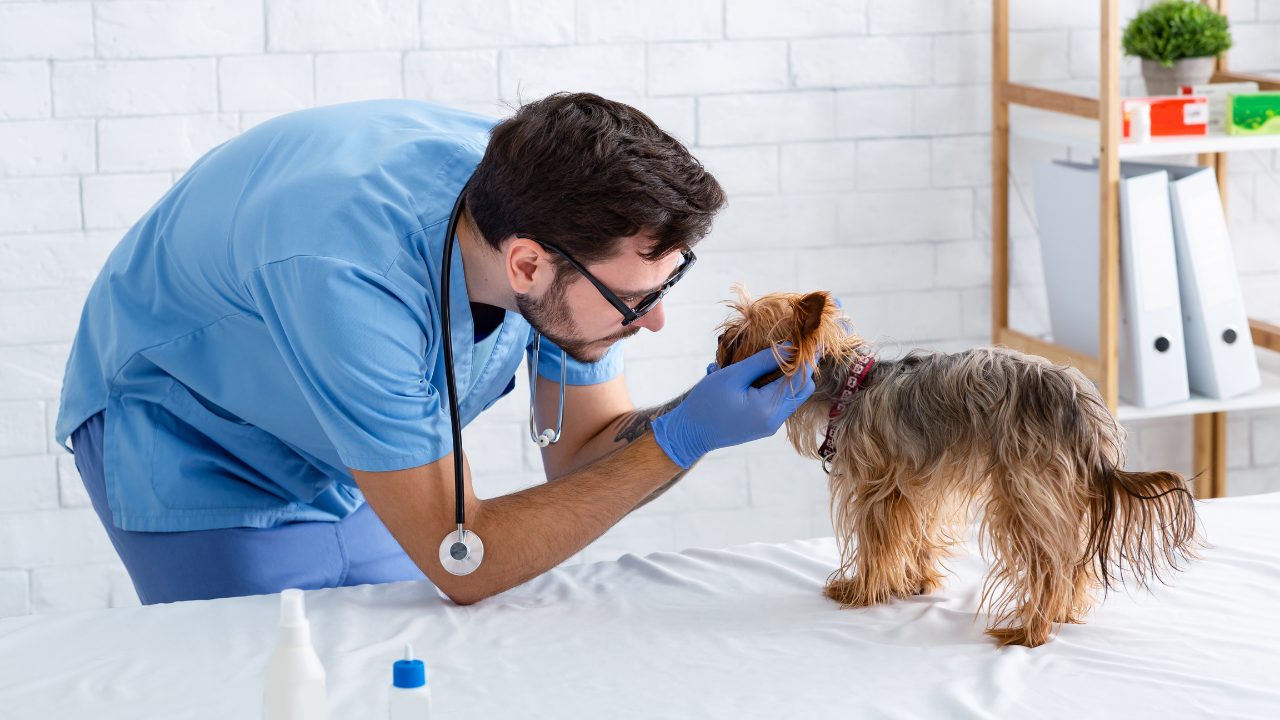
Questions To Ask At Your Next Appointment
Take this list with you, or read from your phone. Write the answers down.
Questions About The Diagnosis
- What is the exact name of my dog's cancer?
- How was it diagnosed, and how certain are we?
- What grade and stage is it?
- Has it spread, and what tests were used to check?
- Is there anything else we should test before deciding?
Questions About Treatment
- What are all the options, including doing nothing?
- What is the goal of each option — is it aimed at removing the cancer, or at giving good time?
- What would you do if this were your dog?
- What does each option involve for my dog in practical terms?
- How many appointments, over how long?
- What are the side effects, and how likely are they?
Questions About Prognosis
- What is the realistic outlook with each option?
- What would happen if we chose no treatment at all?
- What are the specific things about my dog that make the outlook better or worse?
Questions About Cost
- What is the total estimated cost, not just the next step?
- What happens if we start and cannot continue?
- Are there less expensive options that would still help?
- Are there clinical trials my dog might qualify for?
Questions About Comfort
- Is my dog in pain right now?
- How would I know if they were?
- What pain relief should we start, and when?
- What should I watch for at home?
Understanding The Numbers You Will Be Given
At some point someone will say something like median survival is around ten months, and it will land like a countdown.
It is worth understanding what that actually means.
A median is a midpoint across many dogs. Half of the dogs in that group lived less than that. Half lived longer, and some lived considerably longer.
It is not a prediction about your dog. It describes a population, and your dog is one animal with their own cancer, their own health, and their own response to treatment.
The numbers usually come from dogs who received a specific treatment. Survival figures for treated dogs do not apply to untreated dogs, and figures for one treatment do not apply to another.
Older figures may not reflect current options. Treatment for several canine cancers has improved.
You are allowed to ask for the numbers. You are also allowed to say you would rather not hear them. Some families find them steadying and others find them intrusive, and both responses are normal.

Treatment Options In General Terms
Every cancer is different, but the options generally fall into a few categories.
Surgery removes the tumor. For many localized cancers this is the primary treatment, and for some it removes the problem permanently.
Chemotherapy treats cancer that has spread or is likely to. In dogs it is dosed for quality of life rather than at maximum tolerated doses, which is why side effects are far milder than in human medicine. Most dogs experience no significant side effects, and most do not lose their coat.
Radiation treats a specific location, often where surgery is not possible or where some tumor remains after surgery.
Targeted and oral medications are available for certain cancers and are given at home.
Palliative care focuses entirely on comfort — pain, appetite, nausea, breathing — without treating the cancer itself. It can be combined with other treatments or chosen alone.
Clinical trials sometimes offer newer approaches at reduced or no cost.
Ask which of these apply to your dog specifically. Several will not.
Explore Clinical Trials For Dogs With CancerDecisions You Do Not Have To Make Today
Fear creates a feeling of urgency that the medical situation often does not justify.
You do not have to decide about treatment today. Ask whether waiting a week or two changes anything. Usually it does not.
You do not have to change your dog's food today. A sudden diet change during a stressful week can cause digestive problems and confuse the picture of what is happening.
You do not have to buy supplements today. Several interact with cancer treatment, and it is better to ask first.
You do not have to decide about euthanasia today unless your dog is suffering and your veterinarian has raised it.
You do not have to have a plan for the whole illness. You need a plan for the next appointment.
You do not have to tell everyone yet. Some families find support helpful immediately; others need time before fielding questions and opinions.
What Not To Do Right Now
A few things genuinely make the situation harder.
Do not start steroids before speaking to your veterinarian. For some cancers, particularly lymphoma, starting steroids before a diagnosis is confirmed can make the cancer harder to diagnose accurately and can reduce how well chemotherapy works later. If steroids have already been started, say so — it does not close the door on treatment, but the oncology team needs to know.
Do not start supplements without asking. Some affect blood clotting, which matters before surgery. Some affect how the body processes chemotherapy drugs. Some are directly harmful to the liver or kidneys.
Do not delay effective treatment while trying something unproven. Some cancers are removed completely by surgery and never return, and that window narrows as they grow.
Do not read survival statistics for the wrong cancer. Figures vary enormously between cancer types, and between forms of the same cancer. Make sure what you are reading applies to your dog's actual diagnosis.
Do not accept a diagnosis you do not understand. Ask again. Ask for it in plain words. Ask for it in writing.
Do not punish your dog for accidents or changed behavior. House-soiling, restlessness, and irritability can all be symptoms.
Talk About Money
Cost is a legitimate part of this, and nobody should feel ashamed of raising it.
Say it at the first appointment, not partway through. Options that exist at the beginning — a simpler protocol, a payment plan, a clinical trial, a charitable grant — are far harder to arrange once treatment is underway.
Ask directly:
- What is the total cost of each option?
- Is there a less expensive approach that would still help my dog?
- Can my regular veterinarian deliver part of this locally?
- Do you offer payment plans, or work with financing?
- Are there trials or funds we could apply to?
There is often more flexibility than families assume, and clinicians generally prefer to know your constraints so they can recommend something you can actually complete.
Get Help With Fundraising
Is My Dog In Pain?
This is often the first question families ask and the one they most fear the answer to.
Dogs frequently do not show pain the way people expect. Vocalizing is uncommon. Watch instead for:
- Reluctance to move, jump, or climb stairs
- Difficulty settling, or repeatedly shifting position
- A hunched or altered posture
- Panting at rest
- Reduced appetite
- Withdrawal from the family
- Irritability or reluctance to be touched in one area
- Licking repeatedly at one spot
Ask your veterinarian directly whether your dog is likely to be in pain, and what to do about it.
Pain relief should be part of the plan from the beginning, whatever else you decide — including if you choose comfort care alone.
Ease My Dog's PainFind Your Dog's Cancer Type
Each of these covers symptoms, diagnosis, treatment options, what treatment is actually like, prognosis, and cost for that specific cancer.
Most frequently diagnosed
Skin, mouth, and surface
Internal organs
Head, blood, and immune system
See All Dog Cancer TypesBuilding Your Care Team
You may end up working with more people than you expect.
- Your regular veterinarian coordinates care and often delivers much of it
- A veterinary oncologist advises on and delivers cancer treatment
- A veterinary surgeon performs more complex operations
- A radiation oncologist delivers radiation therapy
- A veterinary nutritionist helps where feeding becomes complicated
- A rehabilitation practitioner helps with recovery and mobility
- A hospice or palliative care veterinarian focuses on comfort
Ask who is coordinating, and make sure records are being shared between them.
You are allowed to seek a second opinion. Good clinicians expect it and are not offended by it.
Read More: Who Should Be on My Dog's Cancer Care Team?Taking Care Of Yourself
This part gets skipped, and it should not.
You are allowed to be devastated. The grief that begins at diagnosis is real, and it has a name — anticipatory grief. It is not premature or self-indulgent.
You are allowed to not know what to do. Nobody arrives at this knowing how to handle it.
You will second-guess yourself. Almost every family does, about the decision they made and about whether they should have noticed sooner. Most canine cancers are silent until they are advanced, and earlier detection would frequently not have changed the outcome.
Sleep and eat if you can. You will make better decisions rested.
Ask for practical help. People want to help and rarely know how. Give them specifics — a lift to an appointment, a meal, a walk for your other dog.
Limit the searching. Reading for hours late at night rarely produces new information and reliably produces more fear. Set a limit.
Read More: Self-Care for Dog Cancer Caregivers
Track What You Are Seeing
Patterns become visible in writing that are invisible in memory.
The free Dog Cancer Tracker lets you record:
- Appetite and food intake
- Water intake
- Weight
- Energy and activity
- Pain and comfort
- Vomiting or diarrhea
- Medication and timing
- Treatment dates
- Side effects
- Sleep
- Quality of life
This does two things. It gives your veterinary team far better information than he seems a bit off, and it gives you a record to look back on when you are trying to judge whether things are changing.
Use the Free Dog Cancer TrackerStart The Dog Cancer Care Roadmap
The days after a diagnosis are when information is hardest to absorb and easiest to get wrong.
The free Dog Cancer Care Roadmap was built to give you a structured path through it rather than a search results page.
It can help you:
- Understand your dog's diagnosis in plain language
- Know which questions to ask and when
- Compare treatment options realistically
- Plan for costs before they arrive
- Recognize pain and monitor comfort
- Make supplement and nutrition decisions safely
- Prepare for quality-of-life conversations
- Feel less alone in the process
Frequently Asked Questions
How Long Does My Dog Have?
Nobody can tell you this with certainty, and anyone who does is overstating what is knowable.
What your veterinary team can give you is a realistic range based on your dog's specific cancer, stage, and treatment options. Those figures are averages across many dogs, not predictions about yours.
Is My Dog Suffering Right Now?
Many dogs with cancer feel well for a long time, particularly early on. Some cancers are painful and some are not.
Ask your veterinarian directly. Pain relief should be part of the plan regardless of what else you decide.
Did I Do Something To Cause This?
Almost certainly not.
Age and inherited breed risk account for most canine cancer. Diet, vaccines, and ordinary household products are not established causes.
Should I Have Caught This Sooner?
Most canine cancers cause no signs until they are well established, and many early signs are indistinguishable from ordinary problems.
Earlier detection sometimes matters and often would not have changed the outcome. This question is nearly universal and rarely productive.
Is Cancer In Dogs Contagious?
No. It does not spread to people, to other dogs, or to other pets in the household.
Do I Have To Treat?
No. Choosing comfort-focused care is a legitimate decision made by people who love their dogs.
Age, other health conditions, temperament, cost, and your own judgment about what your dog would tolerate are all valid reasons. What matters is that the decision is made with accurate information rather than in panic.
Is Chemotherapy Cruel For Dogs?
Most people picture human chemotherapy, and canine chemotherapy is dosed differently — for quality of life rather than at maximum tolerated doses.
Most dogs experience no significant side effects. Most do not lose their coat. Appointments are usually outpatient, and many dogs greet the oncology staff enthusiastically.
How Much Is This Going To Cost?
It varies enormously by cancer type, treatment, and region — from very little for some oral medications to many thousands for surgery and radiation.
Ask for a written estimate of the total, not just the next step, and raise cost at the first appointment.
Should I Get A Second Opinion?
If you are uncertain, yes. Good clinicians expect it.
A second opinion is particularly worth considering before irreversible decisions such as amputation, or when the recommendation and your instincts do not match.
Should I Change My Dog's Food?
Not immediately, in most cases. If your dog is eating well and maintaining weight, a sudden change during an already stressful week can cause problems and confuse the picture.
Ask your veterinary team before making a major change.
Should I Start Supplements?
Ask first. Several affect blood clotting, interact with chemotherapy drugs, or stress the liver or kidneys.
Tell your veterinary team about everything your dog is already receiving, including anything started before the diagnosis.
What If I Cannot Afford Treatment?
Say so at the first appointment. There are often less expensive options that still help meaningfully, and some cancers have genuinely affordable treatments.
Payment plans, clinical trials, and charitable funds all exist, and all are easier to arrange at the beginning.
How Do I Explain This To My Children?
Honestly and simply, in language appropriate to their age. Children generally cope better with truth than with being managed around.
Let them be involved in caring for the dog if they want to be.
When Will I Know It Is Time?
Not today, and probably not for a while.
Quality of life is easier to judge with a structure than with feeling alone, and it is worth starting to track now rather than trying to assess it in crisis.
Check Your Dog's Quality Of LifeYou Do Not Have To Have This Figured Out Today
You do not need to become an expert in veterinary oncology this week.
You do not need to decide about treatment, diet, supplements, and the end of your dog's life all at once.
You do not need to prove how much you love your dog by getting everything right.
Start with what actually matters in the next few days:
- Make sure your dog is not in pain
- Get a copy of the pathology report
- Find out whether anything is time-sensitive
- Write down your questions
- Ask whether an oncology consultation makes sense
- Start keeping simple notes
- Let yourself sleep
Your dog does not know they have cancer.
They know that you are here, that meals still happen, that walks still happen, and that you are close by. Today, that is most of what they need — and it is something you are already doing.
One appointment at a time. One decision at a time. One day at a time.
The information on this page is intended for educational and supportive purposes only.
It does not diagnose or treat cancer and does not replace individualized examination, diagnosis, treatment, or emergency care from a licensed veterinarian.
Do not begin or stop any medication, supplement, diet, or treatment without discussing it with your dog's veterinary team.
Contact your veterinarian promptly if your dog stops eating, loses weight, seems painful, becomes unusually weak or lethargic, develops a rapidly growing or bleeding lump, or experiences another concerning change.
Seek immediate emergency veterinary care for difficulty breathing, collapse, pale or blue gums, a suddenly enlarged or painful abdomen, uncontrolled bleeding, a seizure lasting more than five minutes, inability to urinate, or another potentially life-threatening symptom.
