
I Am Grieving the Loss of My Dog
We're Sorry for Your Loss
Losing your dog can change the feeling of your entire home.
The bed may be empty. The leash may still be hanging by the door. You may listen for paws that are no longer walking down the hallway or instinctively look toward the place where your dog used to rest.
Ordinary routines can suddenly become painful reminders.
You may miss filling the food bowl, giving medications, opening the door, taking walks, sharing the couch, or simply knowing your dog was nearby.
Your dog was not “just a pet.”
They may have been your companion, family member, source of comfort, protector, daily routine, reason to get outside, or steady presence through some of the most important years of your life.
The grief that follows the death of a companion animal can be profound. It may affect your emotions, thoughts, body, relationships, routines, and sense of identity. There is no single correct way to grieve and no schedule you are required to follow.
This guide will help you:
- Understand common grief reactions
- Cope with guilt and second-guessing
- Navigate the first days after the loss
- Support children and surviving pets
- Respond to people who do not understand
- Preserve your dog’s memories
- Find grief counseling and community support
- Recognize when additional help may be needed
You do not need to heal quickly.
You do not need to stop loving your dog.
For now, you only need to take the next moment as it comes.
Explore Pet Loss And Grief Resources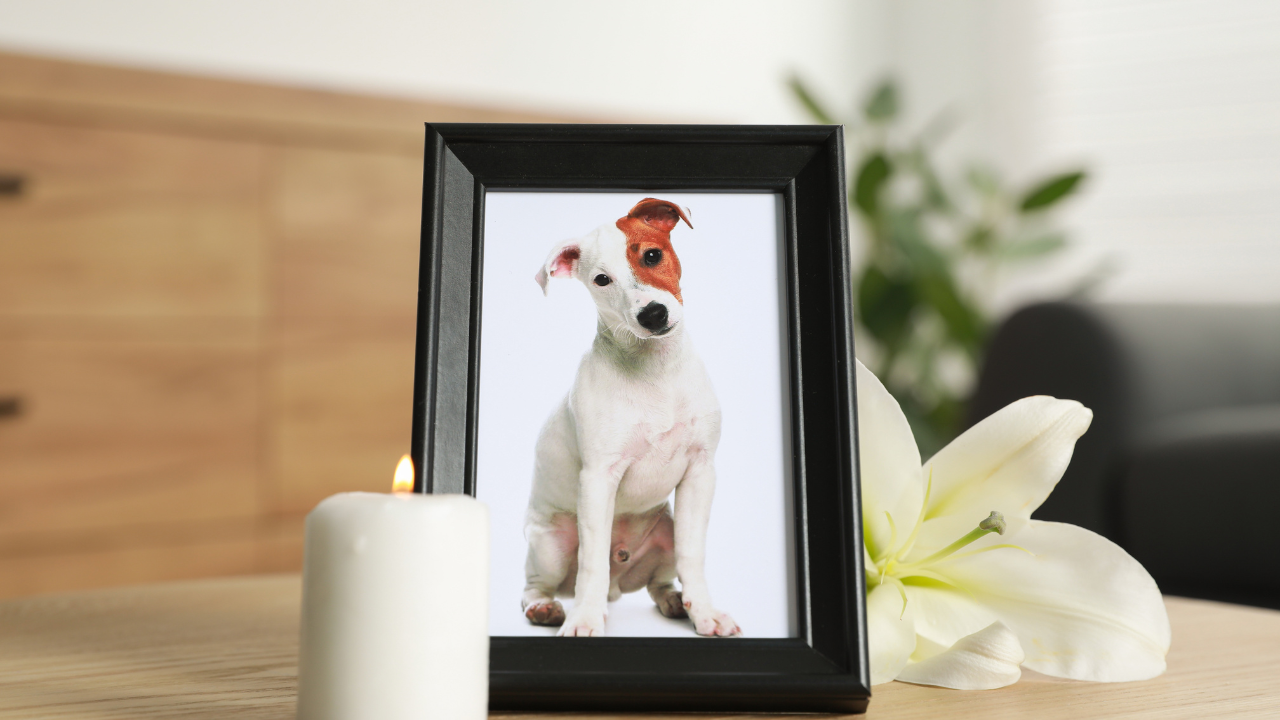
Your Grief Is Real
The depth of grief is not determined by whether the one who died was human or animal.
It is shaped by the relationship you shared.
Your dog may have been woven into nearly every part of your life:
- Morning and bedtime routines
- Meals
- Walks
- Travel
- Holidays
- Family photographs
- Work-from-home days
- Difficult periods
- Celebrations
- Quiet evenings
- Medical routines
- Decisions about where you lived
- The way you planned your time
Your dog may have been the first one to greet you, the one who stayed close when you were sick, or the only living being who seemed to know when you needed comfort without being asked.
When that presence disappears, the loss can feel enormous.
The American Veterinary Medical Association recognizes that grief following the death of an animal may resemble the grief experienced after losing a family member or close friend.
You do not need to minimize your grief to make other people more comfortable.
Your relationship mattered.
Your loss matters.
Grief Does Not Follow A Straight Line
You may have heard that grief occurs in predictable stages.
You might experience denial, anger, bargaining, sadness, acceptance, or other emotional states, but these feelings do not always happen in a particular order.
You may move between them.
You may feel several at once.
You may have a peaceful morning followed by an overwhelming afternoon. A day that feels manageable may be followed by a day when the loss feels newly impossible.
Not everyone experiences the same reactions, and there is no prescribed amount of time each part of grief should last.
Healing does not mean moving through a checklist.
It may mean slowly learning how to carry the relationship differently.
Read: How a Pet Loss Journal for Dog Grief Helps
What Grief May Feel Like
Grief can affect more than your emotions.
Emotional Reactions
You may experience:
- Intense sadness
- Loneliness
- Anger
- Guilt
- Relief
- Numbness
- Anxiety
- Irritability
- Helplessness
- Emptiness
- Fear
- Jealousy of people who still have their dogs
- Gratitude for the time you shared
- Moments of unexpected peace
Several emotions can exist together.
You may feel devastated that your dog died and relieved that they are no longer suffering.
Relief does not mean you wanted the loss.
It may mean that watching someone you loved struggle was painful, too.
Physical Reactions
Grief may affect the body through:
- Fatigue
- Difficulty sleeping
- Sleeping more than usual
- Reduced appetite
- Increased appetite
- Headaches
- Muscle tension
- Chest heaviness
- Nausea
- Restlessness
- Difficulty concentrating
- Feeling physically weak
Contact a medical professional if you are concerned about a physical symptom, particularly severe chest pain, difficulty breathing, fainting, or another potentially urgent change.
Changes In Thinking
You may:
- Replay the final days repeatedly
- Have difficulty making decisions
- Forget simple tasks
- Feel distracted
- Expect to see or hear your dog
- Question every medical decision
- Struggle to believe the death actually happened
- Think about what you should have done differently
- Feel unable to imagine a future without your dog
Briefly thinking you heard your dog’s collar, footsteps, bark, or breathing can occur because those sounds were deeply familiar parts of your life.
If experiences become frightening, persistent, or interfere significantly with your safety or daily functioning, speak with a licensed mental health professional.
Changes In Routine
You may feel the loss most strongly during:
- The time your dog usually woke you
- Meal preparation
- Walk time
- Medication time
- Returning home
- Bedtime
- Weekends
- Veterinary appointment dates
- Grooming days
- Car rides
- Trips your dog once joined
Grief often settles into the spaces where caregiving and companionship used to live.
The First Days After Your Dog Dies
The first days may feel unreal.
You may be expected to make decisions, return to work, care for your family, or respond to messages while your mind is still trying to understand what happened.
Try to reduce expectations where possible.
Focus On Immediate Needs
For now, concentrate on:
- Drinking water
- Eating something simple
- Taking necessary medications
- Resting
- Contacting someone you trust
- Completing urgent aftercare arrangements
- Informing only the people who need to know
- Giving yourself permission to postpone nonessential tasks
You do not need to respond to every message.
You do not need to explain the entire story repeatedly.
A simple statement is enough:
“My dog died, and I am having a very difficult time. I may need some space and patience.”
Let Someone Help
A trusted person may be able to:
- Prepare food
- Make phone calls
- Pick up ashes
- Help with children
- Care for other pets
- Notify family members
- Return medical equipment
- Sit with you
- Help put away medications
- Handle a work obligation
You do not have to prove your strength by managing everything alone.
Delay Permanent Decisions When Possible
You may feel an urgent need to remove every reminder—or to preserve everything exactly as it was.
Both reactions are understandable.
When possible, delay irreversible decisions until the initial shock has softened.
You might place belongings in a box without deciding what to keep permanently.
There is no deadline for moving a bed, washing a blanket, putting away a bowl, or taking down photographs.
When The House Feels Too Quiet
The absence of ordinary sounds may be one of the most painful parts of loss.
You may miss:
- Nails tapping on the floor
- Tags moving against a collar
- Breathing beside the bed
- Barking at the door
- The food bowl moving
- Snoring
- Sighing
- The sound of your dog changing positions
- Paws following you from room to room
Silence may feel peaceful one moment and unbearable the next.
Gentle background sound may help, including:
- Familiar music
- An audiobook
- A television program
- A fan
- Nature sounds
- A podcast
- The voices of supportive family members
You do not need to fill every quiet moment.
But you also do not need to endure silence when it feels painful.

Guilt After Losing a Dog
Guilt is one of the most common and difficult parts of pet loss.
You may ask:
- Did I notice the cancer soon enough?
- Should I have requested more testing?
- Did I choose the right treatment?
- Did I spend enough time with my dog?
- Should I have pursued another option?
- Did I stop treatment too soon?
- Did I wait too long?
- Was euthanasia the right decision?
- Was I calm enough during the final moments?
- Did my dog know how much I loved them?
- Could I have prevented the cancer?
- What if I made the wrong choice?
These questions often come from love.
Your mind is trying to find a decision that could have created a different ending.
But many situations involving cancer, serious illness, and end-of-life care do not offer a perfect choice.
You may have been choosing between options that all carried uncertainty, risk, cost, fear, or possible suffering.
Try to remember:
- You made decisions using the information you had at the time.
- You could not predict every response or complication.
- Cancer can progress despite excellent care.
- Treatment is not always effective.
- Declining treatment does not mean declining care.
- Choosing comfort is not abandonment.
- One difficult decision does not erase a lifetime of love.
- A peaceful death cannot always be perfectly planned.
- Your dog experienced your care across an entire lifetime, not only during the final day.
Guilt may continue to appear even when you logically understand that you did your best.
When it does, try asking:
“What would I say to someone I loved who had made the same decision?”
Offer some of that compassion to yourself.
Read: Coping with the Grief of Losing Your DogGrief After Euthanasia
Choosing euthanasia may create a unique form of grief.
You may have agreed to the timing, signed paperwork, scheduled the appointment, or held your dog while the medication was given.
Knowing that you participated in the decision can feel emotionally overwhelming, even when the decision was made to prevent suffering.
You may replay:
- The drive to the clinic
- The veterinarian arriving at your home
- The moment you signed the form
- Your dog’s final breath
- Whether you said the right words
- Whether your dog seemed afraid
- Whether the timing was right
- Whether another day would have mattered
Euthanasia may be both a compassionate decision and a deeply painful experience.
Those truths can exist together.
You may have chosen to carry the emotional pain of the decision so your dog would not have to experience more physical suffering.
That does not make the loss easier.
But it may help you understand the love behind the choice.
Read: Coping With Guilt After Pet Euthanasia
What If The Death Was Sudden Or Traumatic?
A sudden loss may leave little time to understand what happened.
You may have experienced:
- An unexpected collapse
- Internal bleeding
- A seizure
- An accident
- A rapid decline
- An emergency hospital visit
- An unsuccessful resuscitation attempt
- A dog dying before you reached veterinary care
- Finding your dog after they had already passed
You may feel shock, disbelief, panic, anger, or intense guilt.
You may repeatedly replay the event or focus on distressing details.
After a traumatic loss:
- Ask the veterinarian to explain what likely happened.
- Write down your questions before the conversation.
- Request copies of the medical records if having them would help.
- Avoid repeatedly searching for the most frightening explanations online.
- Tell a trusted person that the death was traumatic.
- Consider speaking with a trauma-informed mental health professional.
- Give yourself permission to avoid graphic details or conversations that feel overwhelming.
- Try to remember your dog’s full life rather than allowing the final event to become the entire story.
Seek professional support if you are experiencing persistent nightmares, flashbacks, panic, severe avoidance, or an inability to function after witnessing or discovering a traumatic death.
What If I Was Not There When My Dog Died?
You may feel guilty because:
- You were at work
- Your dog died during hospitalization
- Another family member was present
- You stepped out of the room
- You could not attend euthanasia
- Your dog died during the night
- You arrived too late
- You were physically or emotionally unable to stay
Your absence from one moment does not define the relationship.
Your dog knew you through:
- Your voice
- Your touch
- Your routines
- Your protection
- Your care
- The meals you provided
- The comfort you offered
- The life you built together
You do not have to prove your love by being present for every medical procedure or final moment.
The relationship was created across years of ordinary days.
What If I Feel Relief?
Relief may appear after a long period of caregiving.
You may feel relieved that:
- Your dog is no longer in pain
- The fear of the next emergency has ended
- You no longer need to make impossible decisions
- Your dog is no longer struggling to breathe, eat, walk, or rest
- Medication schedules and nighttime monitoring have ended
- The uncertainty has stopped
You may then feel guilty for experiencing that relief.
Relief is not happiness that your dog died.
It may be your body recognizing that a long and frightening period of suffering, vigilance, or exhaustion has ended.
Relief and grief can exist together.
What If Other People Do Not Understand?
Pet loss is sometimes minimized.
Someone may say:
- “It was only a dog.”
- “You can get another one.”
- “At least you had many years.”
- “You knew this was coming.”
- “You should be over it by now.”
- “Why are you taking time off work?”
- “At least it was not a person.”
These comments can make grief feel lonely or shameful.
You do not need to defend the significance of your relationship.
You may respond:
“My dog was an important member of my family, and this loss is deeply painful.”
Or:
“I know you may not understand the bond, but I need you to respect that I am grieving.”
You may also choose not to respond.
Protect your energy.
Spend more time with people who allow you to speak your dog’s name, share memories, cry, laugh, or remain quiet without judgment.
Pet-loss support groups can be especially helpful because participants understand that the relationship was meaningful and the grief is legitimate.

When Friends And Family Want To Help
People may care but feel unsure about what to say.
You can tell them what would be useful.
You might ask someone to:
- Listen without trying to fix the grief
- Use your dog’s name
- Share a favorite memory
- Help with a practical task
- Sit with you
- Take a walk with you
- Check in after the first few days
- Remember an anniversary
- Help create a memorial
- Avoid pressuring you to adopt another dog
- Respect your need for space
You are allowed to ask for specific support.
Returning To Work
Returning to work may feel difficult when others expect normal concentration and productivity.
You may struggle with:
- Fatigue
- Crying unexpectedly
- Difficulty focusing
- Irritability
- Anxiety about being asked questions
- An empty home-office space
- Changes in the routine that structured your day
When possible, consider telling a supervisor or trusted colleague:
“My dog recently died. I am grieving and may need a little flexibility while I adjust.”
You do not have to provide every detail.
Helpful accommodations might include:
- A lighter schedule
- Remote work
- Brief breaks
- Fewer meetings
- Time to collect ashes
- A personal day
- Temporary help with urgent responsibilities
Pet bereavement policies vary, but your grief remains valid even when formal leave is unavailable.
Coping With Empty Routines
Caregiving creates structure.
You may have organized your day around:
- Walks
- Meals
- Medication
- Insulin
- Bathroom breaks
- Veterinary visits
- Preparing special food
- Cleaning wounds
- Tracking symptoms
- Helping your dog stand
- Nighttime monitoring
When those tasks suddenly disappear, you may feel lost.
Try replacing one routine gently rather than attempting to rebuild the entire day.
For example:
- Take a short walk at the usual time.
- Sit outside with a cup of tea.
- Journal for five minutes when medication would have been given.
- Call someone during the time you usually prepared food.
- Light a candle at bedtime.
- Look through one photograph.
- Complete a small household task.
- Rest.
You are not replacing your dog.
You are helping your body adjust to a routine that has changed.
Caring For Your Body While Grieving
Grief can make basic care feel difficult.
Try to focus on small, manageable steps:
- Keep water nearby.
- Eat simple foods.
- Take prescribed medication.
- Shower when you can.
- Step outside briefly.
- Rest without expecting perfect sleep.
- Limit alcohol or other substances that intensify emotions.
- Accept prepared meals.
- Ask someone to accompany you to appointments.
- Contact your healthcare provider when physical symptoms concern you.
You do not need to begin a new wellness routine.
The goal is simply to support your body while it carries a heavy emotional loss.
Sleep After Pet Loss
Sleep may become difficult because:
- Your dog once slept beside you
- The room feels too quiet
- You replay the final days
- You wake expecting to provide care
- You feel guilty for resting
- Nighttime was associated with medication or emergencies
- Anxiety increases when distractions stop
You may find it helpful to:
- Keep a familiar blanket nearby
- Use gentle background sound
- Write down recurring thoughts before bed
- Avoid repeatedly reviewing medical records at night
- Practice slow breathing
- Speak with a healthcare professional if sleep problems persist
- Allow yourself to rest at a different time when nighttime sleep is difficult
The absence may feel strongest where your dog used to sleep.
There is no correct time to change the sleeping arrangement.

Helping Children Grieve The Loss Of A Dog
For many children, the death of a dog is their first close experience with death.
Use simple, honest language.
You might say:
“Our dog died. Their body stopped working, so they cannot breathe, eat, walk, or feel pain anymore.”
Avoid phrases such as:
- “Went to sleep”
- “Was put to sleep”
- “Went away”
- “We lost the dog”
Young children may interpret these phrases literally and become afraid of sleep, separation, or getting lost.
Children may:
- Ask the same questions repeatedly
- Cry intensely
- Return quickly to play
- Become clingy
- Worry about other family members dying
- Have difficulty sleeping
- Become angry
- Draw pictures
- Act out the event through play
- Seem unaffected until much later
These reactions can be part of how children process loss.
Invite participation without forcing it.
A child might:
- Draw a picture
- Write a letter
- Choose a photograph
- Help create a memorial
- Share a favorite memory
- Decorate a memory box
- Plant flowers
- Attend a memorial ritual
- Create a Dog Rainbow Bridge page with the family
Answer questions honestly and according to the child’s developmental level.
Let teachers or caregivers know about the loss when it may affect behavior or concentration.
Seek professional support if a child’s fear, guilt, sleep problems, withdrawal, or behavioral changes become severe or persistent.
Supporting A Teenager After Pet Loss
Teenagers may grieve privately.
They may appear distant, spend more time online, become irritable, avoid family conversations, or speak only with friends.
Do not assume a lack of visible tears means the relationship did not matter.
Offer choices:
- Talking
- Writing
- Creating art
- Selecting memorial music
- Making a video
- Choosing photographs
- Spending time alone
- Attending a support group
- Speaking with a counselor
Respect privacy while continuing to check in.
You might say:
“You do not have to talk right now, but I am here when you want to.”
Helping Surviving Pets
Other animals in the home may respond to the loss.
You may notice:
- Searching
- Vocalizing
- Sleeping more
- Eating less
- Clinginess
- Restlessness
- Changes in play
- Waiting near doors
- Spending time in the deceased dog’s usual places
- No obvious behavioral change
Maintain familiar routines as much as possible.
Continue:
- Regular meals
- Walks
- Play
- Rest
- Medication
- Veterinary care
- Individual attention
Try not to overwhelm a surviving pet with constant reassurance if they appear comfortable. Allow behavior to guide you.
Contact a veterinarian if a surviving pet:
- Stops eating
- Vomits
- Develops diarrhea
- Becomes significantly withdrawn
- Shows persistent anxiety
- Develops another concerning health or behavioral change
A medical problem should not automatically be assumed to be grief.
Should I Put My Dog’s Belongings Away?
There is no correct answer.
You may want to:
- Leave everything where it is
- Put items away immediately
- Keep only a few belongings visible
- Store everything temporarily
- Donate unused supplies
- Give medications back to the clinic for safe disposal
- Create a memory box
- Turn a collar into a keepsake
- Wash bedding
- Keep a blanket unwashed for a while
Choose what feels most manageable.
You can make different decisions later.
Before donating medications, food, medical supplies, or equipment, ask whether a veterinary clinic, shelter, rescue, or hospice organization can safely accept them.
Prescription medications should never be given to another animal without veterinary supervision.
Read: 11 Best Keepsakes After Losing a DogWhat Should I Do With My Dog’s Medical Records?
Some people want to keep every record.
Others find the paperwork painful.
You might:
- Store the records in a sealed envelope
- Save digital copies
- Keep the pathology report for future reference
- Set the records aside until you feel ready
- Ask the veterinary clinic to retain copies
- Keep only the documents that feel meaningful
- Shred personal documents when you no longer need them
There is no deadline for deciding.
If you have questions about what happened, request a follow-up conversation with the veterinarian before discarding the records.
Memorializing Your Dog
A memorial gives love and memories somewhere to go.
You might:
- Display a favorite photograph
- Frame a paw print
- Keep a lock of fur
- Create a memory box
- Plant a tree or garden
- Write your dog’s story
- Make a scrapbook
- Create a photo album
- Order memorial jewelry
- Donate to a rescue
- Sponsor another dog’s care
- Volunteer
- Light a candle on meaningful dates
- Walk a favorite route
- Cook a favorite dog-safe meal for another animal
- Create an online memorial
- Write a letter to your dog
- Commission a portrait
There is no right or wrong memorial.
Choose something that reflects the relationship you shared.

Create A Dog Rainbow Bridge Memorial
Your dog’s story deserves a place of its own.
Dog Rainbow Bridge allows you to create a free online memorial where you can:
- Share your dog’s photograph
- Tell their life story
- Preserve favorite memories
- Describe what made them special
- Invite family and friends to leave messages
- Return to the memorial on birthdays and anniversaries
- Create a tribute that does not disappear beneath newer social media posts
Your dog was more than the illness that ended their life.
The memorial can focus on how they lived, loved, played, comforted, and changed your family.
There is no deadline.
You can create the memorial whenever you feel ready.
Create a Free MemorialWhat Should I Write In My Dog’s Memorial?
Begin with one memory.
You might complete one of these sentences:
- I first met my dog when…
- The first thing I noticed was…
- My dog’s favorite activity was…
- My dog always made me laugh by…
- The habit I miss most is…
- My favorite memory is…
- My dog comforted me when…
- Everyone who met my dog knew…
- My dog taught me…
- My life changed because…
- I hope my dog knew…
- I will always remember…
Your tribute does not need to be polished.
A few honest sentences can hold an entire relationship.

Journaling Through Pet Loss
Writing can provide a private place for thoughts you are not ready to say aloud.
You may write about:
- Your dog’s life story
- The day you met
- Favorite memories
- The final days
- Guilt
- Anger
- Gratitude
- Questions you wish you could answer
- What you miss
- What your dog taught you
- What you hope your dog understood
- The ways your life has changed
Possible prompts include:
- Today I miss…
- The memory that made me smile today was…
- I feel guilty about…
- What I wish I could tell my dog is…
- One loving thing I did was…
- My dog knew I loved them because…
- The hardest time of day is…
- Something I never want to forget is…
- If my dog could speak to me, I imagine they might say…
Journaling does not need to be positive.
You are allowed to write what is true.
Explore the Pet Loss Grief JournalAnniversaries, Holidays, And Other Triggers
Grief may become stronger around:
- Your dog’s birthday
- The anniversary of the diagnosis
- The date of death
- Holidays
- Family photographs
- The first snowfall
- A favorite season
- The first trip without your dog
- Returning to the veterinary clinic
- Seeing a similar dog
- Hearing your dog’s name
- Social media memories
Plan gently for difficult dates.
You might:
- Take the day off
- Light a candle
- Visit a meaningful place
- Donate in your dog’s memory
- Share a photograph
- Cook a meal with family
- Write a letter
- Add to the memorial
- Avoid plans that feel overwhelming
- Ask someone to check in
A resurgence of grief does not mean you are moving backward.
It means the date or reminder carries meaning.
Deciding Whether To Adopt Another Dog
There is no correct waiting period.
Some people feel comforted by welcoming another dog soon.
Others need months or years.
Some decide not to adopt again.
A new dog cannot replace the one who died.
But forming another relationship does not betray the relationship you lost.
Consider:
- Do I want this individual dog, or am I trying to recreate the dog who died?
- Do I have the emotional energy for a new relationship?
- Can I accept a dog with a different personality?
- Can I manage the financial and practical responsibility?
- Does the household agree?
- Are surviving pets ready?
- Am I comfortable continuing to grieve while loving another animal?
You do not have to be completely “over” the loss before loving again.
You do need enough capacity to meet the needs of the new dog.
What If I Never Want Another Dog?
That decision is also valid.
The pain of loss may feel too great.
Your circumstances may have changed.
You may feel that the relationship you shared was unique and do not want another dog.
You do not owe anyone a decision.
You may change your mind later, or you may not.
Both possibilities are acceptable.
Finding Pet Loss Support
Support may come from:
- A trusted friend
- A family member
- Your veterinarian
- A veterinary social worker
- A licensed therapist
- A grief counselor
- A pet-loss specialist
- A faith leader
- A support group
- A pet-loss hotline
- An online grief community
Pet-loss support services can provide a place to speak openly with people who recognize the importance of the human-animal bond. Veterinary organizations encourage access to grief and mental health support when animal loss creates significant distress.
The Association for Pet Loss and Bereavement offers support resources and scheduled online group chats facilitated by trained pet-loss grief specialists.
Cornell University College of Veterinary Medicine also maintains pet-loss support resources.
Find A Pet Loss Grief Professional
When To Consider Professional Grief Support
Consider contacting a licensed mental health professional when grief:
- Feels impossible to carry alone
- Prevents you from completing essential daily tasks
- Causes prolonged inability to sleep or eat
- Creates severe anxiety or panic
- Leads to increasing alcohol or substance use
- Causes significant isolation
- Intensifies depression
- Repeatedly triggers traumatic memories
- Interferes with caring for yourself or your children
- Leaves you feeling hopeless
- Causes thoughts of self-harm
- Makes you feel that life is no longer worth living
Seeking support does not mean your grief is abnormal or that you are failing to cope.
It means the relationship and the loss had a significant effect on your life.
If You Feel Unsafe Or Unable To Continue
Grief can become overwhelming.
If you are in immediate danger or believe you may harm yourself, call emergency services now.
In the United States and its territories, you can call or text 988 to reach the 988 Suicide & Crisis Lifeline. It provides free, confidential support 24 hours a day, seven days a week. You do not need to be actively suicidal to contact the Lifeline for emotional distress.
You can also:
- Go to the nearest emergency department.
- Tell a trusted person you are not safe alone.
- Ask someone to stay with you.
- Move away from anything you could use to harm yourself.
- Contact a licensed mental health professional.
- Use a local crisis service if you are outside the United States.
You deserve support.
You do not have to survive the most painful moments by yourself.

Supporting Someone Else Who Lost A Dog
You may be visiting this page because someone you care about is grieving.
Helpful things to say include:
- “I am so sorry.”
- “Your dog was deeply loved.”
- “I remember when your dog…”
- “I am here to listen.”
- “You do not have to be okay right now.”
- “Can I bring you dinner?”
- “Would you like to tell me what happened?”
- “Would you like to talk about your dog?”
- “I will check in again next week.”
Avoid:
- “It was only a dog.”
- “You can get another one.”
- “At least your dog lived a long life.”
- “Everything happens for a reason.”
- “You should be grateful.”
- “You need to move on.”
- Comparing the loss unless the grieving person invites you to do so
Use the dog’s name.
Share memories.
Continue checking in after the first few days, when other support may begin to fade.
Frequently Asked Questions
Is It Normal To Grieve A Dog This Deeply?
Yes.
Dogs may be family members, companions, emotional supports, and central parts of daily life.
The intensity of grief often reflects the depth of the relationship.
How Long Does Pet Loss Grief Last?
There is no universal timeline.
Grief may gradually become less intense, continue in waves, or return strongly around reminders and anniversaries.
You do not need to meet someone else’s schedule.
Why Do I Feel Worse Now Than I Did Immediately After The Loss?
Shock and practical responsibilities may initially protect you from feeling the full impact.
The grief may become stronger after arrangements are complete and the permanence of the loss begins to feel more real.
Is It Normal To Feel Numb?
Yes.
Numbness can be part of shock and grief.
Speak with a mental health professional if the numbness is prolonged, frightening, or interferes significantly with daily life.
Is It Normal To Feel Angry?
Yes.
You may feel angry at cancer, the veterinarian, yourself, family members, other people, or the unfairness of the loss.
Anger does not make you a bad person.
Is It Normal To Feel Relief?
Yes.
Relief that your dog is no longer suffering can exist beside intense grief.
It does not mean you wanted your dog to die.
Why Do I Keep Thinking I Hear Or See My Dog?
Your mind and body were accustomed to your dog’s sounds, movements, and routines.
Briefly expecting those familiar experiences can occur after a loss.
Seek professional support if the experiences are persistent, frightening, or make it difficult to function.
Did My Dog Know I Loved Them?
Love was communicated throughout your dog’s life through safety, food, comfort, attention, protection, familiar routines, your voice, and your presence.
One final moment does not define the entire relationship.
What If I Was Not Present When My Dog Died?
Your absence from the final moment does not erase a lifetime of care.
Your relationship was built through all the moments that came before it.
Did I Choose Euthanasia Too Soon?
This question is common.
Review the decision with the veterinarian who understood your dog’s condition. Consider the pain, breathing, mobility, appetite, rest, disease progression, and risk of a future crisis at the time.
A decision made to prevent suffering was made from love, even when uncertainty remains.
Did I Wait Too Long?
You were trying to balance hope with comfort in an emotionally difficult situation.
Speak with your veterinarian or a grief counselor if memories of the final days are creating intense guilt.
Could I Have Prevented My Dog’s Cancer?
Many canine cancers cannot be prevented.
Cancer may involve genetics, aging, environmental factors, hormones, immune function, and random cellular changes.
A diagnosis does not mean you failed your dog.
Should I Put My Dog’s Belongings Away?
Only when you feel ready.
You may keep everything in place, store items temporarily, create a memory box, donate supplies, or make decisions gradually.
Is It Wrong To Wash My Dog’s Blanket?
No.
Washing, keeping, donating, or storing an item does not change how much you loved your dog.
Choose what feels manageable.
Is It Wrong To Adopt Another Dog Soon?
No.
There is no required waiting period.
A new relationship does not replace the dog who died.
Make sure you have the emotional, practical, and financial capacity to care for the new dog.
Is It Wrong If I Never Want Another Dog?
No.
You are not required to adopt again.
Your decision may remain the same or change over time.
How Can I Help My Child?
Use honest, age-appropriate language. Invite questions and offer ways to participate in remembering the dog.
Tell teachers or caregivers when grief may affect the child’s behavior or concentration.
Can Surviving Pets Grieve?
Surviving pets may show changes in appetite, sleep, activity, vocalization, or attachment.
Maintain routines and contact a veterinarian if the changes are significant or persistent.
When Should I Seek Counseling?
Consider counseling when grief feels unmanageable, prevents daily functioning, causes severe anxiety or depression, increases substance use, or leads to hopelessness or thoughts of self-harm.
Will I Ever Feel Normal Again?
Your life may not return to exactly what it was before the loss.
Over time, however, many people find that memories begin to bring warmth alongside the pain.
Healing does not require forgetting.
Your Dog’s Life Was More Than The Final Day
Grief often pulls attention toward the end.
You may replay the diagnosis, the final appointment, the last meal, the last breath, or the decisions you wish had been different.
But your dog’s life was so much larger than the way it ended.
Their story also includes:
- The day you met
- The first time they trusted you
- The habits that made you laugh
- The places you explored
- The meals they waited for
- The quiet evenings
- The photographs
- The comfort they gave
- The family routines they shaped
- The thousands of ordinary moments that became a life together
The final chapter matters.
But it is not the whole story.
Your dog was here.
Your dog was loved.
And your dog’s life will always be part of yours.
Create a Free Dog MemorialA Gentle Note About Grief Support
The information on this page is intended to provide education and emotional support.
It does not replace care from a licensed mental health professional, physician, grief counselor, or crisis service.
Pet-loss grief can be profound. Seek professional support when grief feels unmanageable, significantly interferes with daily life, or affects your ability to remain safe.
If you are in immediate danger or believe you may harm yourself, contact emergency services.
In the United States and its territories, call or text 988 to reach the 988 Suicide & Crisis Lifeline for free, confidential support at any time.

Reviewed by Amber L. Drake, PhD
Dr. Amber L. Drake is a doctoral-educated canine wellness specialist, author, and founder of the Drake Dog Cancer Foundation. Her advanced education and professional work encompass canine cancer, nutrition, herbal medicine, integrative wellness, and supportive care. She applies her expertise to reviewing complex health information and developing responsible, evidence-informed educational resources that help pet parents communicate effectively with their veterinary care teams and make better-informed decisions throughout their dogs’ cancer journeys.
