Milk Thistle for Dogs With Cancer
Aug 20, 2026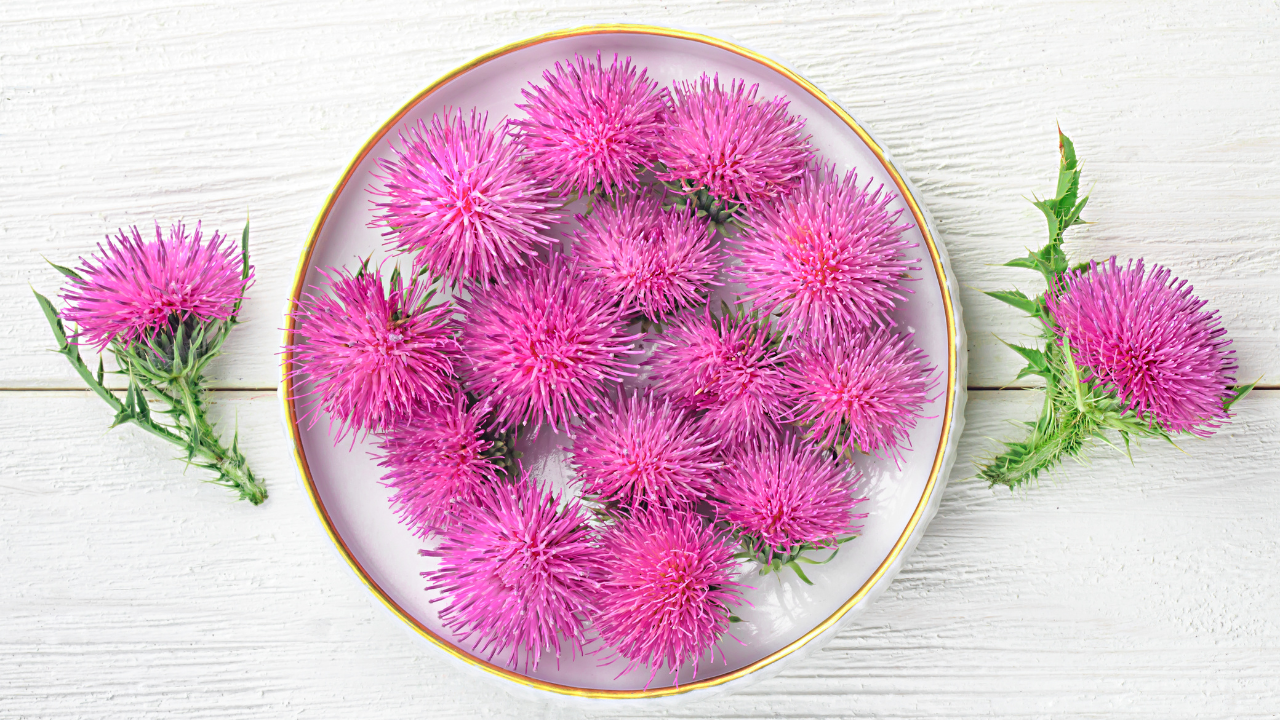
Milk thistle does not treat cancer in dogs. What it may do, and what the veterinary research actually studied, is protect the liver while your dog receives certain chemotherapy drugs that are hard on it.
Your dog’s liver works quietly behind the scenes every day. It helps process nutrients, medications, and natural waste products while supporting digestion and metabolism.
For families navigating cancer, liver health may become an especially important conversation. Your dog may be taking several medications, receiving chemotherapy, experiencing appetite changes, or having regular bloodwork to monitor how their body is responding.
This often leads pet parents to ask, “Could milk thistle help support my dog’s liver?”
Milk thistle, or Silybum marianum, is a botanical commonly used for liver support. Its seeds contain plant compounds collectively known as silymarin. These compounds have antioxidant properties and may help support healthy liver cells and the liver’s natural protective processes.
Milk thistle is not appropriate for every dog, and it should never replace veterinary testing or care. When used with guidance from your veterinarian or veterinary oncologist, however, it may be one part of your dog’s overall support plan.
Potential Benefits
Milk thistle may help:
- Support healthy liver cell membranes
- Provide antioxidant support against oxidative stress
- Support the liver’s normal processing of waste products
- Maintain normal bile production and digestive function
- Support the liver while it processes certain veterinarian-prescribed medications
Research in dogs remains limited, and the potential benefits can vary depending on the product, dose, health concern, and individual dog. Your veterinary team can help you decide whether milk thistle makes sense for your dog.
Four Ways Milk Thistle May Support Your Dog
Supporting and Protecting Liver Cells
Normal processes within the body produce unstable molecules known as free radicals. When the body cannot keep up with them, they can contribute to oxidative stress.
Silymarin provides antioxidant support that may help liver cells manage this everyday stress. Its plant compounds may also help maintain healthy liver cell membranes and support the liver’s natural cellular renewal processes.
This is one reason milk thistle is often included in liver-support plans. However, it cannot tell you why your dog’s liver values are elevated. Changes in bloodwork can have many possible causes and should always be discussed with your veterinarian.
Supporting the Liver’s Daily Workload
Your dog’s liver helps process natural waste products, environmental exposures, supplements, and many medications. Milk thistle may support the liver as it carries out this daily work.
This can be an important consideration when a dog is receiving several medications or undergoing cancer care. However, “natural” does not automatically mean that a supplement is safe to combine with every drug.
Talk with your veterinarian or veterinary oncologist before giving milk thistle to a dog taking chemotherapy, seizure medication, anti-inflammatory drugs, or multiple prescriptions. Never stop, reduce, or change a prescribed medication without speaking with your veterinary care provider.
Supporting Bile Flow and Digestion
The liver produces bile, which helps your dog digest fats and absorb fat-soluble nutrients. Milk thistle has traditionally been used to support normal bile production and flow, which may contribute to healthy digestion.
That does not make it appropriate for every digestive or gallbladder concern. If your dog is vomiting, refusing food, showing signs of abdominal discomfort, developing pale stool, or appearing yellow around the eyes, skin, or gums, contact your veterinarian before starting a supplement.
Supporting Overall Wellness
Because the liver is connected to digestion, metabolism, circulation, and waste processing, maintaining normal liver function supports your dog’s overall well-being.
Milk thistle is best viewed as targeted liver support—not as a supplement for every organ or health concern. Claims that it directly supports the kidneys, pancreas, hormones, or brain go beyond what current canine research can confidently show.
Our goal is not to make milk thistle sound like a miracle. It is to help you understand where it may fit, where the evidence has limits, and what to discuss with your dog’s veterinary team.
Choosing a Milk Thistle Supplement
Milk thistle supplements can differ considerably. The quality of the plant material, extraction method, concentration of active compounds, storage, and dosing instructions can all affect the final product.
Silymarin also has naturally limited oral absorption. Although some formulas are designed to improve delivery, no product should claim superior absorption without evidence specific to that formulation.
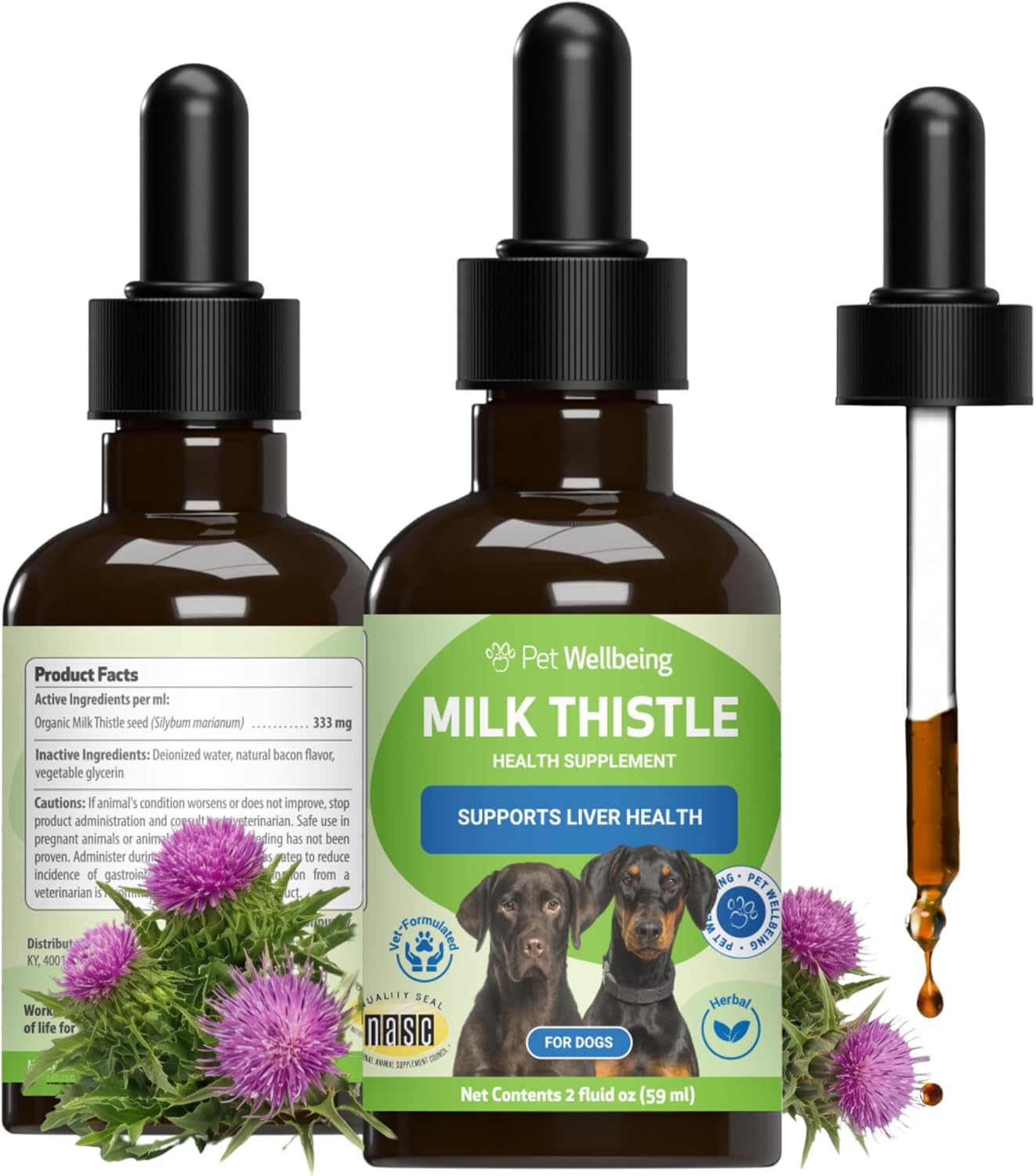
Pet Wellbeing’s Milk Thistle is a veterinarian-formulated, full-spectrum liquid extract. The liquid format may be easier to give to dogs who resist tablets or capsules—something many families appreciate when their dog is already taking several medications.
Always follow the product label and use the amount recommended for your dog’s weight. More is not necessarily better.
Frequently Asked Questions
Can I Give Milk Thistle to My Dog Every Day?
Milk thistle is generally well tolerated when used appropriately, but daily use is not automatically right for every dog.
The appropriate amount and length of use depend on your dog’s size, health history, medications, and reason for taking it. Ask your veterinarian whether ongoing use is appropriate and whether your dog needs follow-up bloodwork.
Stop using the product and contact your veterinarian if you notice vomiting, diarrhea, appetite changes, itching, swelling, or another unexpected reaction.
Can Milk Thistle Interact With My Dog’s Medications?
Yes, interactions may be possible. Both medications and botanical compounds can affect how substances are processed by the liver.
This is especially important for dogs receiving chemotherapy, seizure medications, long-term anti-inflammatory drugs, or complicated medication schedules. Show your veterinary team the complete ingredient label rather than mentioning only “milk thistle,” since other ingredients in the formula may also matter.
Can Milk Thistle Replace Veterinary Liver Care?
No. Milk thistle may support normal liver function, but it cannot identify the cause of abnormal liver values or replace bloodwork, imaging, medication, nutrition changes, or other veterinary recommendations.
Contact your veterinarian promptly if your dog develops yellow eyes or skin, repeated vomiting, a swollen abdomen, unusual bruising, disorientation, collapse, or a significant change in appetite.
Should I Give Milk Thistle to a Healthy Dog?
Some families consider milk thistle for senior dogs or dogs taking long-term medications. However, evidence does not support automatically giving it to every healthy dog.
Ask your veterinarian whether your dog has a specific reason to need liver support. Adding fewer, carefully selected supplements is often more helpful than giving several products without a clear purpose.
Making a Thoughtful Decision for Your Dog
When your dog has cancer, it is understandable to want to do everything possible to support their body. The number of available supplements can quickly become overwhelming, and it is not always easy to separate realistic support from exaggerated promises.
Milk thistle may provide gentle antioxidant and liver support for some dogs. The safest place to begin is with your dog’s veterinary team. Review your dog’s bloodwork, health history, cancer care plan, medications, and current supplements together.
If milk thistle is appropriate, choose a dog-specific product with transparent ingredients and clear weight-based instructions.
Explore Pet Wellbeing’s veterinarian-formulated Milk Thistle.
Questions to ask your veterinarian
- Is my dog receiving any drug that puts stress on the liver?
- Do you recommend a liver-support supplement during this protocol, and if so, which specific product?
- Would you use silybin alone, or a combination product that also contains SAMe?
- Does the concern about antioxidants interfering with chemotherapy apply to my dog's specific drugs?
- How often will you check liver values, and what number would prompt a change in the plan?
- If liver enzymes rise, what happens to the chemotherapy schedule?
- Are there interactions between this supplement and my dog's other medications?
- Is there a brand or formulation you trust, and does absorption differ between products?
- Should this be given with food or on an empty stomach?
- Is there a point at which we would stop it?
Sources
Bijak, M. (2017). Silybin, a major bioactive component of milk thistle (Silybum marianum L. Gaernt.): Chemistry, bioavailability, and metabolism. Molecules, 22(11), 1942. https://doi.org/10.3390/molecules22111942
Christensen, J., Johnson, K., Ettinger, S., Garrett, L., Gordon, I., Ireifej, S., Love, A., & Wisecup, M. (2026). AAHA oncology guidelines for dogs and cats. Journal of the American Animal Hospital Association, 62(1), 1-37. https://doi.org/10.5326/JAAHA-MS-7549
Delmas, D., Xiao, J., Vejux, A., & Aires, V. (2020). Silymarin and cancer: A dual strategy in both chemoprevention and chemosensitivity. Molecules, 25(9), 2009. https://doi.org/10.3390/molecules25092009
Ladas, E. J., Kroll, D. J., Oberlies, N. H., Cheng, B., Ndao, D. H., Rheingold, S. R., & Kelly, K. M. (2010). A randomized, controlled, double-blind, pilot study of milk thistle for the treatment of hepatotoxicity in childhood acute lymphoblastic leukemia (ALL). Cancer, 116(2), 506-513. https://doi.org/10.1002/cncr.24723
National Cancer Institute. (2022). Milk thistle (PDQ): Health professional version. https://www.cancer.gov/about-cancer/treatment/cam/hp/milk-thistle-pdq
Siegel, A. B., Narayan, R., Rodriguez, R., Goyal, A., Jacobson, J. S., Kelly, K., Ladas, E., Lunghofer, P. J., Hansen, R. J., Gustafson, D. L., Flaig, T. W., Tsai, W. Y., Wu, D. P. H., Lee, V., & Greenlee, H. (2014). A phase I dose-finding study of silybin phosphatidylcholine (milk thistle) in patients with advanced hepatocellular carcinoma. Integrative Cancer Therapies, 13(1), 46-53. https://doi.org/10.1177/1534735413490798
Skorupski, K. A., Hammond, G. M., Irish, A. M., Kent, M. S., Guerrero, T. A., Rodriguez, C. O., & Griffin, D. W. (2011). Prospective randomized clinical trial assessing the efficacy of Denamarin for prevention of CCNU-induced hepatopathy in tumor-bearing dogs. Journal of Veterinary Internal Medicine, 25(4), 838-845. https://doi.org/10.1111/j.1939-1676.2011.0743.x
Vandeweerd, J. M., Cambier, C., & Gustin, P. (2013). Nutraceuticals for canine liver disease: Assessing the evidence. Veterinary Clinics of North America: Small Animal Practice, 43(5), 1171-1179.
Disclaimer: Milk Thistle is a holistic supplement intended to support and maintain normal liver health in dogs. It is not intended to diagnose, treat, cure, or prevent cancer or any other disease. Consult your veterinarian before introducing a supplement, particularly if your dog has a health condition, takes medication, or is receiving cancer care.
Reviewed by: Amber L. Drake, PhD
Dr. Amber L. Drake is a board-certified holistic health practitioner, canine clinical herbalist, educator, and founder of the Drake Dog Cancer Foundation and Drake Dog Academy. She is dedicated to helping pet parents better understand canine cancer, treatment options, nutrition, quality of life, and supportive care through compassionate, evidence-informed education. Her work combines professional training, practical resources, and firsthand insight from supporting thousands of dog families through the challenges of a cancer diagnosis.
Stay connected with news and updates!
Join our mailing list to receive the latest news and updates from our team.
Don't worry, your information will not be shared.
We hate SPAM. We will never sell your information, for any reason.