What Does My Primary Veterinarian Do When My Dog Has Cancer? Do They Have Limitations?
Mar 21, 2026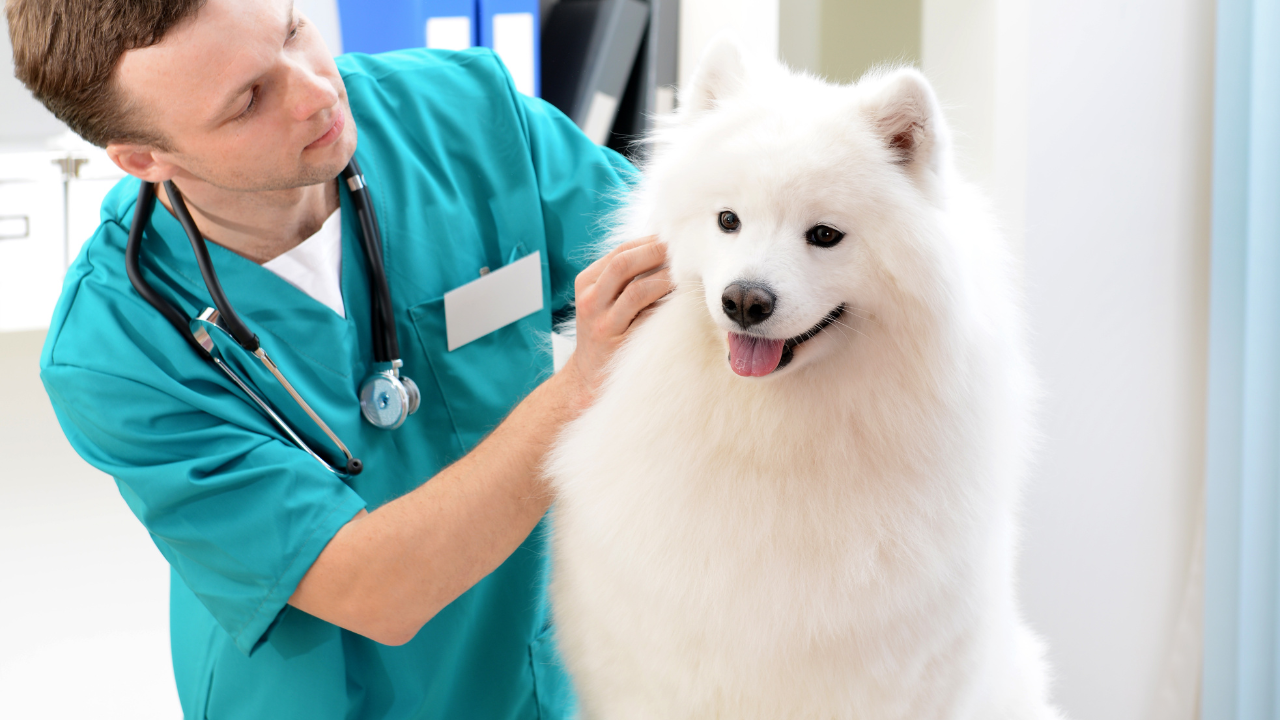
Your primary care veterinarian does more than most owners expect. Current guidelines are explicit that primary care veterinarians may diagnose, stage, and treat many canine cancers within their own practice, and that referral, while often necessary in complex cases, is a collaboration rather than a handoff (Christensen et al., 2026). Your veterinarian finds the mass, samples it, interprets or submits the results, works out how far the disease has spread, decides what treatment makes sense, often delivers that treatment, and manages every side effect and unrelated health problem along the way.
They do have limitations, and they fall into two groups. Some are absolute: no general practice has a linear accelerator, so radiation therapy always requires referral, and a small number of newer cancer drugs are currently restricted to oncologists. Others vary from practice to practice, depending on equipment, chemotherapy safety infrastructure, caseload, and how much oncology a particular veterinarian has chosen to take on.
The limitation that costs dogs the most, though, is not on either list. It is timing. The first attempt at removing a tumor is the one with the best chance of getting all of it (Christensen et al., 2026), and that surgery often happens before anyone has said the word cancer out loud.
Key points
- Primary care veterinarians can and do diagnose, stage, and treat many canine cancers. Referral is recommended for complex staging, specialized surgery, advanced systemic protocols, and decisions weighing curative against palliative intent.
- The first surgical excision offers the best opportunity for complete removal, and recurrent tumors are harder to remove because scar tissue distorts normal tissue planes (Christensen et al., 2026). Sampling a mass before removing it is not an unnecessary step.
- A pathology report of complete margins does not guarantee the tumor was fully removed, and a report of incomplete margins does not guarantee recurrence (Christensen et al., 2026).
- Chemotherapy is better tolerated than most owners fear. Roughly 15 to 30 percent of dogs experience side effects, mostly mild, and severe events requiring hospitalization occur in around 5 to 7 percent (Christensen et al., 2026).
- Absolute limitations include radiation therapy, on-site advanced imaging, clinical trial access, and a handful of drugs currently available only through specialists.
- Extralabel drug use is normal in veterinary oncology and is not a sign your veterinarian is improvising.
- Most pets diagnosed with cancer never see a specialist (Johannes & Sones, 2025), which makes the primary care relationship the one that matters most.
Detailed explanation
What your veterinarian actually does, roughly in order
They find it, and then they sample it. Most cancers are found by an owner or on a routine physical exam. The important next step is that the mass gets sampled rather than watched, because tumor type and behavior cannot be determined from feel or appearance, and many entirely benign lumps look and feel identical to malignant ones (Christensen et al., 2026).
A fine needle aspirate takes minutes, usually needs no sedation, and often gives a definitive answer for benign lesions like lipomas and cysts and for round cell tumors like mast cell tumors and lymphoma. Results come back in about two days. A biopsy is more involved, takes three to seven days, and gives more: specific tumor type in most cases, tumor grade, and the width of surgical margins.
They get a diagnosis, and decide who reads it. Here is a judgment call owners rarely know is happening. Your veterinarian can examine cytology in-clinic themselves, or send it to a board-certified clinical pathologist. The guidelines describe when each is appropriate: in-clinic when the clinician is confident in the diagnosis or when a client has financial constraints, and referral to a clinical pathologist when there is uncertainty about malignancy or cell type, or when further characterization would change the treatment recommendation (Christensen et al., 2026).
Both are legitimate. But if you are uncertain, it is entirely reasonable to ask whether the sample was read in the practice or by a pathologist, and whether sending it out would add anything.
They stage it, without over-testing. Staging means determining how far the disease has spread. This is where good primary care shines, because the skill is not ordering everything, it is ordering the right things. The guidelines describe three tests for deciding: prognostic, meaning the result must actually change the prognosis or the plan; practical, meaning that if a client's budget is limited you should not spend it all on diagnostics and leave nothing for treatment; and pertinent, meaning you screen the places that specific tumor tends to spread to first (Christensen et al., 2026).
That second one deserves emphasis, because it is written into professional guidance and it is on your side. A veterinarian who says "we could run this, but it won't change what we do" is practicing well, not cutting corners.
They treat, more often than owners realize. Surgery in general practice removes a great many canine tumors successfully. Chemotherapy, including conventional protocols, low-dose metronomic protocols given at home, and oral targeted drugs, is available to general practitioners (Christensen et al., 2026). Whether a given practice offers it depends on infrastructure and interest rather than on any rule.
They monitor. This is the unglamorous part and it is most of the work. Bloodwork before treatments. A nadir check after drugs with high bone marrow suppression, typically about a week out, to see how low the neutrophil count has gone. The guidelines note that the neutrophil count rather than the total white cell count is the number that matters, and that a febrile neutropenic patient is an oncologic emergency requiring hospitalization (Christensen et al., 2026).
They manage side effects and everything else. Appetite loss is one of the most common reasons owners stop chemotherapy early, and the guidelines are emphatic that it is usually manageable if addressed quickly (Christensen et al., 2026). Your veterinarian should be sending you home with medications to use if problems appear after hours. They are also handling the arthritis, the dental disease, and the ear infection, none of which pause because your dog has cancer.
The limitation that matters most is the one nobody warns you about
Read this line from the current guidelines carefully: the first attempt at surgical excision always offers the best opportunity to completely remove the tumor (Christensen et al., 2026). Locally recurrent tumors are harder to remove, because the disease has involved more normal tissue and because scar tissue distorts the planes a surgeon relies on.
Now consider how lumps usually get removed. A dog has a bump. It gets taken off during a dental, or as a quick procedure, and sent to the lab afterward. Sometimes that is completely fine. But if that mass turns out to be a soft tissue sarcoma or a mast cell tumor, the margins needed are considerable and vary by tumor type and grade, and a routine excision will not have taken them.
This is not a criticism of general practitioners. It is an argument for the order of operations. Aspirate first, then plan the surgery around the answer. The guidelines describe marginal excision, meaning shelling a tumor out just outside its capsule, as something to avoid where possible, because that capsule is often made of compressed cancer cells (Christensen et al., 2026).
If your dog has a mass scheduled for removal and it has not been aspirated, ask why.
The margin report is more slippery than it sounds
When the pathology comes back, you will get a verdict on margins. Two things owners should know.
A report of complete margins does not guarantee the excision was complete, because laboratories prepare representative sections of a specimen rather than examining every square millimeter. And a report of incomplete margins does not mean recurrence is coming. Recurrence rates are consistently higher with incomplete margins, but many incompletely excised tumors never come back, and some completely excised ones do (Christensen et al., 2026).
After an incomplete margin report, the options are monitoring, a second wider excision of the scar, or radiation. That is a genuine decision with trade-offs, and it is a good moment for a specialist opinion even if you have not needed one before.
Hard limitations
These do not vary much by practice.
Radiation therapy. It requires a linear accelerator and a trained radiation oncologist. No general practice has this. If radiation is part of your dog's best plan, referral is the only route.
Advanced imaging. CT and MRI are needed for tumor's that are large, fixed, or sitting next to critical structures, and for planning complex surgery (Christensen et al., 2026). Most general practices do not have either machine. The guidelines also note it is best practice for a board-certified radiologist to review the images, which is a separate service from having the scanner.
Certain drugs. A few newer agents are currently restricted. The canine melanoma vaccine is available only from a specialist, and gilvetmab, a monoclonal antibody, is currently available only to oncologists (Christensen et al., 2026). If one of these is the right treatment, your veterinarian cannot simply order it.
Clinical trials. Trial enrolment runs through academic institutions and specialty centers. Your veterinarian can raise the possibility, but cannot enroll your dog directly.
Complex or high-morbidity surgery. Limb amputation, chest wall resection, and tumors wrapped around major vessels or nerves are surgical oncology and board-certified surgery territory.
Soft limitations, which vary a lot
Chemotherapy safety infrastructure. This is the most common reason a practice does not offer chemotherapy, and it is worth understanding rather than resenting. Chemotherapy drugs are hazardous drugs. Handling them safely requires specific protective equipment, spill kits, dedicated waste disposal, and typically a Class II biological safety cabinet for preparation, under standards set out in USP General Chapter 800 (Christensen et al., 2026). Staff who are pregnant, trying to conceive, breastfeeding, or immunocompromised should not handle these drugs at all. A small practice may reasonably decide it cannot meet that standard.
There is a workaround, and it is worth asking about. The guidelines suggest that practices where chemotherapy is uncommon consider ordering premeasured single-dose chemotherapeutics, which reduces handling in the clinic and removes the need for a biological safety cabinet (Christensen et al., 2026). If distance to a specialist is your obstacle, this is a concrete question to raise.
Dose calculation practices. Chemotherapy is usually dosed by body surface area, which creates real opportunity for arithmetic error, and the guidelines recommend that two people independently calculate every dose before it is given (Christensen et al., 2026). Any practice giving chemotherapy should be doing this.
Caseload and pattern recognition. A veterinarian who sees a handful of cancer cases a year is working from different experience than one who sees several a week. This is not about competence. It is about how quickly an unusual presentation registers as unusual.
Appointment length. Oncology conversations are long. A practice running fifteen-minute appointments will struggle to give a cancer diagnosis the time it needs. If you feel rushed, ask to book a longer consultation specifically to discuss the plan.
Things that sound like limitations but are not
Extralabel drug use. Most chemotherapy drugs used in dogs are approved for humans and used extralabel in animals, and even veterinary-approved drugs are commonly used for cancers outside their labelled indication (Christensen et al., 2026). This is standard, legal, and evidence-based practice, not improvisation.
Sending samples away. Submitting cytology to a clinical pathologist or histopathology to a laboratory is what everyone does, including specialists. It is a sign of thoroughness.
Saying "I want to ask an oncologist." Teleconsultation, where a specialist reviews your dog's case remotely and advises your veterinarian, is described in current guidelines as a tool that improves access to specialty care (Christensen et al., 2026). A veterinarian who reaches for it is doing exactly the right thing.
Recommending against a test. See the practical principle above. Preserving your budget for treatment is deliberate.
What good primary care oncology looks like
Your veterinarian aspirates masses rather than watching them. They tell you the tumour type, grade, and stage in plain words, and give you the actual reports. They explain what each proposed test will change. They are willing to say what they do not know and to ask someone who does. They send you home with medications for side effects before you need them. They send records to the specialist before your appointment rather than after. And they keep managing your dog's other problems throughout.
If that describes your practice, you have something better than proximity to a referral center.
When to contact a veterinarian
Contact your veterinary practice promptly if:
- Your dog develops a fever or becomes unusually lethargic during or after chemotherapy. Fever combined with a low neutrophil count is an emergency.
- Appetite drops, even mildly. Early intervention is what keeps dogs on treatment, and waiting until your dog has stopped eating entirely makes the problem harder to fix.
- Vomiting or diarrhea lasts more than about a day, or your dog cannot keep water down.
- A mass is scheduled for removal and has not been sampled first.
- A pathology report mentions incomplete or narrow margins and nobody has explained the options.
- Your dog seems painful, restless, or reluctant to move.
- You cannot manage a medication schedule or afford part of the plan. This is a reason to call rather than to quietly stop.
Seek emergency care for collapse, pale gums, labored breathing, a swollen or painful abdomen, uncontrolled bleeding, or seizures.
Questions to ask your veterinarian
- Can we aspirate this mass before deciding whether and how to remove it?
- Was the cytology read here or by a clinical pathologist, and would sending it out change anything?
- What margins would this tumor type need, and is that surgery something you would do here or refer?
- Which staging tests would actually change the plan, and which are optional?
- Do you offer chemotherapy in this practice? If not, would premeasured single-dose drugs make it possible?
- Can you arrange an oncology teleconsultation for this case?
- What side effect medications will I have at home before we start?
- What should make me call you, and what should make me go straight to emergency?
- If the margins come back incomplete, what would our options be?
Sources
American Animal Hospital Association. (2026). 2026 AAHA oncology guidelines for dogs and cats. https://www.aaha.org/resources/2026-aaha-oncology-guidelines-for-dogs-and-cats/
American College of Veterinary Radiology. (n.d.). Diplomate certification: What and how? https://acvr.org/who-we-are/diplomate-accreditation/
American College of Veterinary Surgeons. (n.d.). ACVS fellowship in surgical oncology. https://www.acvs.org/certification/fellowship-programs/acvs-fellowship-in-surgical-oncology/
Christensen, J., Johnson, K., Ettinger, S., Garrett, L., Gordon, I., Ireifej, S., Love, A., & Wisecup, M. (2026). AAHA oncology guidelines for dogs and cats. Journal of the American Animal Hospital Association, 62(1), 1–37. https://doi.org/10.5326/JAAHA-MS-7549
Johannes, C. M., & Sones, E. (2025). The future of veterinary oncology: What is financially sustainable? Today's Veterinary Practice, July/August 2025. https://todaysveterinarypractice.com/oncology/the-future-of-veterinary-oncology-what-is-financially-sustainable/
Reviewed by: Amber L. Drake, PhD
Dr. Amber L. Drake is a board-certified holistic health practitioner, canine clinical herbalist, educator, and founder of the Drake Dog Cancer Foundation and Drake Dog Academy. She is dedicated to helping pet parents better understand canine cancer, treatment options, nutrition, quality of life, and supportive care through compassionate, evidence-informed education. Her work combines professional training, practical resources, and firsthand insight from supporting thousands of dog families through the challenges of a cancer diagnosis.
Stay connected with news and updates!
Join our mailing list to receive the latest news and updates from our team.
Don't worry, your information will not be shared.
We hate SPAM. We will never sell your information, for any reason.