What Pet Parents Say About Nasal Planectomy
Jul 30, 2026
When a dog is diagnosed with squamous cell carcinoma involving the nose, the treatment decisions can feel particularly difficult. Surgery may offer the possibility of long-term control, but a nasal planectomy can dramatically change a dog's appearance and the first days of recovery may be intimidating for a family.
That is the position Spirit's family recently found themselves in.
Spirit was diagnosed with squamous cell carcinoma approximately two weeks before his scheduled surgery. According to his family, the tumor was located immediately inside his right nostril. Imaging had not shown invasion into the bone, extension throughout the nasal passage, lymph-node involvement, or lung metastasis.
His surgeon considered him a good candidate for a nasal planectomy.
The procedure would remove the external nasal planum—the pigmented portion most people think of as a dog's nose—and reconstruct the area using tissue from his upper lip.
Spirit's family understood why surgery was being recommended. What frightened them was everything surrounding it.
What would he look like afterward? How difficult would recovery be? What if the surgeon could not obtain clean margins? Would putting him through such an extensive operation ultimately be worth it?
When they asked other pet parents for their experiences, the answers were emotional, varied, and—in several cases—remarkably encouraging.
First, Nasal Planum Cancer Is Not the Same as Every “Nasal Cancer”
This distinction matters when researching outcomes online.
A squamous cell carcinoma arising on or near the nasal planum is not necessarily equivalent to a tumor developing deep within the nasal cavity, frontal sinus, or structures near the brain. Location, extent of invasion, lymph-node involvement, and whether the tumor can be completely removed can substantially change the treatment options and prognosis.
For localized nasal planum squamous cell carcinoma, surgical excision is an established treatment and may potentially be curative when complete removal can be achieved. A 2025 multi-institutional study involving 89 dogs with nasal planum SCC found that 71% underwent surgical excision alone. Metastasis was identified in only 12% at the time of local treatment, and the researchers concluded that long-term survival was possible and that aggressive local therapy—particularly surgery—should be considered.
That makes Spirit's lack of detectable bone, lymph-node, and lung involvement an important part of the conversation with his surgical team. It does not guarantee that surgery will be curative, but it helps explain why his surgeon may consider an aggressive local procedure reasonable.
“He Has Been Cancer-Free Since”
One of the most encouraging responses came from Cindy H., whose Golden Retriever underwent a procedure strikingly similar to the one proposed for Spirit.
Cindy explained that her dog underwent a planectomy and maxillectomy, along with removal of six upper teeth. The surgeon then reconstructed a new nose by using tissue from the upper lip.
Eighteen months later, she reported:
“He has been cancer free since. No chemo or radiation.”
She also described him as doing extremely well.
A single dog's outcome cannot predict Spirit's, but Cindy's story is not inconsistent with what has been reported in veterinary surgical literature.
In one study of 26 dogs undergoing nasal planectomy with cosmetic reconstruction, 24 had squamous cell carcinoma. The median survival time was 1,542 days—more than four years. Only two dogs were suspected of experiencing local recurrence, and both had narrow or incomplete surgical excision. Among owners interviewed afterward, 10 of 11 were satisfied with their dog's appearance and eight said they would choose the procedure again.
That study was small and retrospective, so its survival figure should not be interpreted as a promise. But it demonstrates something important: a nasal planectomy does not automatically mean a short survival or poor quality of life.
For appropriately selected dogs, long-term control can occur.
The Concern About Clean Margins Is Very Real
Spirit's family expressed one concern repeatedly: What if the surgeon cannot get clean margins?
A clean or complete surgical margin means the pathologist does not identify tumor cells reaching the edge of the removed tissue. An incomplete or narrow margin raises concern that microscopic cancer cells may remain at the surgical site.
That matters with nasal planum SCC.
An older study of 17 dogs found that surgery produced the most favorable outcomes among the treatments examined. Four of six surgically treated dogs were considered cured, while recurrence was anticipated in the other two because their resections were incomplete or marginal.
The later reconstruction study found a similar pattern: the two suspected recurrences occurred in dogs with narrow or incomplete excision.
More recently, the 2025 study of 89 dogs reported local recurrence in 21% overall and in 25% of dogs treated with surgery alone. Dogs without documented disease progression had a substantially longer median survival than dogs whose disease progressed.
So Spirit's family's question is exactly the right one.
The goal is not simply to remove what can be seen. The goal is to understand whether the surgeon believes adequate margins are realistically achievable and what the plan would be if the pathology report later shows incomplete margins.
What Is Recovery Really Like?
This may be the part veterinary statistics cannot fully communicate.
Numbers can tell us how many dogs experienced complications. They cannot tell a family what it feels like to bring their dog home after part of his nose has been removed.
For that, Alison T.'s account of her dog Marley is particularly valuable.
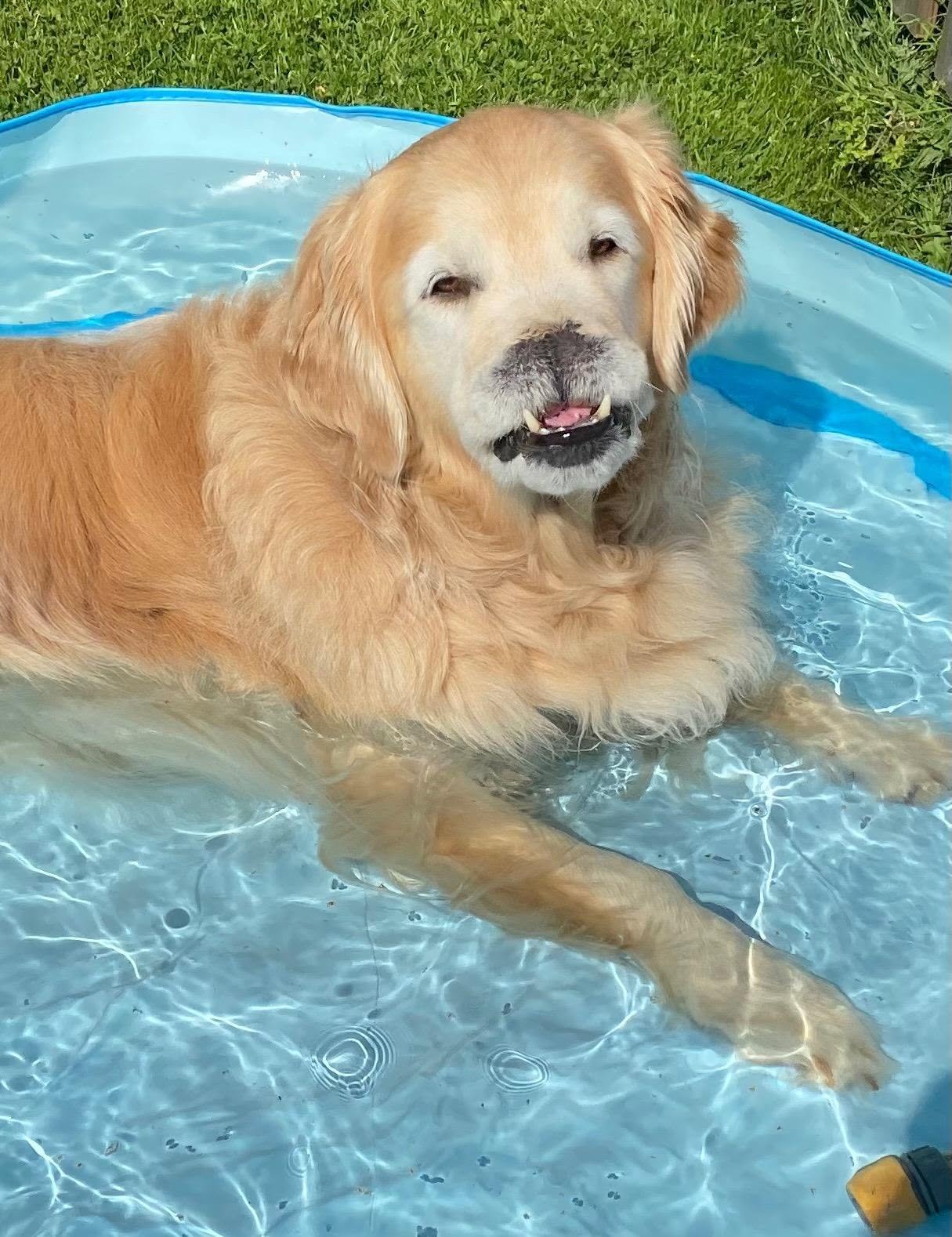
Marley underwent nasal reconstruction at a specialist hospital in the United Kingdom. Alison remembered the first stage of recovery as emotionally difficult.
She described seeing him shaved and recovering from a major facial operation as “initially heart breaking.” Her family slept beside him on a mattress, helped him with water, managed multiple pain medications, and remained in close contact with his surgeon whenever they became worried about the healing wounds.
At first, Alison questioned whether they had made the right decision.
Then Marley healed.
She later wrote:
“We absolutely did 100% the right thing.”
Marley returned to eating and drinking independently. He could even hold a tennis ball again.
Most remarkably, Alison reported that he went on to have another four and a half years of what she described as a wonderful life, and ultimately died from something unrelated to the nasal cancer.
Again, that is an individual testimonial rather than a predicted outcome.
But it provides a perspective families may not get from looking at postoperative photographs: what a dog looks like immediately after surgery is not necessarily what life will look like several months later.
Complications Can Happen
Alison's description of a difficult early recovery is also important because nasal planectomy should not be portrayed as an easy procedure.
In the study of 26 dogs receiving cosmetic reconstruction, postoperative complications occurred in 19 dogs, and nine required revision surgery. One dog did not survive to hospital discharge. Wound separation, or dehiscence, was an important concern. Despite that relatively high complication rate, long-term tumor control and owner satisfaction were reported as favorable.
Another study looked at 11 dogs whose nasal planectomy sites were reconstructed using direct mucocutaneous apposition rather than a more elaborate cosmetic reconstruction. Eight dogs experienced complications, but all were classified as minor; complete tumor excision was achieved in 10 of the 11 dogs, and owner satisfaction remained favorable.
Different reconstruction techniques therefore come with different considerations. The surgeon's experience, how much tissue must be removed, whether bone is involved, and the reconstruction method can all affect recovery.
It is reasonable for a family to ask not only, “Can you perform this surgery?” but also, “How many of these procedures have you performed, and what complications have you personally seen?”
Some Pet Parents Choose Radiation Instead
Not every family facing nasal SCC chooses surgery.
Linda M. shared the experience of her 11-year-old Golden Retriever, who was diagnosed with nasal squamous cell carcinoma without identified metastasis.
Her oncology team recommended stereotactic radiation therapy, or SRT, delivered as three high-dose treatments.
Months later, she reported:
“So far so good.”
Her experience illustrates why treatment cannot be chosen solely from someone else's story.
Radiation therapy is used for canine nasal tumors, including SCC, but outcomes vary considerably according to the exact tumor location, stage, radiation protocol, and other factors. A study of 166 dogs treated with radiation for nasal tumors found meaningful differences in survival according to tumor subtype and CT findings, with destruction of the cribriform plate emerging as an important negative prognostic factor.
This is also why a statement such as “radiation gives six to eight months” should be understood as an estimate for a particular patient and treatment plan, not a universal life expectancy for every dog with nasal SCC.
Spirit's oncology and surgical teams are in the best position to explain why the estimates they provided apply to his individual tumor.
And Some Families Choose Palliative Care
Another pet parent, Lynette Stagg, was dealing with what sounded like a very similar diagnosis at almost the same time.
Her dog's situation was different in one crucial way: imaging had also revealed a lung mass, and the location of the nasal tumor would have required much more extensive surgery and additional treatment.
Her family chose palliative care instead.
That is not the opposite of caring for a dog with cancer.
It is a different goal of care.
The presence or absence of metastatic disease can radically change the value of aggressive local surgery. The 2025 nasal planum SCC study found metastasis in a minority of dogs at the time of treatment, which reinforces why staging before a major operation matters.
For one dog, removing a localized tumor may provide the possibility of years of life.
For another dog whose cancer has already spread, the burden of the same operation may offer far less benefit.
The procedure is the same. The context is not.
“I Wish I'd Been Given Options”
Perhaps one of the shortest comments in the entire discussion said the most:
“When mine had nasal cancer, I wish I'd been given options.”
That came from pet parent Patty Ayers.
When cancer is diagnosed, families sometimes hear a recommendation as though it is the only possible path forward.
It is reasonable to ask what the alternatives are.
For a dog being considered for nasal planectomy, that conversation may include surgery alone, surgery followed by another treatment if margins are incomplete, radiation therapy, other local treatments available at specialty centers, or comfort-focused care.
A second opinion from a veterinary oncologist or surgical oncologist is also reasonable when the proposed procedure is extensive or when the family is uncertain about the expected benefit.
The objective is not to collect opinions until someone gives you the answer you want.
It is to understand the trade-offs well enough that the decision you make is an informed one.
What About The Dog's Appearance?
This deserves direct discussion because many owners feel guilty admitting that it worries them.
A planectomy changes the dog's face.
That can be shocking.
Researchers themselves acknowledge that alteration in appearance is one of the major concerns surrounding nasal planectomy, which is why multiple reconstructive techniques have been developed. Yet the available owner-satisfaction studies suggest that many families adapt well once healing is complete.
Marley's family certainly did.
Alison said that after recovery, he became something of a star with people who met him. More importantly, he went back to doing the things that made him Marley: eating, drinking, carrying his tennis ball, and living his life.
For most families, that becomes far more important than whether the reconstructed nose looks exactly like the original one.
The Questions Spirit's Family Should Have Answered
Before a procedure like this, the most useful conversation is not simply “Should we do surgery?”
It is a much more specific conversation with the surgical and oncology team:
- Based on the CT images, how confident are you that complete margins are achievable?
- Exactly how much tissue do you expect to remove?
- Will bone or teeth need to be removed?
- What reconstruction technique will you use, and why?
- How many similar nasal planectomies has the surgeon performed?
- What complications occur most commonly with this technique?
- How often do dogs require a second surgery for wound healing?
- What should eating and drinking look like during the first week?
- What level of pain is expected, and how will it be controlled?
- How long does healing typically take?
- If the pathology report shows incomplete margins, what would you recommend next?
- Will the regional lymph nodes be sampled even though they appear normal?
- If surgery is successful and margins are clean, would any additional therapy be recommended?
- What would you expect Spirit's quality of life to look like one month, six months, and one year after surgery?
The answers will tell Spirit's family considerably more than a generic survival statistic ever could.
A Major Surgery Can Still Lead Back to an Ordinary Dog's Life
Reading the comments from pet parents reveals something that statistics alone cannot.
There was fear on both sides of the decision.
Some people looked at the proposed operation and immediately thought it sounded like too much.
Others had lived through that exact fear, watched their dog recover, and later said they would make the same decision again.
Cindy's Golden Retriever was reportedly cancer-free 18 months after surgery.
Marley lived another four and a half years after his operation and returned to eating, drinking, playing, and carrying his tennis ball.
Linda's family chose stereotactic radiation for her Golden Retriever and was pleased with how things were going months later.
Lynette's family chose palliative care because their dog's cancer had presented differently.
None of those stories proves what Spirit's outcome will be.
But they demonstrate why “Would I put my dog through that?” cannot be answered by looking at the surgery alone.
The better question is:
What is this particular dog likely to gain from it?
If a tumor is localized, appears surgically accessible, and can potentially be completely removed, nasal planectomy can offer something very different from simply buying a few more weeks. Published veterinary research shows that some dogs achieve long-term control following aggressive local treatment, particularly when disease does not progress.
At the same time, recovery can be demanding, complications are possible, and clean margins cannot always be guaranteed.
That is why this decision belongs between a family and a surgical oncology team that knows exactly where the tumor is, what the CT shows, and what can realistically be removed.
For Spirit's family—and for anyone else facing the same decision—there may never be a moment when the choice feels easy.
But there is a meaningful difference between making that choice frightened and uninformed, and making it after understanding what surgery can accomplish, what recovery may involve, and what life can look like on the other side.
Sometimes the first postoperative photograph is not the end of the story.
Sometimes it is the beginning of several more years of tennis balls, dinners, walks, and ordinary days.
And for many families, those ordinary days are exactly what they are fighting for.
Pet-parent experiences included in this article are individual testimonials shared by owners and should not be interpreted as evidence that another dog will have the same result. This article is educational and does not replace veterinary advice. Treatment decisions for nasal squamous cell carcinoma should be made with your veterinarian, veterinary surgeon, or veterinary oncologist based on your dog's pathology, imaging, stage, overall health, and quality of life.
Reviewed by: Amber L. Drake, PhD
Dr. Amber L. Drake is a board-certified holistic health practitioner, canine clinical herbalist, educator, and founder of the Drake Dog Cancer Foundation and Drake Dog Academy. She is dedicated to helping pet parents better understand canine cancer, treatment options, nutrition, quality of life, and supportive care through compassionate, evidence-informed education. Her work combines professional training, practical resources, and firsthand insight from supporting thousands of dog families through the challenges of a cancer diagnosis.
Stay connected with news and updates!
Join our mailing list to receive the latest news and updates from our team.
Don't worry, your information will not be shared.
We hate SPAM. We will never sell your information, for any reason.