The Roles of Prebiotics, Probiotics, and Postbiotics for Dogs
Jun 06, 2024
Your dog's digestive tract does much more than process food.
Inside the gastrointestinal system lives an enormous community of bacteria and other microorganisms collectively known as the gut microbiome. These organisms interact with digestion, nutrient metabolism, the intestinal barrier, and immune function. Researchers are increasingly investigating how changes within this microbial community may influence health both inside and outside the digestive tract.
When the microbiome becomes disrupted, the balance between different microbial populations can change. Diet, medications, including antibiotics, illness, age, environment, and stress can all influence the intestinal microbiome.
This growing understanding has led to much more discussion about three terms dog parents are likely to encounter:
Prebiotics, probiotics, and postbiotics.
They sound similar, but they don't do exactly the same thing.
Understanding the difference can help you make more informed decisions about supporting your dog's digestive health.
What Are Probiotics For Dogs?
Probiotics are live microorganisms that, when provided appropriately, are intended to support a healthier microbial environment.
You can think of probiotics as adding beneficial microorganisms to the digestive ecosystem.
A healthy gastrointestinal tract naturally contains many different microorganisms. Rather than viewing every bacterium as something harmful, we now understand that many microbial species participate in normal digestive and physiological processes.
Probiotics are commonly used with the goal of supporting:
- Digestive and bowel regularity.
- A healthy intestinal environment.
- Normal immune function.
- Microbial balance following certain dietary or environmental disruptions.
Researchers are also examining the use of probiotics in dogs experiencing gastrointestinal conditions, although results can differ significantly depending on the organisms used, the individual dog, and the situation. Veterinary reviews emphasize that the effects of probiotics are often strain-specific, meaning one probiotic should not automatically be assumed to provide the same benefits as another.
That's an important distinction.
The word probiotic on the front of a container doesn't tell you the whole story.
Which microorganisms are included matters.
What Are Prebiotics?
If probiotics provide beneficial microorganisms, prebiotics help feed beneficial microorganisms already living in the gut.
Prebiotics are compounds that certain intestinal bacteria can use as a food source.
Rather than introducing additional bacteria into the digestive tract, prebiotics can help create an environment that supports desirable microbial populations.
Examples include specific fermentable fibers and oligosaccharides.
One commonly used prebiotic is fructooligosaccharides, or FOS.
Once these compounds reach the large intestine, microorganisms can ferment them and produce metabolites, including short-chain fatty acids, that participate in the intestinal environment.
This is why probiotics and prebiotics are often paired together.
You're not only introducing beneficial microorganisms.
You're also providing nourishment that can help support the microbial ecosystem.
What About Postbiotics?
Postbiotics are a newer part of the gut-health conversation.
Unlike probiotics, postbiotics aren't primarily about supplying live microorganisms.
They generally refer to preparations involving inactivated microorganisms and/or their components that may provide a health benefit.
Researchers are increasingly examining probiotics, prebiotics, synbiotics, and postbiotics collectively under the broader category of “biotics.”
Veterinary research into these approaches is promising, but many questions remain regarding which products work best, appropriate amounts, mechanisms of action, and which dogs are most likely to benefit.
In other words, microbiome science is exciting—but it's still developing.
Dog parents should be cautious of any product claiming that simply “fixing the microbiome” can solve every health problem.
The gut is important, but it is only one part of a much larger biological system.
Why The Dog Gut Microbiome Matters
The intestinal tract has extensive interactions with the immune system.
You may sometimes hear claims that a particular percentage of the immune system is “located in the gut.” While putting an exact percentage on immune function can oversimplify a very complicated biological relationship, there is strong scientific interest in the connection between the intestinal microbiome, gastrointestinal tissues, and immune activity.
The microbiome also participates in digestion and the production of metabolites that can influence the intestinal environment.
When this microbial ecosystem becomes significantly altered, researchers use the term dysbiosis.
Dysbiosis has been associated with several gastrointestinal disorders in dogs, although that doesn't necessarily mean microbial changes are the sole cause of those conditions.
The goal of microbiome support, therefore, isn't simply to add as many bacteria as possible.
It's to help maintain a diverse, functional intestinal ecosystem.
Antibiotics Can Change The Microbiome
One situation in which dog parents frequently begin thinking about probiotics is during or after antibiotic use.
Antibiotics have an important place in veterinary medicine and can be lifesaving when bacterial infections require them.
However, antibiotics don't necessarily affect only the bacteria causing an infection. They can also alter other bacterial populations within the gastrointestinal tract.
Veterinary organizations specifically recognize antibiotics as one of the factors capable of influencing the microbiome.
That's one reason some veterinarians and pet wellness professionals recommend discussing digestive support when a dog needs antimicrobial medication.
It is important, however, not to discontinue or avoid a medically necessary antibiotic because of concerns about gut bacteria.
Instead, ask your veterinarian whether dietary changes, probiotics, prebiotics, or other supportive strategies make sense for your individual dog.
Combining Probiotics And Prebiotics
A product containing both probiotics and prebiotics is sometimes described as a synbiotic approach.
The idea is straightforward.
The probiotic provides beneficial microorganisms.
The prebiotic supplies material that beneficial intestinal microorganisms can utilize.
For pet parents who want both forms of support in one product, this type of formulation can be convenient.
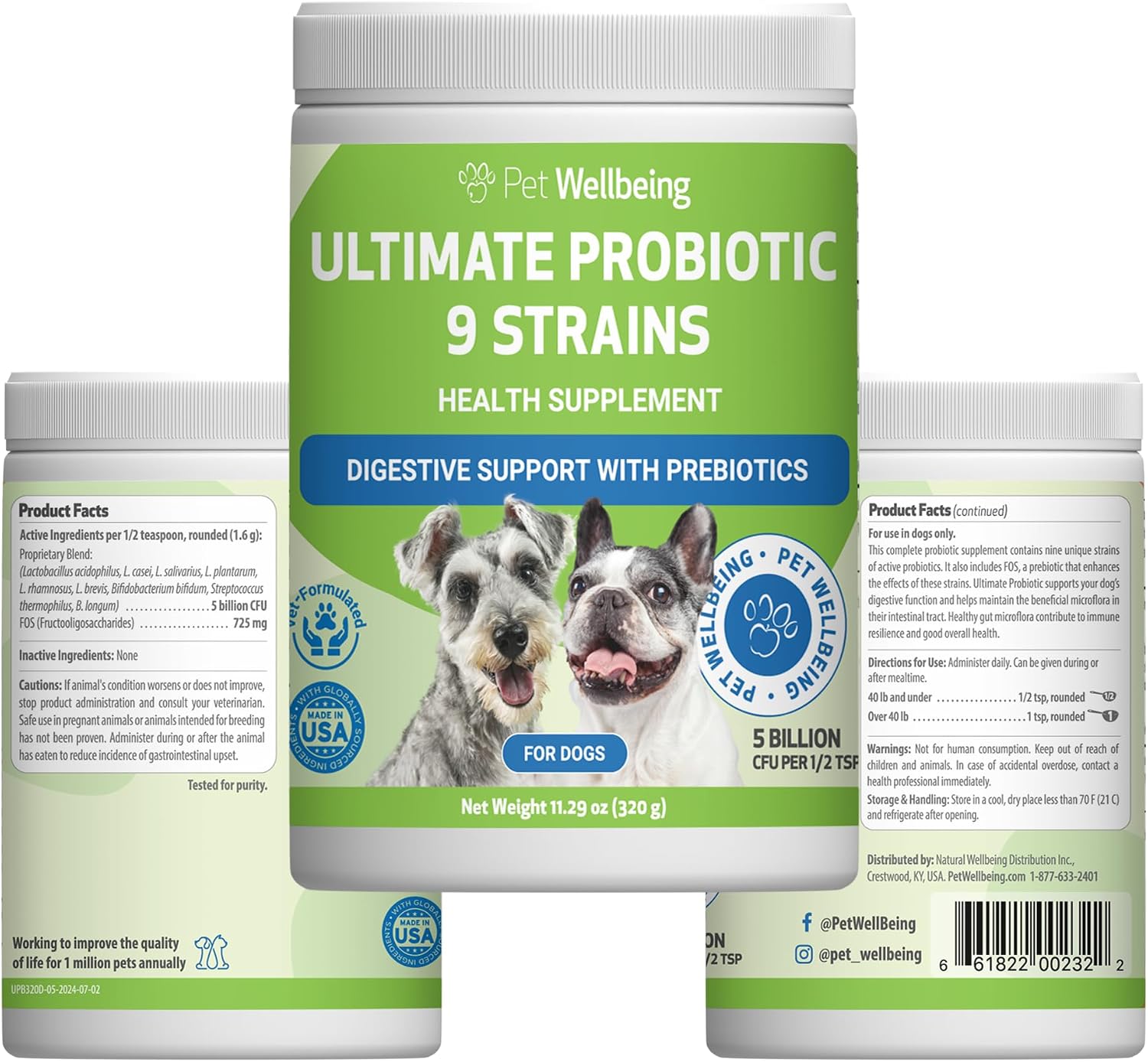
One option is Ultimate Probiotic 9 Strains with Prebiotics from Pet Wellbeing.
Pet Wellbeing's current formula combines nine probiotic strains with FOS, a prebiotic soluble fiber. According to the manufacturer's current label, one rounded half-teaspoon provides a proprietary blend containing 5 billion CFU of probiotic organisms along with 725 mg of FOS.
What's Inside Ultimate Probiotic 9 Strains?
One reason we like looking beyond the word “probiotic” is that different products contain very different formulations.
Ultimate Probiotic 9 Strains contains a combination of Lactobacillus, Bifidobacterium, and Streptococcus species, including Lactobacillus acidophilus, L. casei, L. salivarius, L. plantarum, L. rhamnosus, L. brevis, Bifidobacterium bifidum, B. longum, and Streptococcus thermophilus.
The product also contains FOS.
That combination means pet parents aren't simply adding probiotic organisms—they're also providing a prebiotic designed to support the intestinal microbial environment.
Pet Wellbeing describes Ultimate Probiotic 9 Strains as a veterinarian-formulated powder designed to support normal digestive function, immune defenses, and a healthy balance of gut bacteria.
It's an easy addition for pet parents who want to incorporate microbiome support into their dog's existing wellness routine without completely restructuring the diet.
When Might Pet Parents Consider Probiotic Support?
There isn't one universal reason every dog needs a probiotic supplement.
Some pet parents choose microbiome support during periods when the gastrointestinal system may be under additional stress.
That might include dietary transitions, boarding or changes in routine, antibiotic use, occasional digestive changes, or other circumstances where supporting intestinal balance is a priority.
Pet Wellbeing specifically positions Ultimate Probiotic 9 Strains for digestive and bowel support, immune support, normal environmental stressors, transitions such as boarding or dietary changes, and pets taking medications including antibiotics.
However, probiotics should not be used to mask persistent symptoms.
Recurring diarrhea, constipation, vomiting, weight loss, loss of appetite, blood in the stool, or significant changes in bowel habits deserve veterinary evaluation.
A probiotic may be part of a supportive plan, but figuring out why a digestive problem is occurring remains important.
More Isn't Necessarily Better
Microbiome health isn't a competition to see how many probiotic strains or billions of CFUs you can give your dog.
Veterinary guidance emphasizes that probiotic quality and effectiveness vary among supplements.
A dog's response can also depend on diet, age, medications, existing gastrointestinal health, and the specific microorganisms being provided.
This is why consistency and product quality generally matter more than chasing the highest number printed on a label.
Ultimate Probiotic 9 Strains offers one straightforward option: nine probiotic organisms combined with a prebiotic rather than a probiotic-only formula.
Don't Forget To Feed The Microbiome
Supplements can be useful, but they shouldn't distract us from one of the most powerful influences on the gut microbiome:
Food.
Dietary fiber and other food components provide substrates intestinal microorganisms can use.
A varied, nutritionally appropriate diet can therefore be an important part of supporting gastrointestinal health.
Think of a probiotic as one tool rather than the entire toolbox.
Depending on the individual dog, a comprehensive gut-supportive approach may include an appropriate diet, adequate fiber, prebiotic foods or supplements, probiotic support, stress reduction, appropriate exercise, and careful use of medications.
Supporting The Gut Is A Long-Term Wellness Strategy
The conversation around probiotics has changed dramatically.
They're no longer viewed solely as something to reach for when a dog has diarrhea.
We're beginning to understand the gut as an ecosystem that interacts with digestion, immune activity, metabolism, and other physiological systems. At the same time, veterinary researchers caution that there is still much to learn about exactly which biotics work best for individual dogs.
That balanced perspective matters.
We don't need to believe every exaggerated claim about the microbiome to recognize that gastrointestinal health deserves attention.
Start with good nutrition.
Use antibiotics responsibly when medically necessary.
Pay attention to changes in digestion.
Support beneficial intestinal microorganisms when appropriate.
And if you're looking for an easy way to combine probiotics with a prebiotic in one daily product, Ultimate Probiotic 9 Strains from Pet Wellbeing is one option worth considering. Its nine-strain formula plus FOS provides a simple way to incorporate microbiome support into your dog's everyday wellness routine.
Because supporting your dog's gut isn't about chasing a perfect microbiome.
It's about creating an internal environment that helps the body do what it was designed to do.
This article is intended for educational purposes and is not a substitute for veterinary care. Supplements are not intended to diagnose, treat, cure, or prevent disease. Talk with your veterinarian before adding supplements if your dog has an existing medical condition, is taking medication, is pregnant or breeding, or has persistent digestive symptoms.
References
Lactobacilli and enterococci — Potential probiotics for dogs | SpringerLink
Reviewed by: Amber L. Drake, PhD
Dr. Amber L. Drake is a board-certified holistic health practitioner, canine clinical herbalist, educator, and founder of the Drake Dog Cancer Foundation and Drake Dog Academy. She is dedicated to helping pet parents better understand canine cancer, treatment options, nutrition, quality of life, and supportive care through compassionate, evidence-informed education. Her work combines professional training, practical resources, and firsthand insight from supporting thousands of dog families through the challenges of a cancer diagnosis.
Stay connected with news and updates!
Join our mailing list to receive the latest news and updates from our team.
Don't worry, your information will not be shared.
We hate SPAM. We will never sell your information, for any reason.