Diagnosing Bladder Cancer in Dogs With Ultrasound
Nov 09, 2026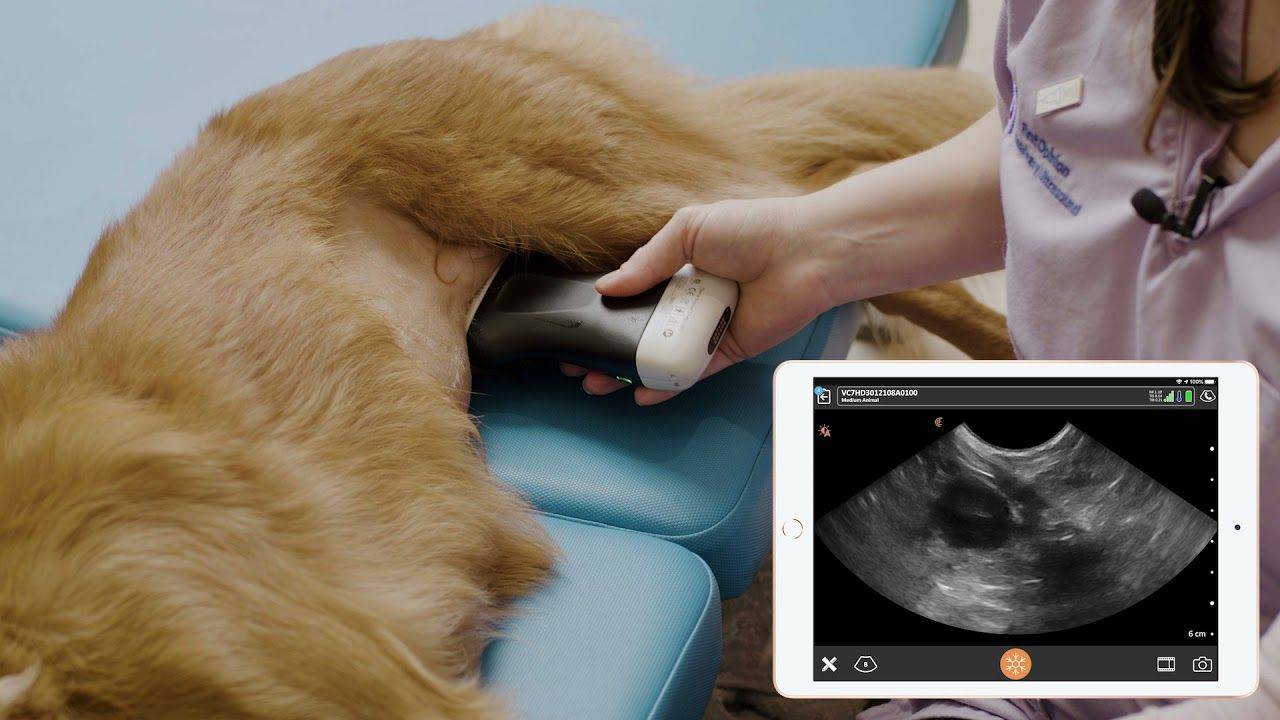
Ultrasound is usually the first test vets use when diagnosing bladder cancer in dogs. It can show a mass in the bladder, where it sits, how big it is, and whether it's blocking the tubes from the kidneys. But ultrasound can't prove a mass is cancer. Polyps, blood clots, and inflammation can look similar, so a tissue sample is still needed (Penninck, 2011).
Ultrasound also has blind spots. It can't see the part of the urethra that runs through the pelvis, and some bladder cancers grow only there (Dunn, 2019). Measurements can vary from one scan to the next, which matters when the scans are used to track treatment (Rippy et al., 2016). For these reasons, vets often pair ultrasound with a urine test, X-rays, a rectal exam, a scope, or a CT scan.
Key Points
- Ultrasound is a painless scan that shows the bladder wall and anything growing inside it (Oklahoma State University Boren Veterinary Medical Teaching Hospital, n.d.; Penninck, 2011).
- Bladder cancer usually looks like an irregular mass with a broad base, most often at the neck of the bladder (Penninck, 2011).
- Polyps, blood clots, and bladder inflammation can look like cancer on ultrasound (Penninck, 2011; Armbrust, 2011).
- A full bladder gives the best view, so your dog may need to hold their urine before the scan (Armbrust, 2011).
- Ultrasound can't see the urethra inside the pelvis. Tumors there may need a rectal exam or contrast X-rays to find (Dunn, 2019).
- Needle samples through the belly are generally avoided because tumor cells can spread along the needle path (Armbrust, 2011; Vignoli et al., 2007).
- In one study, whole-body CT at diagnosis found enlarged lymph nodes near the pelvis in 47.7% of dogs and spread to the lungs in 35.4% (Iwasaki et al., 2019).
- Standard ultrasound measurements of the tumor varied enough to change the treatment-response call 60% of the time, compared with 28% for CT (Rippy et al., 2016).
Detailed Explanation
Can ultrasound detect bladder cancer in dogs?
Yes, ultrasound can usually find a bladder mass, but it can't confirm the mass is cancer or see every place this cancer grows (Penninck, 2011; Dunn, 2019). Here's what it can and can't show.
| Ultrasound can usually show | Ultrasound can't show or confirm |
|---|---|
| A mass in the bladder, and where it sits | Whether the mass is cancer |
| The rough size and shape of the mass | Tumors in the urethra inside the pelvis |
| Whether the mass reaches the start of the urethra | Spread to the lungs |
| Swollen ureters or kidneys from a blockage | Tiny spread that hasn't enlarged a lymph node |
| Enlarged lymph nodes near the bladder | Perfectly repeatable tumor measurements |
| An enlarged or irregular prostate in males | The tumor's grade or type |
Sources for this table: Armbrust (2011), Dunn (2019), Penninck (2011), and Rippy et al. (2016).
Why is ultrasound usually the first imaging test?
Ultrasound uses sound waves to make live pictures of soft tissue and fluid (Oklahoma State University Boren Veterinary Medical Teaching Hospital, n.d.). A urine-filled bladder is one of the easiest organs to see this way. The full bladder even acts as a window to nearby structures (Penninck, 2011). It's painless, it doesn't use radiation, and most dogs don't need to be put under anesthesia.
If your dog has signs like blood in the urine or straining, an ultrasound is often the next step after a urine test. Our signs of bladder cancer in dogs article covers what usually leads here. For a general look at how ultrasound is used in cancer care, see our guide to ultrasound for dogs with cancer.
What does bladder cancer look like on ultrasound?
The most common bladder cancer in dogs is urothelial carcinoma, also called transitional cell carcinoma (TCC). On ultrasound, it usually looks like an irregular mass attached to the bladder wall by a broad base. It's most often found at the trigone, the neck of the bladder (our glossary explains terms like this), and along the top wall. Brightness varies. Some tumors have bright spots of mineral inside (Penninck, 2011).
A tumor at the trigone can press on the openings where the ureters drain into the bladder. Urine then backs up, and the ureter, or the kidney itself, looks swollen on the scan (Penninck, 2011; Armbrust, 2011). The tumor may also extend into the first part of the urethra (Penninck, 2011). Color Doppler, a setting that shows blood flow, often picks up flow inside a tumor (Armbrust, 2011).
Even so, ultrasound can't tell the tumor type on its own, so a biopsy is still needed (Penninck, 2011). Our article on transitional cell carcinoma explains this tumor in more depth.
What else can look like bladder cancer on ultrasound?
Several harmless or treatable problems can look a lot like a tumor. That's one reason a scan alone isn't a diagnosis.
| Look-alike | How it can appear | How vets tell it apart |
|---|---|---|
| Polypoid cystitis | One or more nodules or stalked growths sticking into the bladder | A tissue sample taken through a urinary catheter |
| Blood clot | A bright clump, sometimes stuck to the wall | No blood flow on color Doppler |
| Cystitis (bladder inflammation) | A thickened wall, most often at the front and bottom of the bladder | Its location and pattern, plus urine tests |
| Sediment or crystals | Bright material settling at the bottom | It settles at the lowest point, and stones cast a dark shadow |
Sources for this table: Armbrust (2011) and Penninck (2011).
Polypoid cystitis deserves a special mention. It's a benign condition, and it can look very similar to a tumor. A suction biopsy is needed to know for sure (Penninck, 2011). If your dog's report says "bladder mass," try not to assume the worst until the sample comes back. Waiting is hard, and our guide to self-care for caregivers is there if you need it.
Can ultrasound miss bladder cancer?
Yes. The biggest blind spot is the urethra. Standard abdominal ultrasound and X-rays can't examine the section of the urethra that runs through the pelvis. Bladder cancer sometimes grows only in the urethra, so it can be missed on ultrasound and found only with a rectal exam or contrast X-rays (Dunn, 2019). In males, the urethra also passes through the prostate, which can be involved too (Armbrust, 2011).
Urethral tumors aren't rare. In one CT study of 65 dogs, 26 had tumors only in the urethra, compared with 16 with tumors only in the bladder (Iwasaki et al., 2019). So a "normal bladder" on ultrasound doesn't end the search if signs continue. Your vet may suggest a rectal exam, contrast X-rays, a scope, or a CT scan.
Ultrasound can also miss small spread. It can find lymph nodes that are enlarged, but enlargement isn't specific to cancer (Penninck, 2011). And it can't see the lungs at all.
How should you prepare your dog for a bladder ultrasound?
Clinics differ, so follow your own vet's instructions. Here's what's common.
Don't let your dog empty their bladder right before the scan, because the exam works best with a full bladder (Armbrust, 2011). If you're unsure, ask whether to skip the last walk before you leave.
Your dog may need to skip food beforehand. One referral hospital asks for no food for at least 10 hours, with water allowed (VCA Shoreline Veterinary Referral and Emergency Center, 2023). Another asks for no food after 8 p.m. the night before (Oklahoma State University Boren Veterinary Medical Teaching Hospital, n.d.). Food in the stomach can make the images harder to read (VCA Shoreline Veterinary Referral and Emergency Center, 2023).
Expect a shaved belly. The fur is clipped so the probe can touch the skin, and gel is applied (VCA Shoreline Veterinary Referral and Emergency Center, 2023). Minor clipper irritation can happen.
Some dogs need sedation, especially if they're anxious or painful. Many lie still with gentle handling (Oklahoma State University Boren Veterinary Medical Teaching Hospital, n.d.). The scan itself usually takes about 20 minutes at one hospital (VCA Shoreline Veterinary Referral and Emergency Center, 2023). Reports typically go to your regular vet, often the same day or within 1 to 3 days (VCA Shoreline Veterinary Referral and Emergency Center, 2023; Oklahoma State University Boren Veterinary Medical Teaching Hospital, n.d.). Our checklist of what to bring to appointments can help you get ready.
What happens after ultrasound finds a bladder mass?
The next step is getting a sample. This is where bladder masses differ from many other lumps.
For most masses, a vet can push a thin needle in to collect cells. With bladder tumors, needle samples through the belly wall are generally avoided. Tumor cells can be carried along the needle path and start growing outside the bladder (Armbrust, 2011; Vignoli et al., 2007). Our article on FNA vs. biopsy in dogs explains needle samples in general.
Instead, many vets use ultrasound to guide a urinary catheter up to the mass. Gentle suction pulls off small pieces of tissue. This approach is preferred over needle samples through the belly when cancer is suspected (Penninck, 2011). Other options include a scope passed into the bladder, called cystoscopy, or surgery (Knapp, 2022). Sometimes the first sample isn't enough. Our article on whether a biopsy always gives a diagnosis explains why, and our guide to reading a pathology report can help when results arrive.
Your vet may also suggest the BRAF urine test, which looks for a genetic change found in most of these tumors. Purdue's team cautions that urine tests can't replace a biopsy (Knapp, 2022). Our article on the BRAF test covers how it fits in.
How does ultrasound help with staging?
Once cancer is confirmed, the next question is whether it has spread. That process is called staging.
Ultrasound plays a part. Vets should always check the medial iliac lymph nodes, which sit near the bladder, for signs that the cancer has spread (Armbrust, 2011). They also look at the ureters, kidneys, and, in males, the prostate (Penninck, 2011; Armbrust, 2011). Abdominal X-rays can check the lower spine, and chest X-rays look for spread to the lungs (Armbrust, 2011; Knapp, 2022). Our article on why dogs need X-rays explains what they add.
CT gives a fuller picture. One study looked at 65 dogs who had whole-body CT at diagnosis. Of those, 47.7% had enlarged lymph nodes near the pelvis, 35.4% had spread to the lungs, and 24.6% had spread to bone (Iwasaki et al., 2019). Spread to bone was linked to shorter survival (Iwasaki et al., 2019). Our article on metastatic cancer in dogs explains what spread means for care. Our guide to whether a dog's cancer has spread explains what those findings can mean.
Is CT better than ultrasound for bladder cancer?
It depends on the job. Ultrasound is quicker, cheaper, and usually doesn't need anesthesia, which makes it the practical first test. CT measures better and checks the whole body.
In a small study of 10 dogs, different people measured the same tumors with standard ultrasound and CT. With ultrasound, their measurements led to a different call about whether treatment was working 60% of the time. With CT, that happened 28% of the time (Rippy et al., 2016). The authors suggested CT for clinical trials (Rippy et al., 2016).
Three-dimensional ultrasound may close part of that gap. In another 10-dog study, 3-D ultrasound measured tumor volume about as well as CT, while standard 2-D ultrasound didn't (Naughton et al., 2012). Not every clinic has it. Ask what's available.
How is ultrasound used to track treatment?
Repeat scans are often used during treatment to see whether the tumor is shrinking, stable, or growing. Ultrasound works well for this because it's quick and usually doesn't need anesthesia. If your dog is getting chemotherapy, scans are one way your vet checks whether it's working.
Measurements can vary, so a small change on one scan may not mean much (Rippy et al., 2016). How full the bladder is can matter too. In one study, though, 3-D measurements stayed steady at different fill levels (Naughton et al., 2012). Ask your vet how they keep scans consistent. It's also fair to ask whether a big change should be checked again before treatment changes. Our article on why bladder cancer is hard to treat explains the treatments these scans help monitor.
Can ultrasound find bladder cancer before signs appear?
Sometimes. In a 3-year screening study of 120 Scottish Terriers, bladder cancer was found before any signs appeared, and early cancers responded better to treatment (Knapp, 2022). Purdue offers bladder ultrasound screening for four high-risk breeds age 6 and older: Scottish Terriers, West Highland White Terriers, Beagles, and Shetland Sheepdogs.
Blood and urine tests are done at the same visit (Purdue University College of Veterinary Medicine, 2026). If you have a high-risk breed, ask your vet whether regular scans make sense. Our articles on cancer in Scottish Terriers and cancer screening for dogs cover screening in more detail.
What should you do next?
If the scan shows a mass, the usual path is a sample first, then staging. A veterinary oncologist can guide you through both. Not sure you need one? Our article on when to ask for a referral can help you decide.
If the diagnosis is confirmed, start with our page for owners whose dog was just diagnosed. Our bladder cancer in dogs page brings everything together. Repeat scans add up, so our guides to the cost of treating cancer in dogs and pet insurance and cancer costs can help you plan.
When to Contact a Veterinarian
Go to an emergency vet right away if your dog:
- Strains to pee and passes no urine, or only a few drops.
- Has a swollen or painful belly, is vomiting, or seems very weak.
Call your vet if:
- Urinary signs continue even though the ultrasound didn't show a bladder mass.
- Your dog has more blood in the urine, more straining, or new pain after a catheter biopsy or scope.
- You're waiting on results and your dog's signs are getting worse.
- You haven't received the ultrasound or biopsy report in the timeframe you were given.
- Your dog is a high-risk breed and you'd like to discuss screening.
Questions to Ask Your Veterinarian
- Should my dog skip food, or hold their urine, before the ultrasound?
- Will my dog need sedation?
- Who will perform and read the scan?
- If you see a mass, how will you get a sample? Will you avoid a needle through the belly?
- Could this be a polyp or a blood clot instead of a tumor?
- Can you check the urethra inside the pelvis with a rectal exam or another test?
- Did the scan show any enlarged lymph nodes, or swelling of the ureters or kidneys?
- Would a CT scan add useful information for my dog?
- How will you keep repeat scans consistent during treatment?
- Is 3-D ultrasound available?
- How much change on a scan would make you adjust treatment?
Our full list of questions to ask your vet has more ideas.
Sources
Armbrust, L. J. (2011, August 1). Bladder and reproductive ultrasonography: The good, the bad and the really ugly (Proceedings). dvm360. https://dvm360.com/view/bladder-and-reproductive-ultrasonography-good-bad-and-really-ugly-proceedings
Dunn, M. (2019). Lower urinary tract tips: Part 1. Proceedings of the World Small Animal Veterinary Association Congress. https://www.vin.com/doc/?id=9382978
Iwasaki, R., Shimosato, Y., Yoshikawa, R., Goto, S., Yoshida, K., Murakami, M., Kawabe, M., Sakai, H., & Mori, T. (2019). Survival analysis in dogs with urinary transitional cell carcinoma that underwent whole-body computed tomography at diagnosis. Veterinary and Comparative Oncology, 17(3), 385-393.
Knapp, D. W. (2022). Canine bladder cancer. Purdue University College of Veterinary Medicine. https://www.vet.purdue.edu/wcorc/documents/CanineUrinaryBladderCancer.pdf
Naughton, J. F., Widmer, W. R., Constable, P. D., & Knapp, D. W. (2012). Accuracy of three-dimensional and two-dimensional ultrasonography for measurement of tumor volume in dogs with transitional cell carcinoma of the urinary bladder. American Journal of Veterinary Research, 73(12), 1919-1924.
Oklahoma State University Boren Veterinary Medical Teaching Hospital. (n.d.). Ultrasound. https://vethospital.okstate.edu/services/ultrasound
Penninck, D. (2011, October 1). Ultrasonography of bladder disorders (Proceedings). dvm360. https://www.dvm360.com/view/ultrasonography-bladder-disorders-proceedings
Purdue University College of Veterinary Medicine. (2026, August 25). Bladder cancer screenings. Werling Comparative Oncology Research Center. https://www.vet.purdue.edu/wcorc/bladder-cancer-screenings.php
Rippy, S. B., Gardner, H. L., Nguyen, S. M., Warry, E. E., Portela, R. F., Drost, W. T., Hostnik, E. T., Green, E. M., Chew, D. J., Peng, J., & London, C. A. (2016). A pilot study of toceranib/vinblastine therapy for canine transitional cell carcinoma. BMC Veterinary Research, 12, Article 257.
VCA Shoreline Veterinary Referral and Emergency Center. (2023). Outpatient ultrasound (OPUS) guidelines for owners. VCA Animal Hospitals. https://prd101-cm.vcahospitals.com/-/media/2/vca/documents/hospitals/connecticut/shoreline/vca-shoreline_outpatient-ultrasound-guidelines-for-owners_2023.ashx
Vignoli, M., Rossi, F., Chierici, C., Terragni, R., De Lorenzi, D., Stanga, M., & Olivero, D. (2007). Needle tract implantation after fine needle aspiration biopsy (FNAB) of transitional cell carcinoma of the urinary bladder and adenocarcinoma of the lung. Schweizer Archiv für Tierheilkunde, 149(7), 314-318.
Reviewed by: Amber L. Drake, PhD
Dr. Amber L. Drake is a board-certified holistic health practitioner, canine clinical herbalist, educator, and founder of the Drake Dog Cancer Foundation and Drake Dog Academy. She is dedicated to helping pet parents better understand canine cancer, treatment options, nutrition, quality of life, and supportive care through compassionate, evidence-informed education. Her work combines professional training, practical resources, and firsthand insight from supporting thousands of dog families through the challenges of a cancer diagnosis.
Stay connected with news and updates!
Join our mailing list to receive the latest news and updates from our team.
Don't worry, your information will not be shared.
We hate SPAM. We will never sell your information, for any reason.