Perianal Adenoma in Dogs: Causes, Neutering, and When to Worry
Nov 05, 2026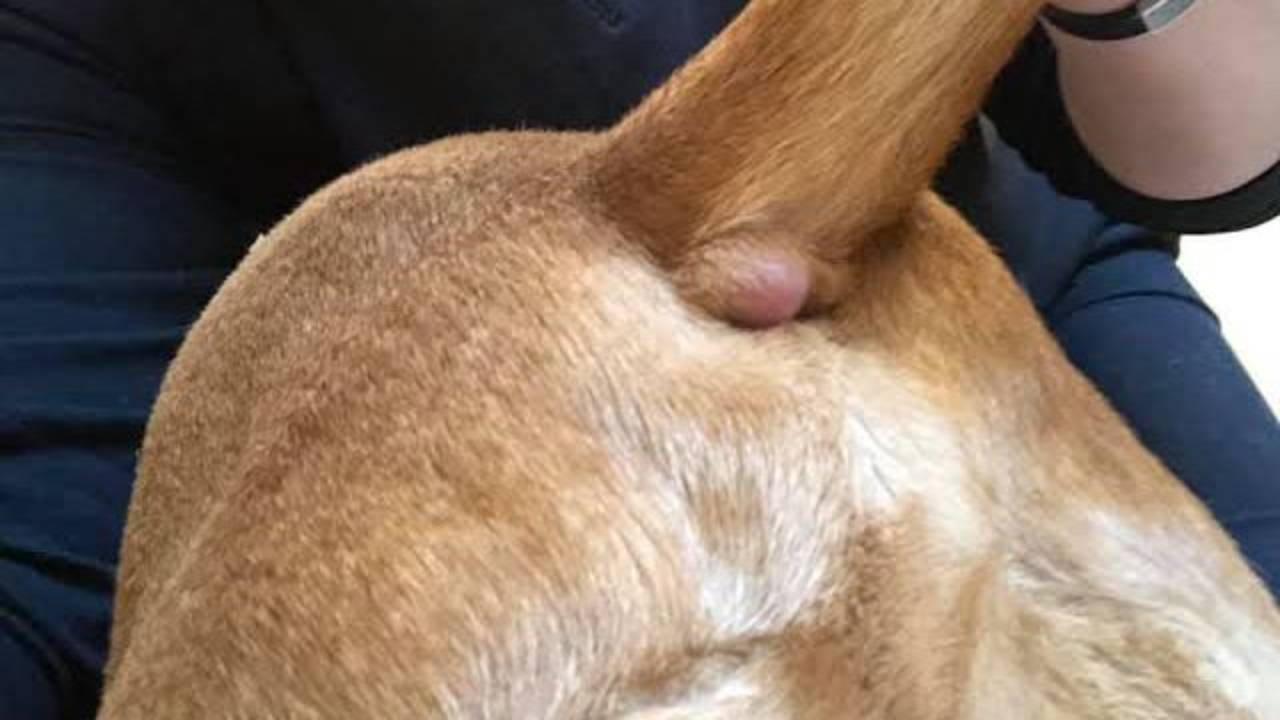
A perianal adenoma is a benign tumor of the hepatoid glands, small modified oil glands that sit mostly around a dog's anus. The same glands are also found on the prepuce, the base of the tail, the groin, inner thighs, and along the back (Brodzki et al., 2023; Weir & Stoewen, 2025). These tumors are among the most common tumors in unneutered male dogs, and they're driven by sex hormones (Brodzki et al., 2023). That's why the treatment of choice for a benign perianal tumor in an intact male is castration, usually combined with removal of the tumor (Brodzki et al., 2023; Weir & Stoewen, 2025). In an early study, castration alone led to regression without recurrence (Wilson & Hayes, 1979).
Most lumps near the anus in intact male dogs turn out to be adenomas. Even so, every one should be sampled. Malignant perianal adenocarcinomas and anal sac adenocarcinomas can form in the same area, and they need very different treatment (Brodzki et al., 2023; Weir & Stoewen, 2025).
Key points
- Perianal gland tumors are among the most common tumors in sexually intact male dogs (Brodzki et al., 2023).
- Adenomas are far more common than the malignant form. In one early study, they occurred about 4.5 times as often as carcinomas (Wilson & Hayes, 1979).
- These tumors depend on hormones, so neutering often shrinks small adenomas (Weir & Stoewen, 2025; Wilson & Hayes, 1979).
- With neutering and removal, adenomas come back less than 10% of the time (Weir & Stoewen, 2025).
- An adenoma in a spayed female or a neutered male is unusual and can point to a hormone problem, such as Cushing's disease or an adrenal tumor (Weir & Stoewen, 2025).
- Perianal adenocarcinomas are malignant and need wide surgical removal. Castration and hormone treatment haven't been shown to control them (Brodzki et al., 2023).
Detailed explanation
What the perianal glands are
Dogs have several kinds of glands around the anus. The perianal glands, also called hepatoid glands because their cells resemble liver cells under the microscope, are modified sebaceous glands. They're concentrated around the anus but also occur on the prepuce, at the base of the tail, along the back, and in the groin and inner thighs (Brodzki et al., 2023; Weir & Stoewen, 2025). They're distinct from the anal sacs, the two small scent sacs that sit under the skin, one on each side of the anus (Cornell University College of Veterinary Medicine [Cornell], n.d.). That distinction matters, because the cancers that come from each are very different.
Tumors of the anal region rank among the most frequent tumors in male dogs, accounting for an estimated 9% to 18% of all skin cancers reported in male dogs (Brodzki et al., 2023).
Adenoma, epithelioma, and adenocarcinoma
Perianal gland tumors come in three forms:
- Adenomas are benign and by far the most common. Reported estimates range from 58% to 96% of all tumors in the perianal area (Weir & Stoewen, 2025).
- Epitheliomas are considered borderline (low-grade) malignancies and are uncommon (Weir & Stoewen, 2025).
- Adenocarcinomas are malignant. They tend to grow faster and can spread to lymph nodes, abdominal organs, and the lungs (Weir & Stoewen, 2025).
In a 2023 study of 41 male dogs with perianal gland tumors, 24 had adenomas, 12 had epitheliomas, and 5 had carcinomas (Brodzki et al., 2023). The type can't be determined by looking at the lump, which is why a biopsy matters.
Why hormones matter
Perianal gland tumors depend on sex hormones, which bind to receptors in the gland tissue and stimulate cell growth (Brodzki et al., 2023). Testosterone promotes these tumors, which is why they're seen mostly in intact males and are rare in neutered males (Weir & Stoewen, 2025). Estrogen appears to inhibit them, so in females they're more common after spaying than in intact females (Weir & Stoewen, 2025).
The hormone connection also explains a link with testicular disease. In the 1979 study, about 1 in 3 dogs with perianal gland tumors also had a testicular tumor, most often an interstitial cell tumor, and about 1 in 10 had shrunken (atrophied) testicular tissue (Wilson & Hayes, 1979). When your veterinarian examines a dog with a perianal lump, a careful check of the testicles is part of the exam. Our hub on testicular cancer in dogs covers those tumors.
What a perianal adenoma looks like
Adenomas typically appear as small, round, pink, hairless nodules that grow slowly. A dog can have one or several. They may ulcerate and become infected (Weir & Stoewen, 2025), and bleeding and tissue breakdown are among the most troublesome problems for dogs and their owners (Brodzki et al., 2023). Our article on what to do when a tumor bleeds covers first steps.
Adenocarcinomas tend to grow larger and faster. A large one can press on the rectum and cause straining or constipation (Weir & Stoewen, 2025).
Siberian Huskies, Cocker Spaniels, Pekingese, Shih Tzus, Afghan Hounds, Lhasa Apsos, German Shepherds, and Samoyeds are among the breeds reported to be affected more often (Weir & Stoewen, 2025).
Not to be confused with anal sac cancer
Anal sac adenocarcinoma is a separate cancer that arises from the apocrine glands lining the anal sacs, rather than from the perianal glands (Cornell, n.d.). Unlike perianal adenomas, it isn't concentrated in intact males; recent studies haven't found a real difference in how often it affects males and females (Cino & Martano, 2024). A lump right beside the anus can be either type, and only testing can tell them apart. Our hub on anal gland cancer in dogs explains that disease in detail.
Diagnosis
Your veterinarian will usually start with a rectal exam and a fine-needle aspirate of the lump. A biopsy, either of part of the mass or of the whole mass once it's removed, confirms whether it's an adenoma, epithelioma, or adenocarcinoma. Our guide to reading a pathology report can help when the results come back.
If an adenoma appears in a spayed female or a neutered male, or comes back after treatment, a second biopsy to rule out adenocarcinoma and testing for hyperadrenocorticism (Cushing's disease) are recommended (Weir & Stoewen, 2025).
Treatment
Benign adenomas in intact males. Castration is the treatment of choice (Brodzki et al., 2023). Because adenomas depend on hormones, castration alone can lead to regression without recurrence (Wilson & Hayes, 1979). In practice, most veterinarians combine castration with removal of the tumor, and small tumors often shrink after neutering (Weir & Stoewen, 2025). Surgery is especially indicated for large or ulcerated tumors (Brodzki et al., 2023). With neutering and removal, adenomas recur less than 10% of the time (Weir & Stoewen, 2025).
Adenomas in females and neutered males. Surgical removal is recommended, along with a look for the underlying hormonal cause (Weir & Stoewen, 2025).
Adenocarcinomas. Castration and hormone treatments haven't been shown to be effective for malignant perianal tumors. Good results have come from removing the tumor completely with a wide margin (Brodzki et al., 2023). Radiation or chemotherapy may also be recommended, and the prognosis is fair to guarded because of the risk of regrowth and spread (Weir & Stoewen, 2025).
Hormone-blocking drugs. Some dogs aren't good candidates for surgery. In a 2023 study, adenomas treated with antihormonal therapy did not recur during follow-up, but 60% of epitheliomas came back within 6 months (Brodzki et al., 2023). This is another reason to know the tumor type before choosing a treatment.
Prevention
Because these tumors depend on testosterone, neutering greatly reduces the risk of perianal adenomas in male dogs (Weir & Stoewen, 2025). If you've chosen to keep your male dog intact for health or breeding reasons, check the area around the anus, tail base, and prepuce during grooming, and have any new lump examined.
When to contact a veterinarian
Book an appointment for:
- Any new lump around the anus, at the tail base, or near the prepuce
- A lump that's growing, ulcerated, or bleeding
- Licking, scooting, or discomfort at the rear end that doesn't settle
- Any perianal lump in a spayed female or neutered male
Call the same day if your dog:
- Is straining to pass stool or can't pass stool
- Has a lump that's bleeding heavily or appears infected
- Is drinking and urinating much more than usual along with a lump near the anus
Questions to ask your veterinarian
- Is this lump from the perianal glands or the anal sacs?
- Can we aspirate it now and biopsy it when it's removed?
- If it's an adenoma, should we neuter, remove the lump, or both?
- Are my dog's testicles normal on exam?
- If my dog is already neutered or spayed, should we test for Cushing's disease?
- If it turns out to be an adenocarcinoma, what staging tests and treatment would you recommend?
- How should I check for new lumps after treatment?
References
Brodzki, A., Łopuszyński, W., Brodzki, P., Głodkowska, K., Knap, B., & Gawin, P. (2023). Pharmacological treatment of perianal gland tumors in male dogs. Animals, 13(3), Article 463.
Cino, M., & Martano, M. (2024). Is there anything new in canine AGASACA? Veterinary Sciences, 11(12), Article 629.
Cornell University College of Veterinary Medicine. (n.d.). Anal sac adenocarcinoma. Richard P. Riney Canine Health Center. Retrieved November 5, 2026, from https://www.vet.cornell.edu/departments/riney-canine-health-center/canine-health-information/anal-sac-adenocarcinoma
Weir, M., & Stoewen, D. (2025). Hepatoid gland tumors. VCA Animal Hospitals. Retrieved November 5, 2026, from https://vcahospitals.com/know-your-pet/hepatoid-gland-tumors
Wilson, G. P., & Hayes, H. M., Jr. (1979). Castration for treatment of perianal gland neoplasms in the dog. Journal of the American Veterinary Medical Association, 174(12), 1301-1303.
Reviewed by: Amber L. Drake, PhD
Dr. Amber L. Drake is a board-certified holistic health practitioner, canine clinical herbalist, educator, and founder of the Drake Dog Cancer Foundation and Drake Dog Academy. She is dedicated to helping pet parents better understand canine cancer, treatment options, nutrition, quality of life, and supportive care through compassionate, evidence-informed education. Her work combines professional training, practical resources, and firsthand insight from supporting thousands of dog families through the challenges of a cancer diagnosis.
Stay connected with news and updates!
Join our mailing list to receive the latest news and updates from our team.
Don't worry, your information will not be shared.
We hate SPAM. We will never sell your information, for any reason.