Hard Immovable Lump on a Dog: What It Could Mean and What to Do
Nov 05, 2026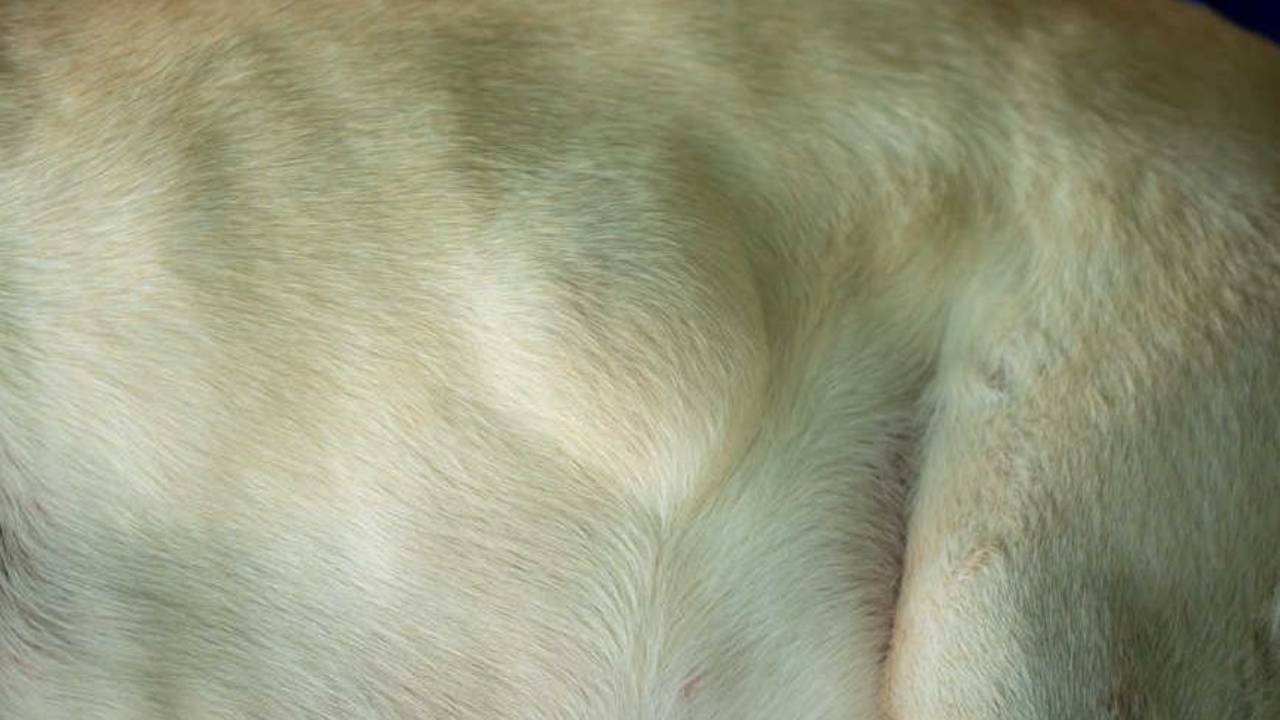
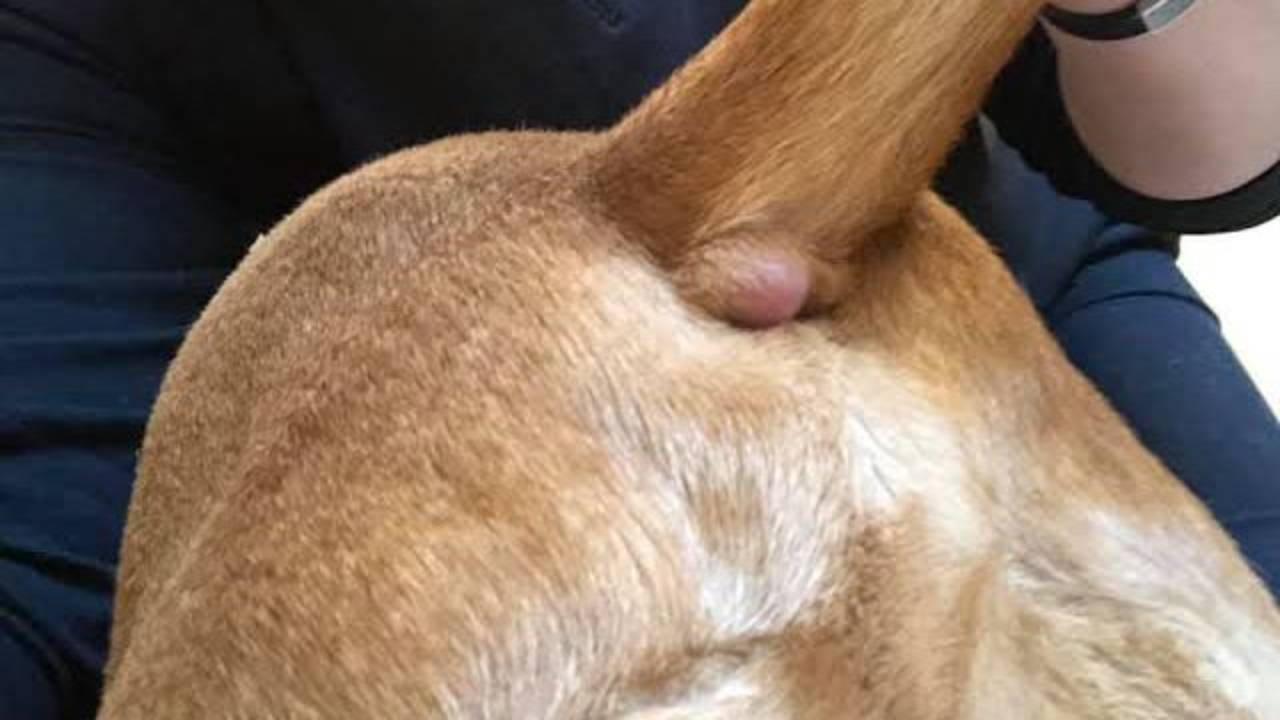
A hard lump that doesn't move under your dog's skin isn't automatically cancer, but it deserves a prompt visit and a diagnosis. "Immovable" usually means the lump is attached to deeper tissue such as muscle, fascia, or bone. That feature shows up often in tumors that grow into surrounding tissue. Soft tissue sarcomas commonly appear as "a firm, fixed mass" on the trunk, legs, or in the mouth (Ehrhart, 2005). A firm swelling on a leg bone, especially with limping, can be a sign of osteosarcoma (Cornell University College of Veterinary Medicine [Cornell], 2024). Benign growths can also be firm or invade nearby tissue, including infiltrative lipomas and some cysts (Cortadellas, n.d.; Ethos Veterinary Health, 2016).
No one can tell what a lump is by feeling it, including cancer specialists (Ettinger, 2015). The most useful thing you can do is get a sample of the lump tested before anyone removes it. For a fixed lump, the order of those steps matters a great deal.
Key points
- A lump that's attached to deeper tissue is a reason to test promptly, not proof of cancer.
- Soft tissue sarcomas often feel firm and fixed, and a tumor that's freely movable and not attached to deeper tissue carries a better prognosis (Ehrhart, 2005).
- Sarcomas grow a "pseudocapsule" of compressed tumor cells. Simply shelling the lump out almost always leaves cancer behind, and the tumor tends to come back (Ehrhart, 2005).
- For large or fixed lumps, a partial (incisional) biopsy before surgery is usually recommended over removing the whole lump first (Cornell, 2025).
- A firm, painful swelling on a limb with lameness in a large or giant breed should be checked for bone cancer (Cornell, 2024).
- A good rule of thumb: any lump the size of a pea that has been there for a month should be aspirated or biopsied (Ettinger, 2015). For a hard, fixed lump, don't wait the month.
Detailed explanation
What "immovable" tells your veterinarian
When your veterinarian examines a lump, one of the first things they check is whether it slides freely under the skin or stays put. A lump that moves with the skin, or glides over the tissue beneath it, is sitting in a single layer. A lump that won't budge is usually anchored to muscle, the tissue sheets that cover muscle, or bone.
Fixation matters because it can signal that a growth is extending into neighboring tissue. In soft tissue sarcomas, tumors that are freely movable and not attached to deeper structures have a better prognosis (Ehrhart, 2005). In thyroid tumors, a mass that's anchored to the neck tissue is generally not considered a good candidate for surgery alone, and immovability is listed as a negative prognostic factor (BluePearl Specialists, 2016).
Fixed doesn't mean malignant, though. Some benign growths are fixed too, and plenty of cancers start out movable. The feel of a lump is a clue, not a diagnosis.
Soft tissue sarcomas
Soft tissue sarcomas are a group of cancers that arise from the body's connective tissues. They commonly appear as a firm, fixed mass on the trunk or legs, or in the mouth (Ehrhart, 2005). Some feel firm and closely attached to underlying structures, while others are softer and more movable (Cornell, 2025). Many grow slowly and aren't painful, which can make them seem harmless for months (Cornell, 2025).
What makes sarcomas tricky is how they grow. They're locally invasive, sending microscopic extensions beyond the edges you can see or feel (Cornell, 2025). They also look like they have a neat capsule, but that capsule is actually a layer of compressed tumor cells. Removing the lump along that apparent capsule is "certain to leave microscopic bits of tumor behind," and conservative removal almost always leads to the tumor coming back (Ehrhart, 2005).
Most sarcomas don't spread. Estimated rates of spread, usually to the lungs, are about 10% for low-grade tumors, about 20% for intermediate-grade tumors, and up to 40% for high-grade tumors (Cornell, 2025). Ehrhart (2005) estimated a 50% likelihood of spread for high-grade tumors. Our overview of soft tissue sarcoma in dogs covers grading and treatment in more depth.
Bone tumors
A hard swelling directly on a bone, most often on a leg, raises the question of osteosarcoma. This cancer usually affects the long bones of the front or back legs, and less often the jaw, ribs, or pelvis. It's often painful, and common signs include limping or reluctance to walk, a firm swelling in one area, and muscle loss in the affected leg. It's seen most in large and giant breeds such as Rottweilers, Great Danes, St. Bernards, and Golden Retrievers, most often around seven years of age (Cornell, 2024). By the time it's diagnosed, the cancer has often already spread to the lungs, whether or not the spread is visible on X-rays (Cornell, 2024).
If your large-breed dog has a new firm swelling on a leg and is limping, don't assume it's a sprain. See our osteosarcoma in dogs hub and our article on cancer in a dog's leg.
Lumps in the neck
A firm lump low in the neck can be a thyroid tumor, which usually sits below the windpipe (Prastiti et al., 2018). About 90% of canine thyroid tumors are carcinomas (Prastiti et al., 2018). Whether the mass moves freely or is fixed to the neck tissue strongly influences whether surgery is an option (BluePearl Specialists, 2016). Our article on signs of hyperthyroidism in dogs and our thyroid cancer in dogs hub cover these tumors.
Firm lumps under the jaw, in front of the shoulders, or behind the knees may be enlarged lymph nodes rather than tumors of the skin. Painless enlargement of lymph nodes in several places at once is the hallmark sign of lymphoma (Fan, 2023). Our guide to where a dog's lymph nodes are can help you tell what you're feeling.
Benign causes of a firm or fixed lump
Infiltrative lipomas are fatty tumors that don't spread to distant organs, but they can grow into nearby muscle, fascia, nerves, joints, and even bone (Ethos Veterinary Health, 2016). That invasion can make them feel more fixed than an ordinary lipoma. A needle sample often looks just like a regular lipoma, so CT or MRI is usually needed to show how far one extends (Ethos Veterinary Health, 2016).
Follicular cysts, often called sebaceous cysts, can be firm or squishy (Cortadellas, n.d.). They're benign and cured by surgical removal, but they can resemble tumors, so they still need to be sampled (Huber & Beck, 2017). See our article on sebaceous cysts on dogs.
Not every firm bump is a growth at all. Ask your veterinarian whether what you're feeling could be a normal part of your dog's anatomy.
Why biopsy should come before removal
This is the most important practical point for any fixed lump. The intuitive approach is to remove the lump and then send it to the lab. For a sarcoma, that can backfire. If the first surgery shells out the tumor without wide margins, cancer is left behind, and the follow-up treatment needed to control it is usually more aggressive (Ehrhart, 2005).
That's why specialists prefer to biopsy a suspected tumor before the definitive surgery. Removing the entire lump as the biopsy is generally reserved for spots where wide margins of 2 to 3 centimeters can easily be taken (Ehrhart, 2005). For large or fixed lumps, an incisional biopsy, which removes only a small piece, is the usual choice (Cornell, 2025). Once the diagnosis and grade are known, the surgeon can plan the right margins the first time.
A fine-needle aspirate is a reasonable first step for many lumps, but for sarcomas an aspirate can be inconclusive, and a biopsy is often needed for a definitive diagnosis (Cornell, 2025). Our article on whether clear margins mean your dog is in the clear explains what the surgical report means afterward.
Why speed matters
Ettinger (2015), a board-certified veterinary oncologist, recommends that any lump the size of a pea that's been present for one month be aspirated or biopsied, because most skin and under-the-skin tumors can be cured if they're diagnosed while small. A hard lump that's fixed to deeper tissue is a reason to move faster than that.
When to contact a veterinarian
Call your veterinarian the same day if:
- A hard lump appears on a leg and your dog is limping, holding the leg up, or crying out
- A lump in the neck comes with coughing, a voice change, trouble breathing, or trouble swallowing
- A fixed lump is growing quickly, bleeding, or ulcerated
Book an appointment within a week or two if:
- You find any new lump that feels hard and doesn't move under the skin
- A lump that was movable now seems attached
- You feel firm lumps in more than one lymph node area
Questions to ask your veterinarian
- Is this lump fixed to the muscle, bone, or another deep structure?
- Can we start with a fine-needle aspirate, and if it's inconclusive, should we do an incisional biopsy?
- Before removing it, do we know enough to plan the right margins?
- Does this need X-rays, CT, or MRI to see how deep it goes?
- If it's a sarcoma, what grade is it, and does my dog need chest X-rays?
- Should a surgical specialist or veterinary oncologist be involved before surgery?
- If the margins aren't clean, what are the options for radiation or a second surgery?
Sources
BluePearl Specialists. (2016, September 6). Thyroid tumors. https://bluepearlvet.com/medical-articles-for-pet-owners/thyroid-tumors/
Cornell University College of Veterinary Medicine. (2024). Osteosarcoma in dogs. Richard P. Riney Canine Health Center. Retrieved November 5, 2026, from https://www.vet.cornell.edu/departments-centers-and-institutes/riney-canine-health-center/canine-health-information/osteosarcoma-dogs
Cornell University College of Veterinary Medicine. (2025). Soft tissue sarcomas in dogs. Richard P. Riney Canine Health Center. Retrieved November 5, 2026, from https://www.vet.cornell.edu/departments-centers-and-institutes/riney-canine-health-center/canine-health-information/soft-tissue-sarcomas-dogs
Cortadellas, O. (n.d.). Sebaceous cysts in dogs. Are they really sebaceous? Vets & Clinics. Retrieved November 5, 2026, from https://vetsandclinics.com/en/library/sebaceous-cysts-in-dogs-are-they-really-sebaceous
Ehrhart, N. (2005). Soft-tissue sarcomas in dogs: A review. Journal of the American Animal Hospital Association, 41(4), 241-246.
Ethos Veterinary Health. (2016, December 12). Infiltrative lipomas in dogs & cats. https://www.ethosvet.com/?p=14707
Ettinger, S. (2015, June 8). See something, do something: Why wait? Aspirate. dvm360. https://www.dvm360.com/view/see-something-do-something-why-wait-aspirate
Fan, T. M. (2023). Lymphoma in dogs. Merck Veterinary Manual, Professional Version. Retrieved November 5, 2026, from https://www.merckvetmanual.com/circulatory-system/canine-lymphoma/canine-lymphoma
Huber, D., & Beck, A. (2017). Canine cutaneous cysts of follicular epithelial origin. Hrvatski veterinarski vjesnik, 25(1/2), 72-89. https://hrcak.srce.hr/en/clanak/336262
Prastiti, E., Tzenetidou, Z., & Papazoglou, L. G. (2018). Canine thyroid tumours: Diagnosis and treatment. Hellenic Journal of Companion Animal Medicine, 7(2), 19-27. https://www.hjcam.hcavs.gr/images/vol7iss2/izs_v7i2-canine-hyroid-en.pdf
Reviewed by: Amber L. Drake, PhD
Dr. Amber L. Drake is a board-certified holistic health practitioner, canine clinical herbalist, educator, and founder of the Drake Dog Cancer Foundation and Drake Dog Academy. She is dedicated to helping pet parents better understand canine cancer, treatment options, nutrition, quality of life, and supportive care through compassionate, evidence-informed education. Her work combines professional training, practical resources, and firsthand insight from supporting thousands of dog families through the challenges of a cancer diagnosis.
Stay connected with news and updates!
Join our mailing list to receive the latest news and updates from our team.
Don't worry, your information will not be shared.
We hate SPAM. We will never sell your information, for any reason.