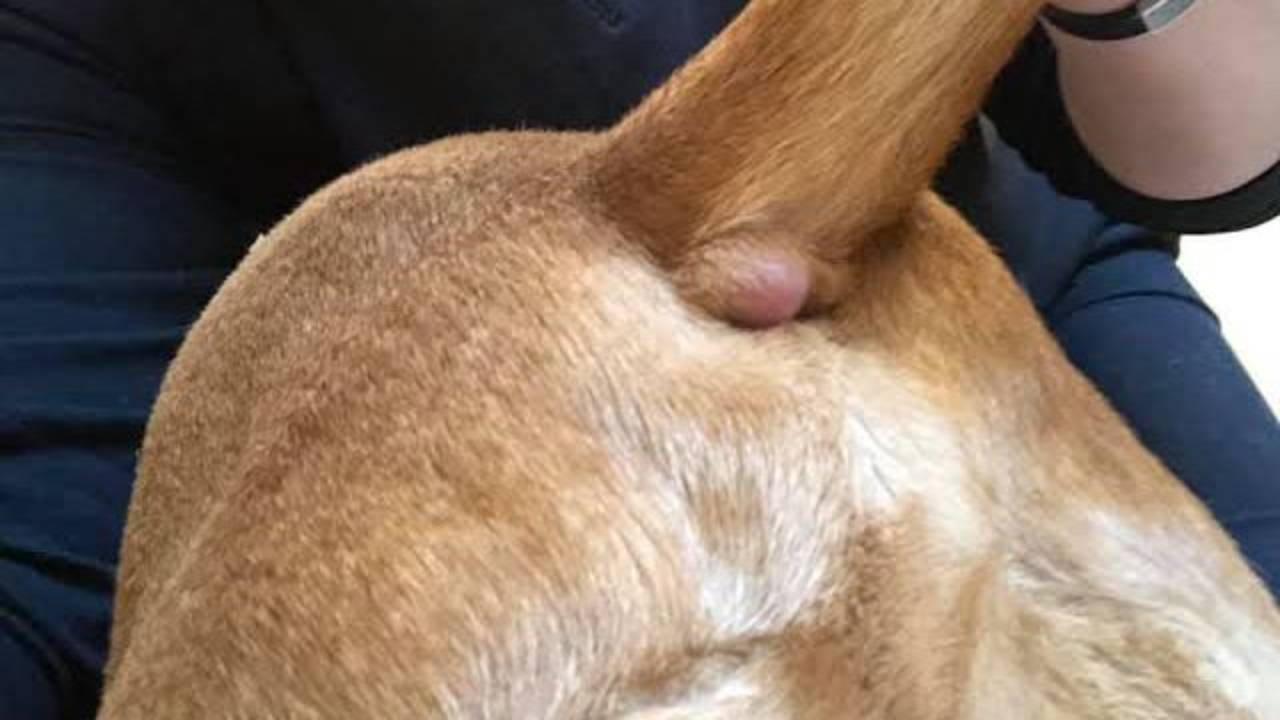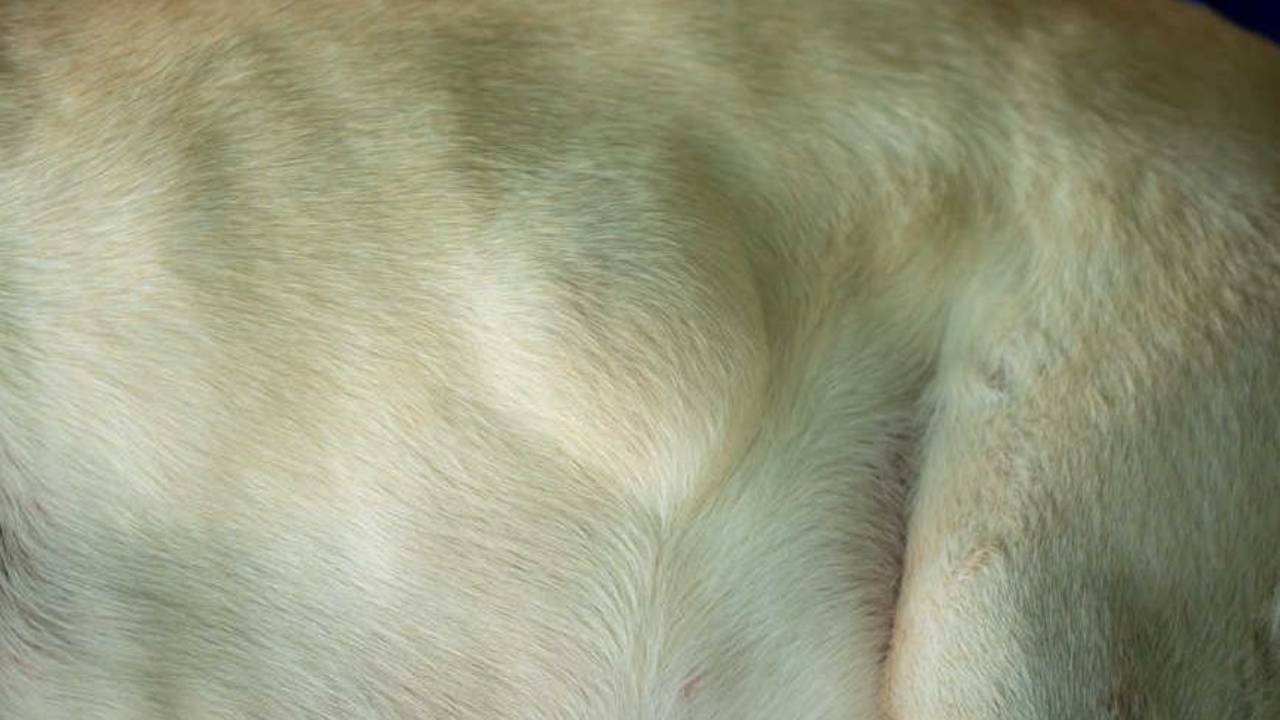
Growth on a Dog's Ear: Flap vs. Ear Canal Lumps Explained
Nov 05, 2026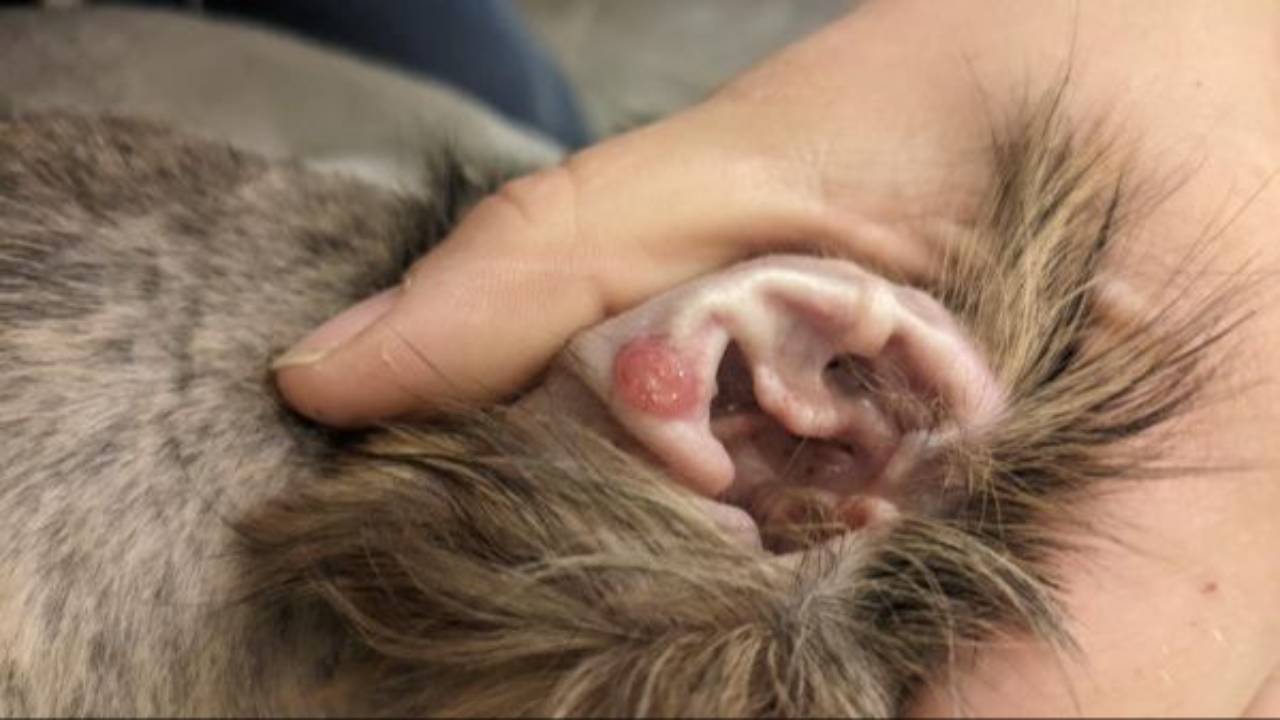
A growth on a dog's ear can be many things, and where it sits makes a big difference. On the ear flap (the pinna), the most common tumors are histiocytomas, sebaceous gland tumors, and mast cell tumors (Pieper, 2026a). Inside the ear canal, the most common tumors come from the earwax glands and are called ceruminous gland adenomas (benign) or adenocarcinomas (malignant). Inflammatory polyps, papillomas, and melanomas also occur in the canal (Pieper, 2026a). A soft, fluid-filled swelling of the whole ear flap is usually an aural hematoma, a pocket of blood caused by head shaking, not a tumor (Tomich, 2026).
Most ear canal tumors in dogs are benign (Pieper, 2026a; Roman, 2026). That isn't true of every ear lump, though. In a study of 39 dogs with mast cell tumors on the ear flap, nearly half were high grade and over half had already spread to a lymph node (Chalfon et al., 2023). Any new growth on or in your dog's ear should be sampled by a veterinarian rather than watched and hoped about.
Key points
- The ear has two main zones. Growths on the flap behave like skin lumps; growths in the canal often hide behind signs that look like an ear infection (Pieper, 2026a; Roman, 2026).
- Ear canal tumors in dogs are more likely to be benign than malignant, but dogs older than 11 are at higher risk of malignant ones (Pieper, 2026a; Roman, 2026).
- Long-standing ear inflammation can lead to tumors in the canal over time, and Cocker Spaniels have higher rates of ear tumors (Pieper, 2026a; Roman, 2026).
- An ear "infection" in one ear that doesn't respond to treatment should raise suspicion of a tumor (Pieper, 2026a; Roman, 2026).
- Mast cell tumors on the ear flap are often high grade and frequently spread to nearby lymph nodes (Chalfon et al., 2023).
- Even malignant ear canal tumors in dogs can carry long survival times after appropriate surgery; one study reported a median of more than 58 months (London et al., 1996, as cited in Pieper, 2026b).
Detailed explanation
Growths on the ear flap
The ear flap is covered in skin on both sides, so the lumps that appear there are mostly the same kinds of lumps found elsewhere on the skin. Veterinary references list sebaceous gland tumors, histiocytomas, and mast cell tumors as the common tumors of the canine pinna (Pieper, 2026a).
Histiocytomas are benign growths. Our article on cutaneous histiocytoma explains what they look like, what to expect, and why a sample is still worth getting.
Sebaceous gland growths come from the oil glands in the skin. A different and very common lump, the so-called sebaceous cyst, can also show up on the ear.
Mast cell tumors are the ones that matter most on the flap. Every mast cell tumor is a form of cancer, and researchers concluded that mast cell tumors of the pinna are often high grade and have a higher frequency of lymph node spread (Chalfon et al., 2023). In that multi-institution study of 39 dogs with mast cell tumors of the pinna, 48.7% were high grade, and 56.4% had spread to a regional lymph node. Grade was the only factor independently tied to outcome. Dogs with high-grade tumors had a median time to progression of 270 days and a median tumor-specific survival of 370 days, while those medians weren't reached in dogs with low-grade tumors (Chalfon et al., 2023). The authors noted that combining treatments may support good long-term outcomes. Our article on mast cell tumor life expectancy covers what drives survival.
Given how often these tumors reached a lymph node in that study, ask your veterinarian whether nearby lymph nodes should be checked if a mast cell tumor is found on the ear. Our guide to the mandibular lymph nodes shows where the nodes under the jaw are.
A swollen ear flap that isn't a tumor
If the whole flap has puffed up like a pillow, usually on the inner surface, the most likely cause is an aural hematoma. These are fluid-filled swellings, and trauma from head shaking or scratching because of an itchy ear infection is almost always involved. In dogs, they're linked to allergies such as atopic dermatitis and food allergy (Tomich, 2026).
Treating an aural hematoma means treating the itch behind it, along with draining or surgically managing the swelling. Even with treatment, the ear can scar into a crinkled shape sometimes called cauliflower ear (Tomich, 2026). It's not cancer, but it still needs a veterinary visit, both for comfort and because ear tumors in the canal can cause the head shaking that leads to a hematoma (Pieper, 2026a).
Growths inside the ear canal
Growths in the canal are harder to spot at home because they're often out of sight. Ceruminous gland tumors, which grow from the glands that make earwax, are the most common. They can be stalk-like or broad-based, and smooth or lumpy in appearance (Pieper, 2026b). Other growths found in the canal include inflammatory polyps, papillomas, and melanomas (Pieper, 2026a).
Ear canal tumors in dogs are more likely to be benign than malignant (Pieper, 2026a). Middle-aged dogs are more likely to have benign tumors, while dogs older than 11 are at higher risk of malignant ones (Roman, 2026). That age pattern seems to reflect how long the ear has been inflamed rather than age alone. Chronic inflammation of the canal can progress from thickened tissue to abnormal cells and eventually to a tumor (Pieper, 2026a). American Cocker Spaniels have higher rates of both benign and malignant ear tumors, likely because of their tendency toward chronic ear inflammation and overgrown earwax glands (Pieper, 2026a).
Signs of an ear canal growth
Many owners never see the growth itself. What they notice instead:
- Discharge from one ear, which may be waxy, pus-filled, or bloody
- A foul or rotten smell from the ear
- Head shaking and ear scratching
- Swelling or draining pockets near the ear
- Balance problems, a head tilt, or hearing loss if the middle or inner ear is involved
These signs come from Roman (2026) and Pieper (2026a). They overlap almost completely with ordinary ear infections. The key difference is the pattern: a problem in one ear that keeps coming back or doesn't improve with treatment. Both the owner and professional versions of the Merck Veterinary Manual say that persistent one-sided ear inflammation should raise suspicion of a tumor (Pieper, 2026a; Roman, 2026). Our article on why a dog with cancer may smell bad discusses odor as a sign more broadly.
How ear growths are diagnosed
For a lump on the ear flap, a fine-needle aspirate is usually the first step. It can identify a mast cell tumor or histiocytoma quickly, and a biopsy can confirm the type and grade.
Ear canal growths are trickier. A deep biopsy is needed for a definitive diagnosis (Roman, 2026). Shallow samples are often misread as polyps or inflammatory tissue, while deeper samples of the same growth are more often correctly identified as tumors (Pieper, 2026b). CT or MRI can show how far a growth extends and whether it has reached the middle ear (Pieper, 2026b; Roman, 2026). Our guide to reading a pathology report can help you through the results.
Treatment and outlook
On the ear flap, treatment depends on the diagnosis. Benign growths may be removed or monitored. Mast cell tumors usually need surgery and sometimes additional treatment, guided by grade and whether lymph nodes are involved (Chalfon et al., 2023).
In the ear canal, benign tumors can often be removed surgically, including with laser surgery through a video otoscope, which can sometimes avoid opening the canal (Pieper, 2026b; Roman, 2026). Malignant tumors need more extensive surgery. Removing only the outer wall of the canal for a malignant tumor has been associated with recurrence rates above 75%, which is why surgeons generally recommend removing the entire ear canal along with part of the middle ear bone, a procedure called total ear canal ablation and bulla osteotomy (Pieper, 2026b). Radiation can help when a malignant tumor can't be fully removed (Roman, 2026).
The outlook for dogs is better than many owners expect. Malignant ear tumors tend to invade locally, and fewer than 10% involve the lymph nodes (Pieper, 2026a). In a study of dogs and cats with ear canal tumors, the median survival for dogs with malignant tumors was more than 58 months (London et al., 1996, as cited in Pieper, 2026b). Dogs with extensive tumor involvement, or tumors that have invaded the middle ear bone, have a less favorable prognosis (Pieper, 2026a, 2026b).
When to contact a veterinarian
Make an appointment for:
- Any new lump on the ear flap, especially one that's growing, red, ulcerated, or changing size
- An ear infection in one ear that keeps returning or isn't improving with treatment
- A visible growth inside the ear opening
Call the same day if:
- The ear flap suddenly swells into a soft, fluid-filled pillow
- There's bloody discharge from the ear or a growth that's bleeding
- Your dog has a new head tilt, loss of balance, circling, or a drooping face
Questions to ask your veterinarian
- Is this growth on the flap or in the canal, and what do you think it is?
- Can we do a fine-needle aspirate, or does this need a biopsy?
- If it's in the canal, will the biopsy be deep enough to give a reliable answer?
- If it's a mast cell tumor, should the lymph nodes under the jaw be checked?
- Does my dog need a CT scan before surgery?
- Is laser removal an option, or does this need more extensive surgery?
- Could chronic ear inflammation be playing a role, and how do we control it going forward?
- Should we see a veterinary dermatologist, surgeon, or oncologist?
Sources
Chalfon, C., Finotello, R., Sabattini, S., Gramer, I., Morris, J. S., Aralla, M., Morello, E. M., Ferraris, E., Ramos, S., Polton, G., Schiavo, L., Dobson, J., Cola, V., & Marconato, L. (2023). Patterns of nodal metastases, biological behaviour and prognosis of canine mast cell tumours of the pinna: A multi-institutional retrospective study. Veterinary and Comparative Oncology, 21(2), 332-338.
Pieper, J. B. (2026a). Overview of tumors of the ear in small animals. Merck Veterinary Manual, Professional Version. Retrieved November 5, 2026, from https://www.merckvetmanual.com/ear-disorders/tumors-of-the-ear-in-small-animals/overview-of-tumors-of-the-ear-in-small-animals
Pieper, J. B. (2026b). Ceruminous gland tumors in small animals. Merck Veterinary Manual, Professional Version. Retrieved November 5, 2026, from https://www.merckvetmanual.com/ear-disorders/tumors-of-the-ear-in-small-animals/ceruminous-gland-tumors-in-small-animals
Roman, N. (2026). Tumors of the ear canal in dogs. Merck Veterinary Manual, Dog Owners Version. Retrieved November 5, 2026, from https://www.merckvetmanual.com/dog-owners/ear-disorders-of-dogs/tumors-of-the-ear-canal-in-dogs
Tomich, L. (2026). Auricular hematomas in animals. Merck Veterinary Manual, Professional Version. Retrieved November 5, 2026, from https://www.merckvetmanual.com/ear-disorders/diseases-of-the-pinna/auricular-hematomas-in-animals
Reviewed by: Amber L. Drake, PhD
Dr. Amber L. Drake is a board-certified holistic health practitioner, canine clinical herbalist, educator, and founder of the Drake Dog Cancer Foundation and Drake Dog Academy. She is dedicated to helping pet parents better understand canine cancer, treatment options, nutrition, quality of life, and supportive care through compassionate, evidence-informed education. Her work combines professional training, practical resources, and firsthand insight from supporting thousands of dog families through the challenges of a cancer diagnosis.
Stay connected with news and updates!
Join our mailing list to receive the latest news and updates from our team.
Don't worry, your information will not be shared.
We hate SPAM. We will never sell your information, for any reason.