Bumps on Dogs: Common Causes and When a Lump Needs Testing
Nov 05, 2026
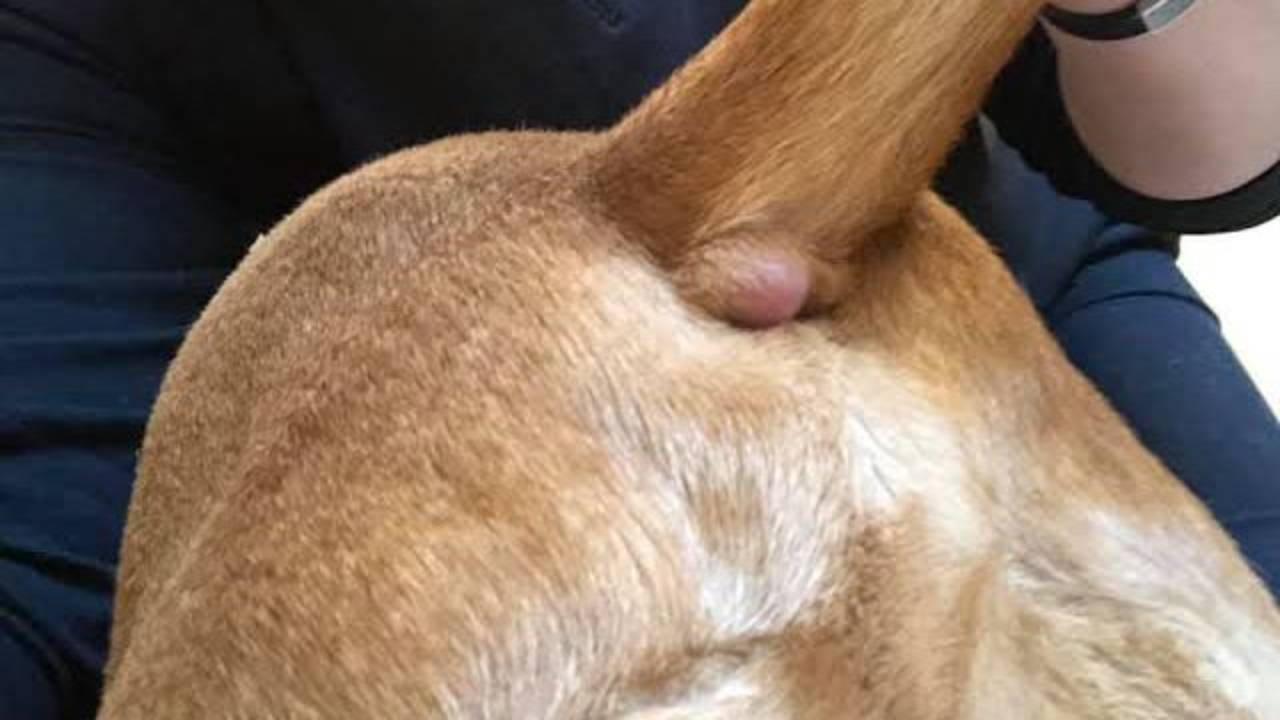
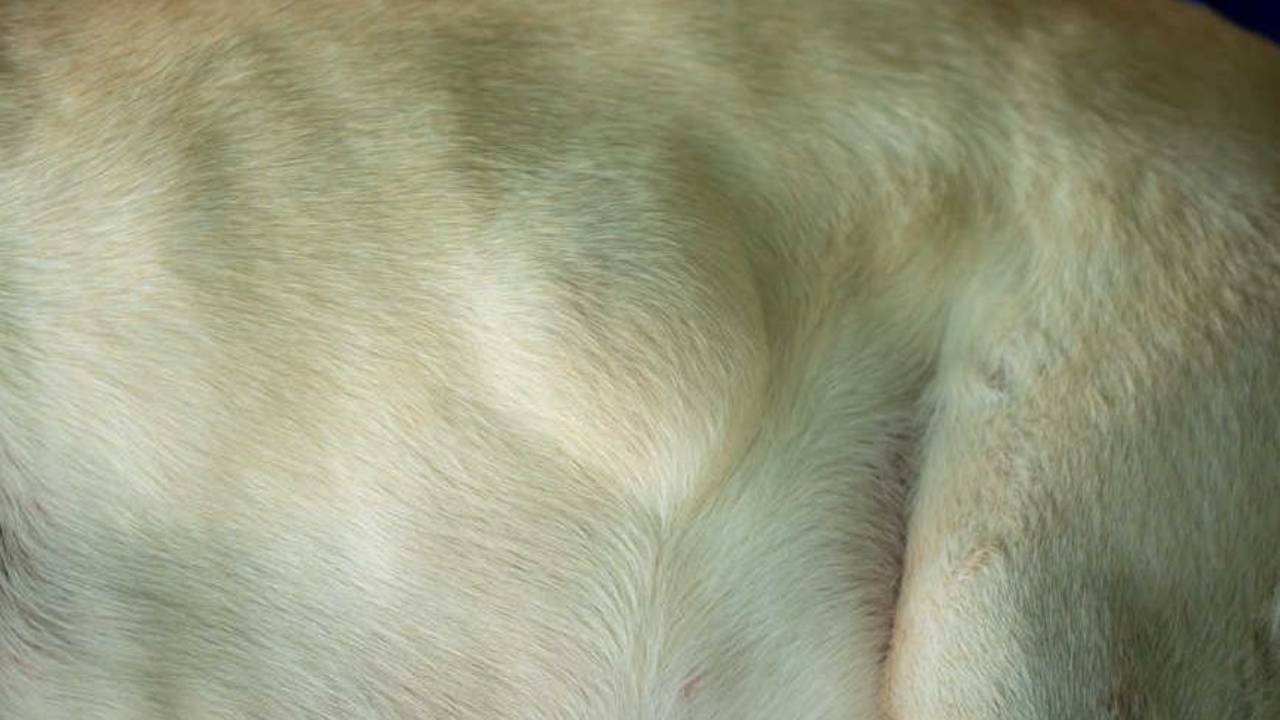
Bumps on dogs generally fall into two groups. The first is many small bumps that appear quickly, often itchy or red. These are usually hives from an allergic reaction or a bacterial skin infection (Clark, 2025; White, 2024). The second is a single lump or a few distinct lumps that you can feel in or under the skin. These are more often cysts, benign growths such as histiocytomas and lipomas, or tumors, including mast cell tumors and other cancers (Graf et al., 2018; Huber & Beck, 2017).
You can't tell which kind of lump is which by looking or feeling. A board-certified veterinary oncologist puts it simply: "Even an experienced cancer specialist like me cannot look at or feel a mass and know what it is" (Ettinger, 2015). Her rule of thumb is that any lump the size of a pea (about 1 centimeter) that has been there for one month should be aspirated or biopsied by a veterinarian (Ettinger, 2015).
Key points
- Hives are red, swollen, usually itchy bumps that appear within minutes to hours of a trigger and often fade within a few hours (White, 2024).
- Small pimple-like bumps, crusts, and scaly rings on the belly or trunk often mean a bacterial skin infection, usually driven by an underlying problem such as allergies or parasites (Clark, 2025).
- Wart-like growths in young dogs are often viral papillomas, which may go away on their own within weeks to months (Mulherin, 2024).
- Mast cell tumors were the most common skin tumor in a Swiss registry of 11,740 canine skin tumors, followed by lipomas, hair follicle tumors, histiocytomas, and soft tissue sarcomas (Graf et al., 2018).
- Use the "see something, do something" rule: a lump the size of a pea that has been present for a month should be sampled (Ettinger, 2015).
- Most skin tumors can be cured if they're caught while still small (Ettinger, 2015).
Detailed explanation
Group 1: Many small bumps that appear quickly
Hives (urticaria). Hives are patches of red, swollen, usually itchy skin. They can appear anywhere but are most common on the back, flanks, neck, eyelids, and legs. The most frequent causes are insect bites or stings, shampoos, and medications, and they typically appear within minutes or hours of exposure (White, 2024). Many cases fade within a few hours, but hives can come back quickly if the trigger isn't removed.
Hives themselves are rarely dangerous. The risk is swelling that extends to the airway, or a severe allergic reaction called anaphylaxis (White, 2024). If your dog's face swells, or your dog has trouble breathing, vomits, or collapses, treat it as an emergency. Hives that appear after a vaccine or a new medication should be reported to your veterinarian right away (White, 2024).
Bacterial skin infection (pyoderma). A superficial skin infection often shows up as small raised bumps or pimple-like pustules, patchy hair loss, crusts, and ring-shaped areas of scaling. The trunk and belly are the most common areas (Clark, 2025). The usual bacterium is Staphylococcus pseudintermedius (Clark, 2025). The infection is almost always a symptom of something else, most often allergies (including flea, food, and environmental allergies), external parasites, or hormone disorders such as hypothyroidism or Cushing's disease (Clark, 2025). That's why skin infections that keep coming back need a search for the underlying cause.
Group 2: Distinct lumps in or under the skin
Warts (papillomas). Papillomas are benign growths caused by canine papillomavirus. They're most common in young dogs, often appear suddenly in clusters, and look finger-like or cauliflower-like. They typically show up in the mouth, on the lips, and on nearby skin. Many go away on their own within weeks to months (Mulherin, 2024). In an older adult dog, multiple new papillomas can point to a weakened immune system, sometimes from a disease such as lymphoma (Mulherin, 2024).
Cysts. What owners often call a sebaceous cyst is usually a follicular cyst, a benign sac filled with keratin (Cortadellas, n.d.). These cysts are cured by surgical removal, but they can resemble both benign and malignant tumors, so they need cytology or a biopsy to confirm (Huber & Beck, 2017). If a cyst ruptures, the leaked keratin can cause a fast, large, painful swelling (Huber & Beck, 2017). Our article on sebaceous cysts on dogs covers them in detail.
Histiocytomas. These benign growths are by far the most common skin mass in young dogs. In a study of 2,554 skin masses from dogs under one year old, 86.6% were histiocytomas (Kim et al., 2022). See our article on cutaneous histiocytoma and on whether young dogs can get cancer.
Lipomas. These fatty tumors were the second most common skin tumor in the Swiss registry, at 12.47% (Graf et al., 2018). They're usually benign, but a soft lump that feels like "just fat" can turn out to be something else, which is why lipomas still get sampled. Our overview of lumps other than cancer covers lipomas and other harmless masses.
Mast cell tumors. These were the most common skin tumor in the Swiss registry, making up 16.35% (Graf et al., 2018), and they account for roughly 20% of canine skin tumors overall (Harshbarger & Meinkoth, 2023). Every mast cell tumor is a form of cancer, although many low-grade ones are cured by surgery. They can be raised, red, ulcerated, or swollen, and owners often notice the lump growing and shrinking from day to day (Penn Vet Ryan Hospital, 2017). Our guide on how to identify mast cell tumors explains why they're so easy to mistake for something harmless.
Other tumors. Soft tissue sarcomas, hair follicle tumors, and melanocytic tumors also ranked among the most common skin tumors in dogs (Graf et al., 2018).
Why "it feels like a fatty lump" isn't enough
Owners and veterinarians alike are tempted to judge a lump by touch. Ettinger (2015) writes that she often hears a mass "does not look or feel malignant," and points out that "even after many benign aspirates, the next one can be malignant." Because a soft lump can be a mast cell tumor and a firm one can be a harmless cyst, the only reliable answer comes from looking at the cells.
A fine-needle aspirate is usually the first test. It's quick, typically done during a regular visit, and uses a small needle to collect cells for the microscope. If the aspirate isn't conclusive, a biopsy gives the definitive answer.
The "see something, do something" rule
Ettinger's (2015) rule gives owners a clear threshold. See something: a lump that's the size of a pea, or about 1 centimeter, and has been there for one month. Do something: take your dog to the veterinarian and have it aspirated or biopsied.
The reason is timing. Most skin and under-the-skin tumors can be cured if they're diagnosed while the mass is still small (Ettinger, 2015). Waiting to see whether a lump grows gives a cancer time to grow too.
How to keep track of bumps at home
Run your hands over your dog regularly, including the belly, armpits, legs, and tail. When you find a lump, write down where it is, measure it with a ruler or calipers, and take a dated photo. Repeat every few weeks. A simple map of your dog's lumps helps your veterinarian see exactly what's new and what's changed. Our 10-minute dog cancer check walks you through a full routine, and the Dog Cancer Tracker can store your notes.
When to contact a veterinarian
Go to an emergency hospital now if your dog has:
- Swelling of the face, muzzle, or throat
- Trouble breathing, vomiting, or collapse along with hives or after a sting
Call your veterinarian the same day if:
- Hives appear after a vaccine or a new medication
- A lump suddenly swells, turns red, becomes painful, or starts to bleed
Book an appointment soon if:
- Any lump is pea-sized or larger and has been present for a month
- A lump grows, changes shape or texture, or seems to grow and shrink
- Your dog has a new lump and was previously diagnosed with a skin tumor
- Small itchy bumps or pimples keep coming back
- An older dog suddenly develops several wart-like growths
Questions to ask your veterinarian
- Do these look like hives, a skin infection, or something else?
- Can we do a fine-needle aspirate on this lump today?
- If the aspirate is inconclusive, should we do a biopsy?
- If this is an infection, what's the underlying cause, and how do we prevent it from coming back?
- Which of my dog's lumps need sampling, and which can we monitor?
- How often should we recheck known lumps?
- Should this lump be removed, and how much tissue around it needs to come out?
Sources
Clark, M. D. (2025). Pyoderma in dogs and cats. Merck Veterinary Manual, Professional Version. Retrieved November 5, 2026, from https://www.merckvetmanual.com/integumentary-system/pyoderma/pyoderma-in-dogs-and-cats
Cortadellas, O. (n.d.). Sebaceous cysts in dogs. Are they really sebaceous? Vets & Clinics. Retrieved November 5, 2026, from https://vetsandclinics.com/en/library/sebaceous-cysts-in-dogs-are-they-really-sebaceous
Ettinger, S. (2015, June 8). See something, do something: Why wait? Aspirate. dvm360. https://www.dvm360.com/view/see-something-do-something-why-wait-aspirate
Graf, R., Pospischil, A., Guscetti, F., Meier, D., Welle, M. M., & Dettwiler, M. A. (2018). Cutaneous tumors in Swiss dogs: Retrospective data from the Swiss Canine Cancer Registry, 2008-2013. Veterinary Pathology, 55(6), 809-820.
Harshbarger, A. A., & Meinkoth, J. H. (2023, February 13). Cytologic grading of mast cell tumors in small animals. Today's Veterinary Practice. https://todaysveterinarypractice.com/clinical-pathology/cytologic-grading-of-mast-cell-tumors-in-small-animals/
Huber, D., & Beck, A. (2017). Canine cutaneous cysts of follicular epithelial origin. Hrvatski veterinarski vjesnik, 25(1/2), 72-89. https://hrcak.srce.hr/en/clanak/336262
Kim, D., Dobromylskyj, M. J., O'Neill, D., & Smith, K. C. (2022). Skin masses in dogs under one year of age. Journal of Small Animal Practice, 63(1), 10-15.
Mulherin, B. L. (2024). Papillomas in dogs. Merck Veterinary Manual, Professional Version. Retrieved November 5, 2026, from https://www.merckvetmanual.com/digestive-system/diseases-of-the-mouth-in-small-animals/papillomas-in-dogs
Penn Vet Ryan Hospital. (2017). Mast cell tumors in dogs [Client information sheet]. Comprehensive Cancer Care Service, University of Pennsylvania School of Veterinary Medicine. https://www.vet.upenn.edu/wp-content/uploads/2025/05/mast-cell-tumors-in-dogs.pdf
White, S. D. (2024). Hives and rashes (urticaria) in dogs. Merck Veterinary Manual, Dog Owners Version. Retrieved November 5, 2026, from https://www.merckvetmanual.com/dog-owners/skin-disorders-of-dogs/hives-and-rashes-urticaria-in-dogs
Reviewed by: Amber L. Drake, PhD
Dr. Amber L. Drake is a board-certified holistic health practitioner, canine clinical herbalist, educator, and founder of the Drake Dog Cancer Foundation and Drake Dog Academy. She is dedicated to helping pet parents better understand canine cancer, treatment options, nutrition, quality of life, and supportive care through compassionate, evidence-informed education. Her work combines professional training, practical resources, and firsthand insight from supporting thousands of dog families through the challenges of a cancer diagnosis.
Stay connected with news and updates!
Join our mailing list to receive the latest news and updates from our team.
Don't worry, your information will not be shared.
We hate SPAM. We will never sell your information, for any reason.